A buyer-oriented guide to The Village at Coral Gables for waterfront estate owners seeking privacy, walkability, architectural continuity, and a more intentional daily rhythm.
For a certain South Florida buyer, the waterfront estate has long represented the summit of residential achievement: land, frontage, views, gates, and a private world built at grand scale. Yet the next chapter of luxury is not always larger. Increasingly, the more compelling question is how precisely a home supports the owner’s actual day.
That is where The Village at Coral Gables becomes especially relevant. It is positioned for buyers who want a refined, human-scale alternative to the expansive waterfront estate, with an emphasis on intentional living rather than spectacle. The appeal is not a retreat from luxury. It is luxury edited down to privacy, design coherence, walkability, and ease.
For owners coming from the Estates & Single-Family world, the shift can feel surprisingly liberating. Instead of organizing life around water frontage, grounds, service logistics, and constant spatial abundance, the focus moves toward convenience, architectural character, and a neighborhood rhythm that feels more connected.
Coral Gables has a particular kind of prestige. It is not defined only by display, nor by the vertical glamour of the coast. Its strength comes from civic maturity, residential refinement, and an architectural language rooted in Mediterranean inspiration. For buyers who have already owned the trophy property, Coral Gables offers something quieter: a city with history, proportion, and everyday grace.
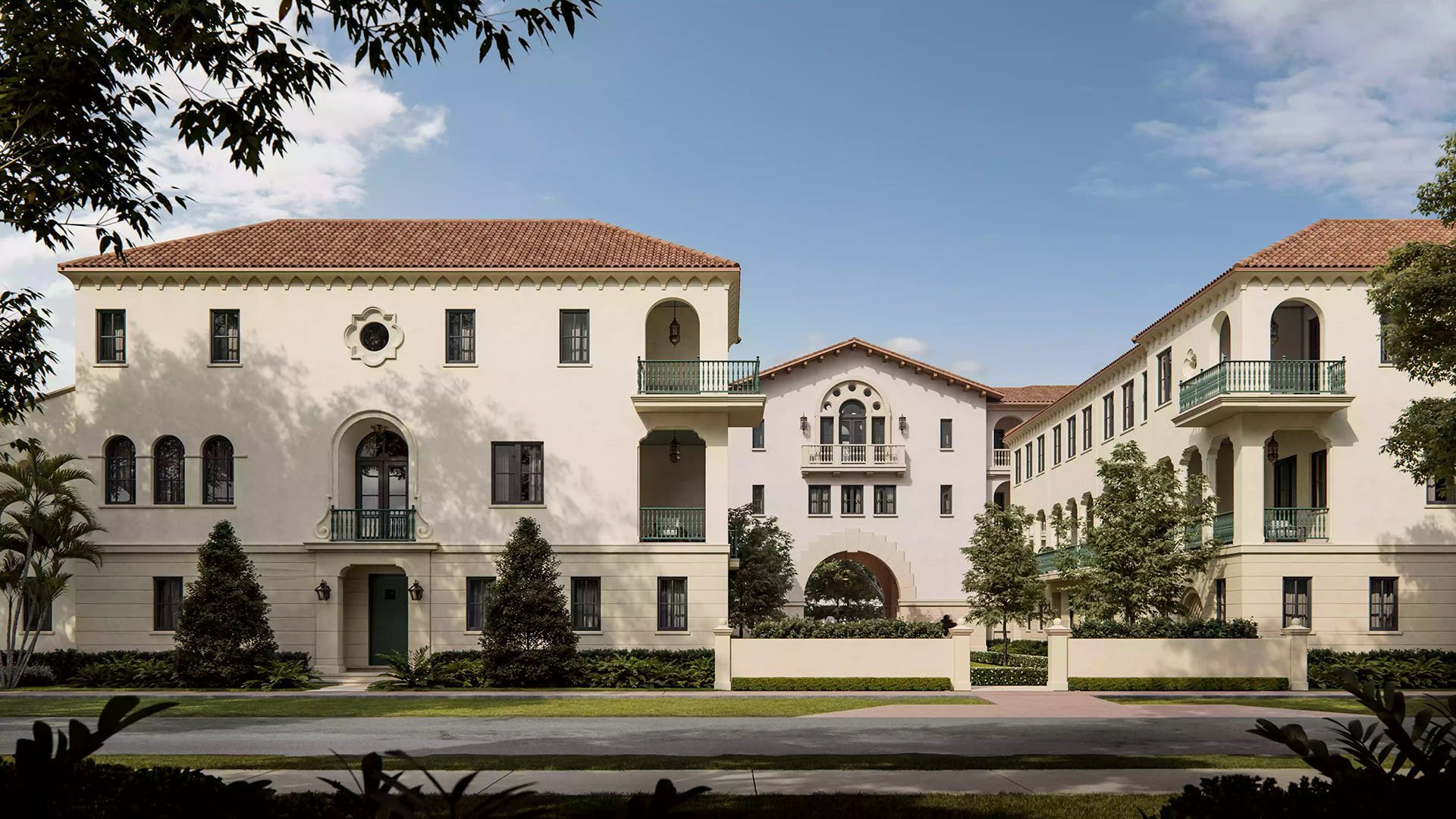
The Village at Coral Gables is framed around that established fabric. Its concept is closer to a village environment than a conventional high-rise luxury development, which matters for buyers attuned to scale. The point is not to replace a waterfront estate with an anonymous tower. It is to replace maintenance-heavy isolation with a composed residential setting that still feels private and considered.
This is also why Coral Gables buyers often study the area in context, comparing projects such as Ponce Park Coral Gables and Cora Merrick Park when evaluating how much neighborhood proximity they want. Each name belongs to the same broader conversation: luxury that is less dependent on spectacle and more anchored in place.
The lifestyle conversation is the center of this move. A waterfront estate can be magnificent, but it can also place distance between the owner and daily life. The Village at Coral Gables answers a different desire: to be near dining, culture, and neighborhood services without relying on the estate-compound model.
For many buyers, the goal is time efficiency. A home should not only impress guests. It should simplify mornings, reduce unnecessary friction, and make spontaneous dinners or cultural outings easier. Coral Gables lends itself to that rhythm because its appeal is civic and residential, not merely scenic.
The transition is psychological as much as practical. Estate owners often become accustomed to maximizing land, frontage, and separation. The Village at Coral Gables asks a more refined question: what if the better luxury is not more space, but better-used space? What if the greater privilege is a home that lets its owner move through the day with discretion and less operational burden?
One of the most important distinctions is that privacy here does not mean withdrawal. The Village at Coral Gables is positioned to support discretion while encouraging a more neighborly, socially connected environment. That balance is valuable for buyers leaving large estates, where privacy can sometimes become distance.
The project’s village-oriented planning suggests a softer residential experience. Green spaces, gardens, and courtyards are presented as a lower-maintenance substitute for the expansive landscaped grounds common to waterfront estates. The result is not a loss of outdoor life. It is a more curated version of it.
For buyers who have grown weary of constant visibility, waterfront trophy properties can feel performative. The Village at Coral Gables offers a different register of status: one based on restraint, proportion, and architectural belonging. It is luxury that does not need to announce itself from the shoreline.
Design & Architecture becomes especially important when buyers right-size from an estate. Without acreage or water frontage carrying the emotional weight of the purchase, the quality of the built environment must do more. Scale, materials, courtyards, thresholds, and streetscape relationships all become part of the value proposition.
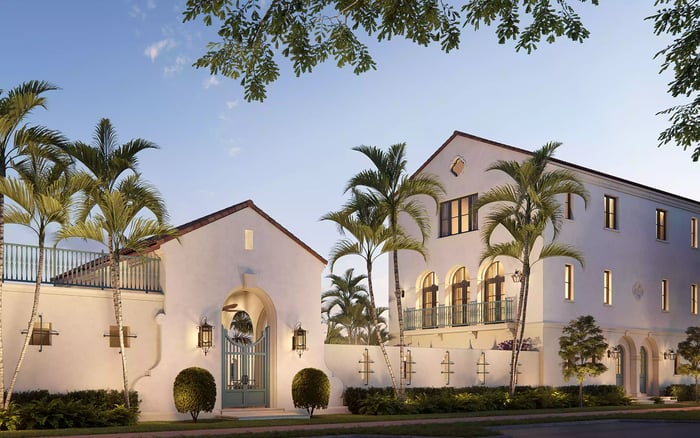
The Village at Coral Gables is described as rooted in Coral Gables’ historic fabric and aligned with the city’s Mediterranean-inspired identity. That matters because the best version of right-sizing does not feel like compromise. It feels like moving into a more resolved environment, where architecture and planning create continuity with the neighborhood.
Buyers considering nearby village-scaled or garden-oriented living may also look toward Coconut Grove, where projects such as The Well Coconut Grove speak to a similar appetite for daily wellness, neighborhood texture, and residential calm. The Gables distinction, however, is its civic formality and architectural continuity, which can resonate deeply with estate sellers seeking a more intentional setting.
The most successful buyers approach The Village at Coral Gables with a clear sense of what they are leaving behind and what they want to gain. If the old priority was maximum private domain, the new priority may be quality of movement. If the former home was about hosting at scale, the next home may be about living beautifully every day.
That does not mean giving up privacy. It means choosing a more efficient version of it. Buyers should think about how often they use their current outdoor grounds, how much they value proximity to restaurants and services, and whether their next residence should reduce the logistical demands of ownership.
This is where a Buyer's Guides approach is useful. The question is not simply whether The Village at Coral Gables is beautiful. The question is whether its balance of privacy, walkability, gardens, and neighborhood access matches the life the buyer intends to lead over the next decade.
For many affluent buyers, less friction has become a defining amenity. Not less quality, less privacy, or less beauty, but fewer unnecessary demands on time. The Village at Coral Gables captures that mood by emphasizing daily ease, refined residential scale, and proximity to the cultural and service fabric of Coral Gables.
This is a quieter form of wealth, one that values discretion over exposure. It is especially compelling for owners who have already experienced the waterfront estate chapter and no longer need every residence to function as a trophy. The more intentional home is not a retreat from ambition. It is a more mature expression of it.
Who is The Village at Coral Gables best suited for? It is best suited for affluent buyers seeking privacy, walkability, and refined scale rather than the upkeep and visibility of a large waterfront estate.
Is The Village at Coral Gables positioned as a high-rise alternative? Its planning is intended to feel more like a village environment than a conventional high-rise luxury development.
Why would a waterfront estate owner consider Coral Gables? Coral Gables offers an established civic setting, Mediterranean-inspired character, and access to dining, culture, and neighborhood services.
Does moving here mean giving up privacy? No. The concept supports privacy while allowing for a more neighborly and socially connected residential experience.
How does the outdoor lifestyle compare with an estate? Gardens, green spaces, and courtyards offer a more curated and lower-maintenance alternative to expansive private grounds.
Is the appeal mainly architectural? Architecture is central, but the broader appeal includes daily ease, discretion, time efficiency, and long-term livability.
What is the biggest lifestyle change for estate sellers? The shift is from maximizing land, water frontage, and scale to optimizing convenience, design coherence, and quality of life.
Is The Village at Coral Gables meant for buyers who want visibility? It is more aligned with buyers who want luxury without the constant public visibility often associated with waterfront trophy properties.
Should buyers compare other Coral Gables projects? Yes. Comparing other Coral Gables options can help clarify the desired balance of walkability, privacy, and neighborhood access.
What makes this move feel intentional rather than downsizing? It reframes the decision around better daily living, architectural fit, and reduced friction rather than simply reducing square footage.
When you're ready to tour or underwrite the options, connect with MILLION.
If branded residences are on your mind — as a home or as an allocation — we would be glad to share what we are seeing, privately.
Begin a quiet conversation