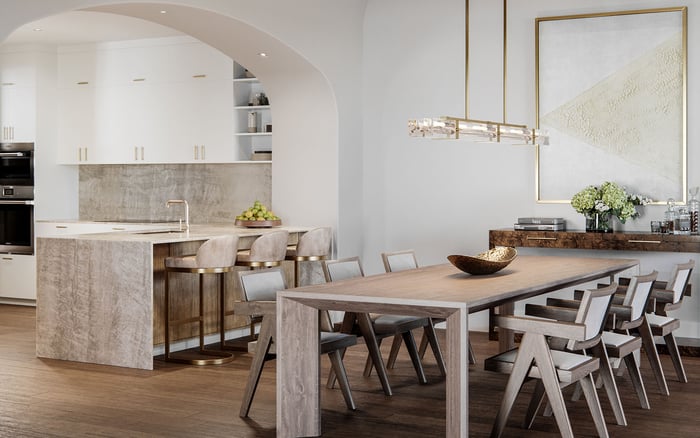
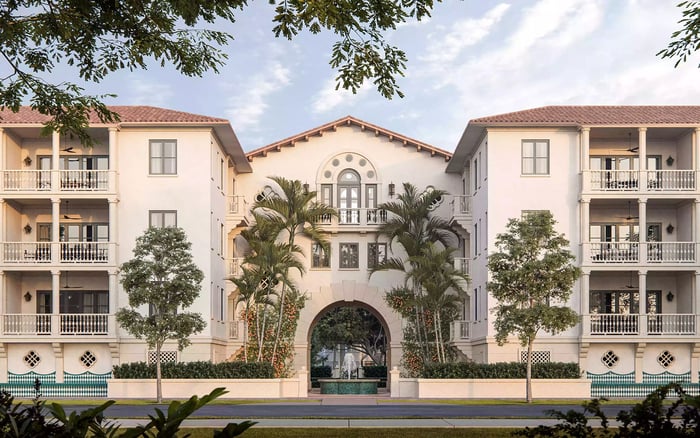
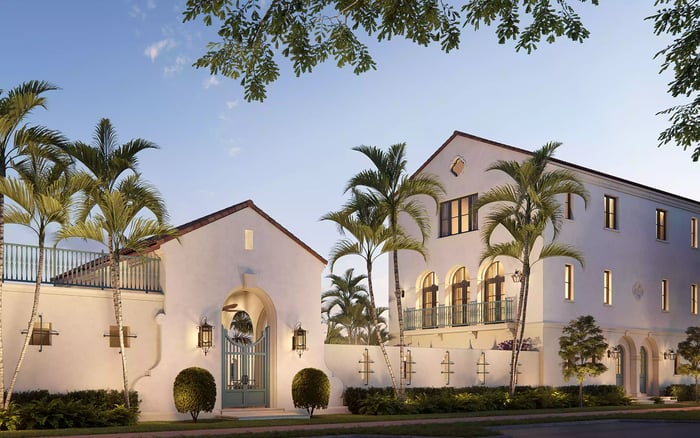
A buyer-focused comparison of how The Village at Coral Gables and The Well Coconut Grove express two distinct models of South Florida luxury: composed residential calm and wellness-driven neighborhood energy.
In South Florida’s upper tier, the most discerning buyers are no longer evaluating a residence by square footage, finishes, or amenity lists alone. They are asking a more revealing question: what kind of life does the building make possible every day?
That is where building culture becomes a meaningful differentiator. It is the sum of architecture, resident experience, staff cadence, communications, programming, privacy, arrival sequence, and the way a property mediates between home and neighborhood. A building can be quiet without feeling isolated. It can be social without feeling exposed. It can offer convenience without becoming performative.
The Village at Coral Gables and The Well Coconut Grove offer a useful comparison because they begin from different civic temperaments. The Village at Coral Gables is rooted in Coral Gables’ Mediterranean, master-planned identity, where order, continuity, and composure carry real value. The Well Coconut Grove is tied to Coconut Grove’s wellness-forward, waterfront, lifestyle-oriented character, where daily life tends to feel more layered, open, and socially textured.
For buyers comparing Coral Gables and Coconut Grove, the distinction is not simply location. It is rhythm.
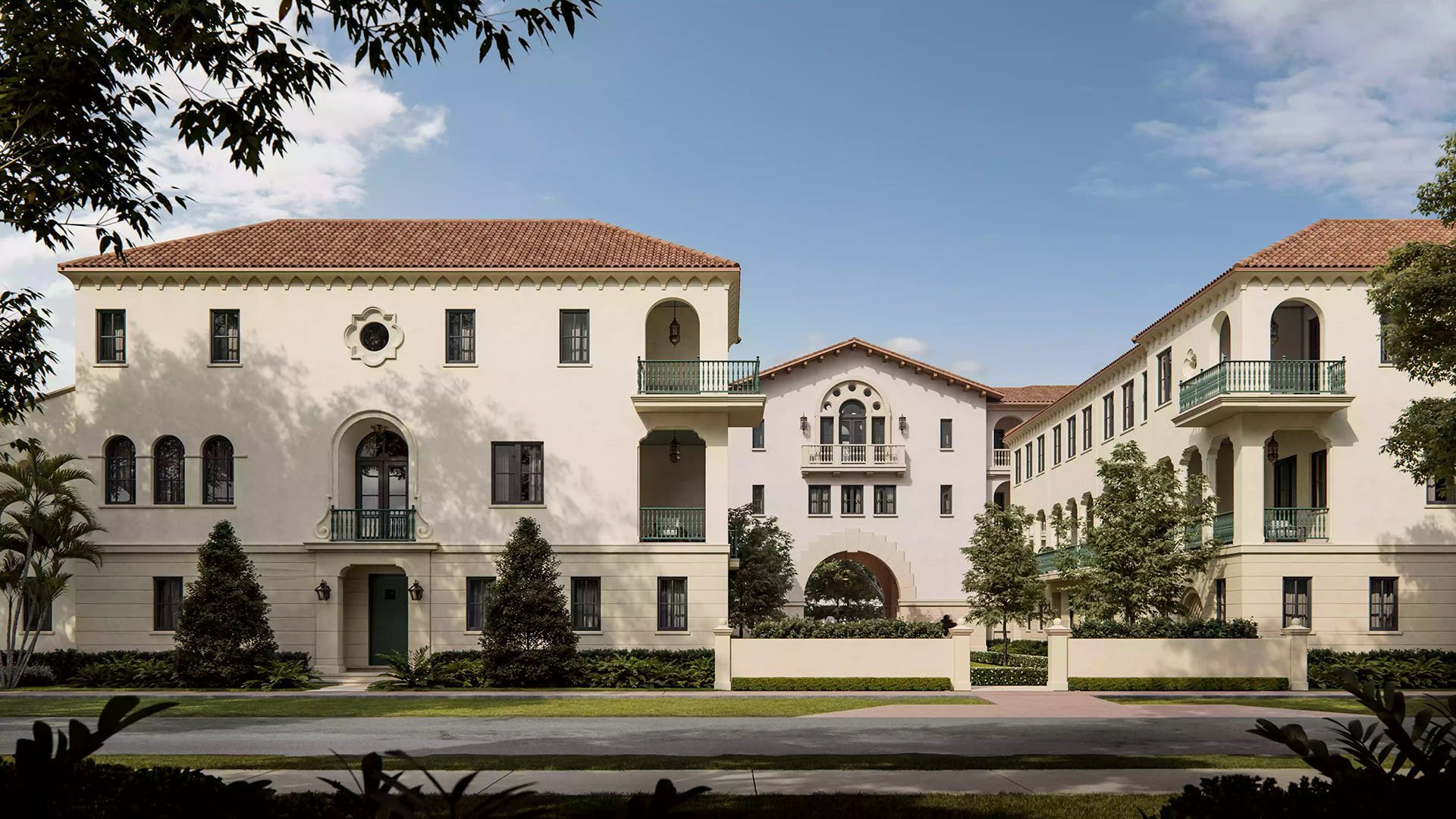
The Village at Coral Gables is strongest as an expression of luxury shaped by residential calm. Its appeal comes from the way a home can feel connected to neighborhood tradition while still protecting the private rituals of daily life. In Coral Gables, architectural continuity matters. The city’s planned elegance, Mediterranean vocabulary, and sense of civic order create an expectation that new residential life should feel composed rather than disruptive.
That does not mean stillness for its own sake. At this level, calm is operational as much as aesthetic. It comes from how arrivals feel, how resident communications are handled, how staff presence is calibrated, and how shared spaces support privacy rather than demanding constant interaction. A building’s behavior becomes part of its luxury.
The Village at Coral Gables fits a buyer who wants the home to act as a retreat. The surrounding culture favors neighborhood coherence, measured beauty, and a sense of permanence. For some buyers, that continuity is not nostalgia. It is protection from friction. It allows the residence to support a cleaner boundary between public life and personal life.
Within a new-construction context, this matters because many buyers are not merely seeking what is new. They are seeking what feels settled from the beginning.
The Well Coconut Grove represents a different residential proposition. Its cultural signal is more outward-facing, shaped by wellness identity, lifestyle convenience, and Coconut Grove’s long-standing urban-village character. The Grove is waterfront, bohemian, layered, and social in a way that is less formal than Coral Gables yet still deeply sophisticated.
Here, the home is not only a sanctuary. It is a platform for daily rituals that may extend into wellness programming, neighborhood movement, and the casual energy of village life. The appeal is not noise or spectacle. It is immediacy. Residents who value this model often want their building to simplify the day: easier transitions, more integrated routines, and a greater sense that health, social life, and convenience are part of the residential ecosystem.
The Well Coconut Grove is therefore well suited to the buyer who wants privacy but not withdrawal. Its culture suggests a life where the building participates more actively in the resident’s day. Amenities and wellness identity are not decorative extras. They help define how the property feels from morning through evening.
This is where a boutique mindset can become powerful. Smaller-scale sensibility, intentional programming, and neighborhood intimacy can make a residence feel more personal, even when it is highly serviced.
The comparison between The Village at Coral Gables and The Well Coconut Grove should not be reduced to quiet versus active, or traditional versus contemporary. Both models can be luxurious. The question is which form of luxury aligns with the buyer’s real life.
For some, daily convenience means leaving the building and immediately feeling connected to a more animated neighborhood ecosystem. For others, convenience is the absence of unnecessary stimulation: a graceful return home, a predictable service culture, and a neighborhood fabric that lowers the temperature of the day.
Coral Gables’ planned elegance and Coconut Grove’s wellness-oriented waterfront identity both offer strong residential logic. One leans toward composure, privacy, and architectural continuity. The other leans toward vitality, wellness culture, and public-facing ease. Neither is inherently superior. Each asks the buyer to be honest about what kind of environment restores them.
This is especially important for second-home owners, executives, families, and relocators who may be choosing not only a property, but a daily operating system. The most beautiful residence can feel misaligned if its culture is wrong.
A sophisticated buyer should study more than floor plans. Observe how the building introduces itself. Does the arrival experience feel calm or animated? Do common areas invite lingering, privacy, wellness, or social contact? Does the staff posture feel discreet, highly interactive, or program-driven? Do resident events enhance life or create obligations? Does the building seem to protect the home from the city, or connect the home more actively to it?
These questions are increasingly central in South Florida’s luxury market because residential value is becoming behavioral. A building does not only stand in a neighborhood. It acts within one. It can reinforce local identity, soften the pressures of daily life, or turn proximity into convenience.
The Village at Coral Gables shows how architecture and operations can support retreat, tradition, and composure. The Well Coconut Grove shows how wellness culture and neighborhood energy can shape convenience and social rhythm. Together, they illustrate a more mature luxury conversation: not just what a residence contains, but how it behaves.
What is meant by building culture in luxury real estate? Building culture is the way architecture, service, programming, communications, and resident behavior shape daily life inside a property.
Why is The Village at Coral Gables associated with residential calm? It aligns with Coral Gables’ Mediterranean, master-planned identity and supports a sense of privacy, composure, and neighborhood continuity.
Why is The Well Coconut Grove associated with public-facing energy? It reflects Coconut Grove’s wellness-forward, waterfront, and lifestyle-oriented character, with a stronger connection to daily movement and neighborhood life.
Is Coral Gables quieter than Coconut Grove for luxury buyers? In this comparison, Coral Gables reads as more planned and composed, while Coconut Grove reads as more layered, social, and wellness-driven.
Does wellness programming matter to resale value? It can matter when it strengthens daily convenience and identity, but buyers should judge whether the programming matches their own routine.
Is residential calm the same as lack of amenities? No. Calm can come from thoughtful operations, privacy, architecture, and service discipline, not from having fewer offerings.
Who is the best fit for The Village at Coral Gables? It is especially compelling for buyers who value retreat, architectural continuity, privacy, and a measured neighborhood rhythm.
Who is the best fit for The Well Coconut Grove? It suits buyers who want wellness culture, convenience, social texture, and a more outward-facing relationship with the neighborhood.
Should buyers prioritize neighborhood or building culture first? The strongest decision considers both, because the building’s culture should amplify the neighborhood rhythm rather than fight it.
How should a buyer compare these two projects in person? Focus on arrival, staff cadence, shared-space atmosphere, privacy, and how naturally each setting supports your daily routine.
For a confidential assessment and a building-by-building shortlist, connect with MILLION.
If branded residences are on your mind — as a home or as an allocation — we would be glad to share what we are seeing, privately.
Begin a quiet conversation