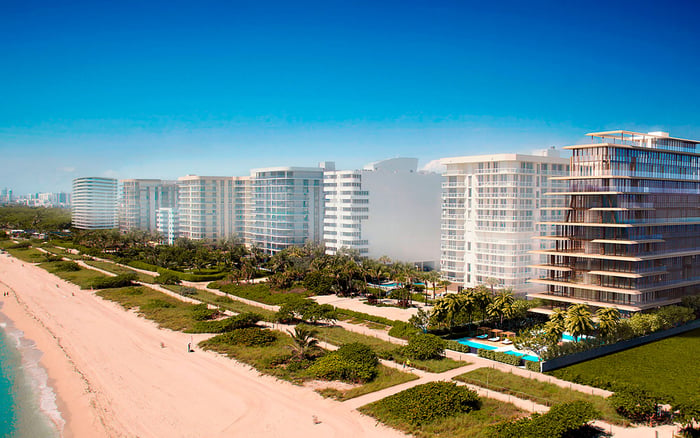
At The Surf Club, private arrival and controlled beach routes meet a state-owned public shoreline. Buyers should examine the documents defining access, maintenance, dunes and amenity operations.
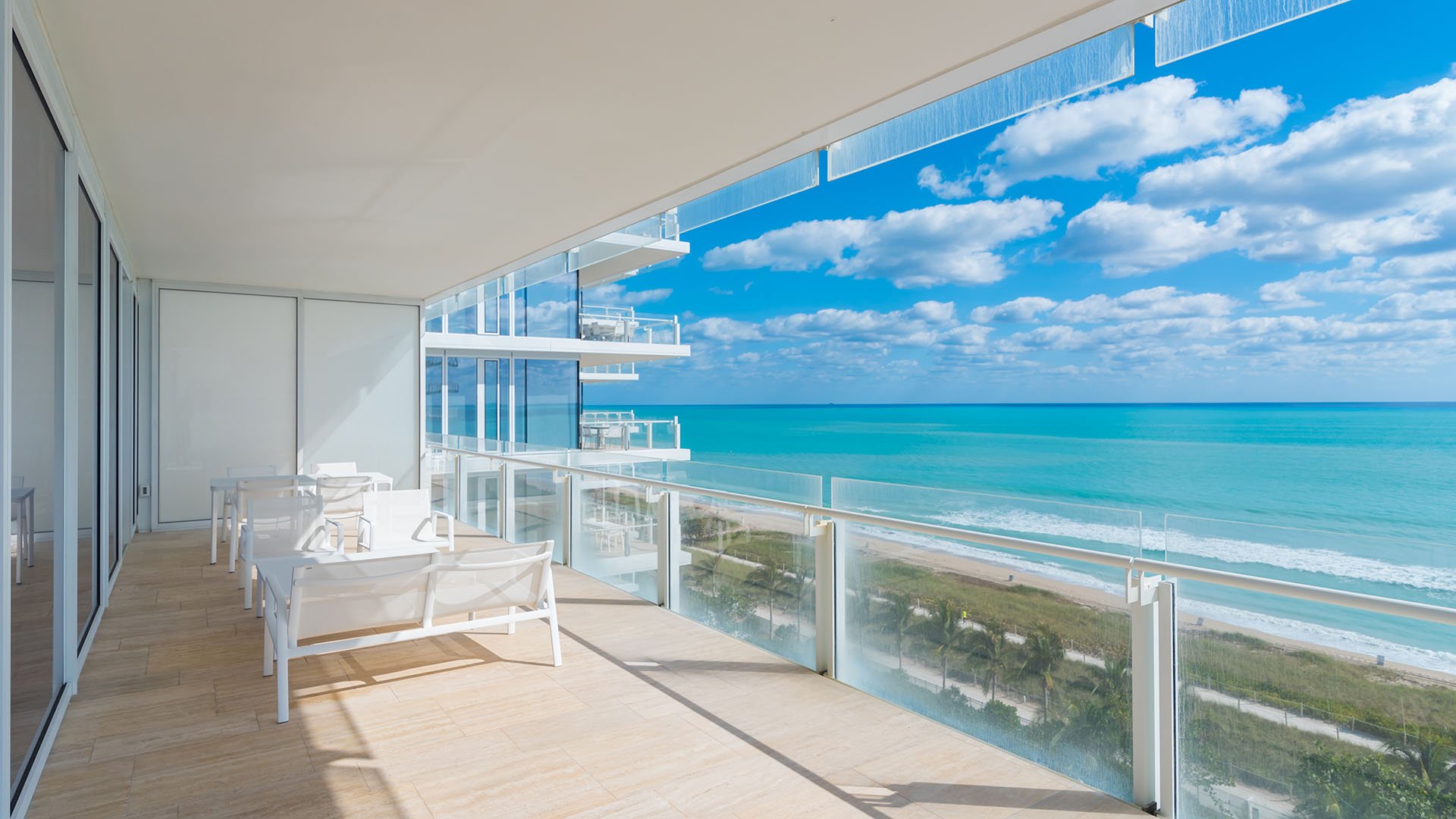
At The Surf Club Four Seasons Surfside, the choreography of oceanfront living feels exceptionally private: controlled arrival, discreet residential spaces and a direct progression toward the Atlantic. Yet the legal geography beneath that experience is more layered than the phrase “private beach” may suggest.
Surfside’s entire one-mile oceanfront beach is owned by the State of Florida and open to the public for recreational use. Running approximately along the dune crest, the erosion control line marks the boundary between private property and the state-owned public beach. In practical terms, a residence can offer a private or deeded route from its grounds to the shore without conveying private ownership of the sand beyond that boundary.
That distinction does not diminish exclusivity; it defines it more precisely. The luxury lies in controlled passage, service, amenity design and separation between residential grounds and public shoreline activity.
A private route to the shore is not necessarily a privately owned shore.
The Surf Club site spans the oceanfront addresses marketed from 9001 through 9111 Collins Avenue. The hotel’s official address is 9011 Collins Avenue, while the two residential addresses are 9001 and 9111 Collins Avenue. The 12-story development was completed in 2017.
The property is described using terms including private beach access, deeded beach access and unrestricted ocean access. Its four-bedroom Beach Villa has a private entry, oceanfront pool and beach access steps away. The route to Surfside Beach is gated, illustrating how access can remain controlled on private property even when the destination is a public beach.
For a buyer, beach-access wording should therefore be read as a description of rights and experience, not as a substitute for title review. The decisive questions are who may use a route, where it runs, whether it is exclusive, who maintains it and whether it can be relocated or interrupted for lawful work.
An easement can grant a defined party the right to use land owned by another party for a stated purpose. On an oceanfront parcel, potential rights may concern pedestrian passage, utilities, drainage, maintenance or governmental activity. The relevant answer must come from the recorded documents affecting the specific property, not from the atmosphere created by gates, landscaping or beach service.
This matters because an easement can influence several dimensions of ownership:
Privacy: A right of passage may establish who can cross a defined portion of the property.
Operations: Access rights can affect gates, service circulation, security procedures and maintenance timing.
Improvements: Recorded rights and shoreline controls may constrain where landscaping, structures or other improvements can be placed.
Resale clarity: A well-documented access framework can help future purchasers distinguish legal rights from customary practices.
The municipal framework does not, by itself, establish that the public may cross The Surf Club’s private grounds. Public ownership of the beach and public access to it are separate from any claimed right to traverse a particular condominium or hotel parcel. That is why project-specific title materials remain essential.
Platted public beach rights-of-way in Surfside are located at 88th, 90th, 92nd, 94th, 95th and 96th Streets. The beachfront Surfside Community Center at 93rd Street also provides public access to the Atlantic beach. Town policy calls for maintaining existing street ends and other public access points, retaining platted rights-of-way, identifying access locations with signage along Collins and Harding Avenues, and regulating nearby public parking to facilitate beach use.
This network provides context for the shoreline experience at nearby residences such as Arte Surfside, Fendi Château Residences Surfside and Ocean House Surfside. Their inclusion is not a statement that the projects share identical documents or access conditions. Rather, each luxury property along the same municipal shoreline should be evaluated through its own survey, declaration, title materials and operating rules.
For branded residences in particular, hospitality language and property law often describe different layers of the experience. Service can feel seamless while the underlying legal map remains exacting.
The dune is more than a landscape feature. Running approximately along its crest, the erosion control line separates private property from the state-owned public beach. Surfside has also established an ocean bulkhead line for private beachfront properties east of Collins Avenue and prohibits development or redevelopment seaward of that line.
An unimproved path on the landward side of the dune is used by state, county and town personnel for beach and dune maintenance. Miami-Dade County’s parks department maintains the beach and dune system in a natural condition. These conditions make maintenance access and shoreline regulation material due-diligence subjects, particularly for buyers focused on ground-level outdoor areas, villas, cabanas or direct beach routes.
A buyer should ask how dune work, beach maintenance or nourishment activity may interact with the residence’s access path and service setup. The goal is not to predict disruption without evidence, but to understand the rights, notice procedures and operational plans already in place.
The core buyer’s-guide principle is simple: evaluate the legal route to the ocean with the same care applied to the residence itself. Request the current survey and recorded easements, then compare them with the condominium declaration, amendments and rules governing beach service. Confirm whether access is appurtenant to the unit, shared through common elements or provided as an operating privilege.
Counsel should identify the erosion control line, property boundary, dune area, bulkhead line and any maintenance corridor shown in the governing materials. Buyers should also examine who controls gates, which guests may use the route, what hours or service rules apply, and who bears maintenance or restoration costs.
Finally, separate permanent legal rights from present-day custom. Furniture placement, attendant service and an apparently secluded stretch of sand may shape the lived experience, but they do not independently define ownership or access rights. At The Surf Club Four Seasons Surfside, the most sophisticated view of privacy is not absolute isolation. It is a carefully managed transition from private residence to controlled grounds, protected dune and public shore.
For discreet guidance on South Florida’s finest coastal residences, connect with MILLION.
If branded residences are on your mind — as a home or as an allocation — we would be glad to share what we are seeing, privately.
Begin a quiet conversationYes. Surfside’s entire one-mile oceanfront beach is state-owned and open to the public for recreational use.
Not necessarily. It can describe a controlled or deeded route across private property to the publicly owned shoreline.
The municipal framework alone does not establish such a right. Any right to cross the property would require review of the applicable recorded documents.
The erosion control line, running approximately along the dune crest, marks the boundary in Surfside.
Platted rights-of-way are identified at 88th, 90th, 92nd, 94th, 95th and 96th Streets, with additional access at the Community Center on 93rd Street.
Easements can affect passage, maintenance, utilities, privacy, improvements and the operation of gates or service routes.
Key materials include recorded easements, a current survey, the condominium declaration and amendments, beach-service rules, and shoreline maintenance plans.
It is a development control line established for private beachfront properties east of Collins Avenue. Surfside prohibits development or redevelopment seaward of it.
An unimproved path on the dune’s landward side is used by state, county and town personnel for beach and dune maintenance.
Clear documentation helps future buyers distinguish enforceable property rights from current service practices, landscaping or customary use.