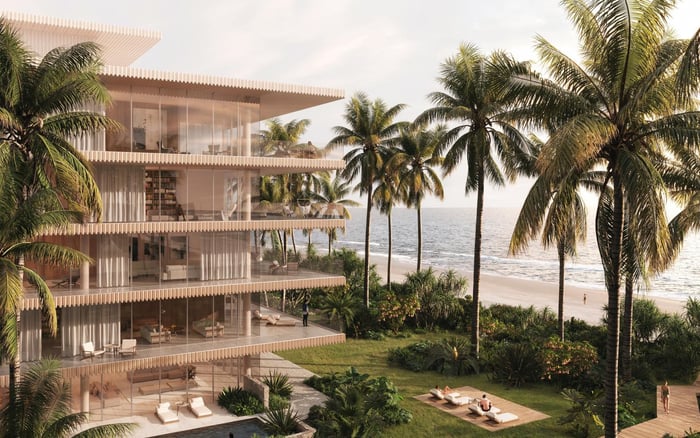
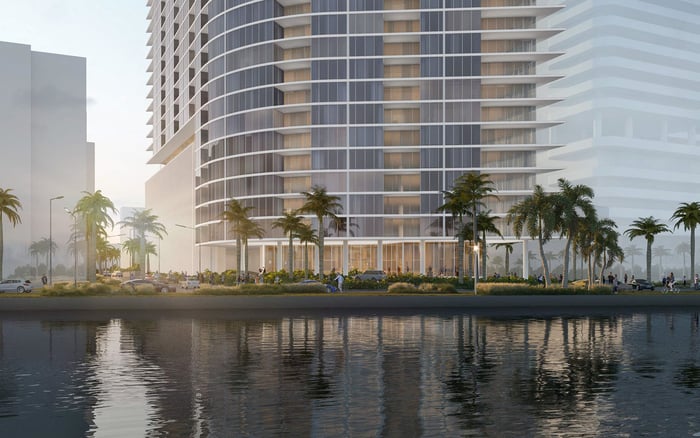
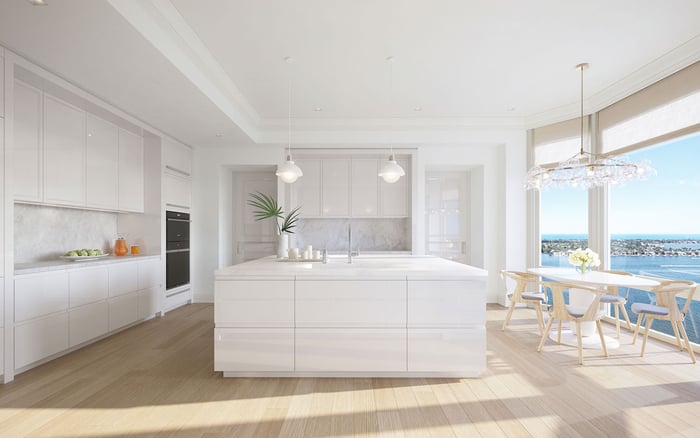
At Shorecrest, private elevator arrival and waterfront amenities frame the ownership experience. A more revealing purchase review asks which elevators provide alternative access, what backup power actually serves, and how those provisions translate into daily continuity.
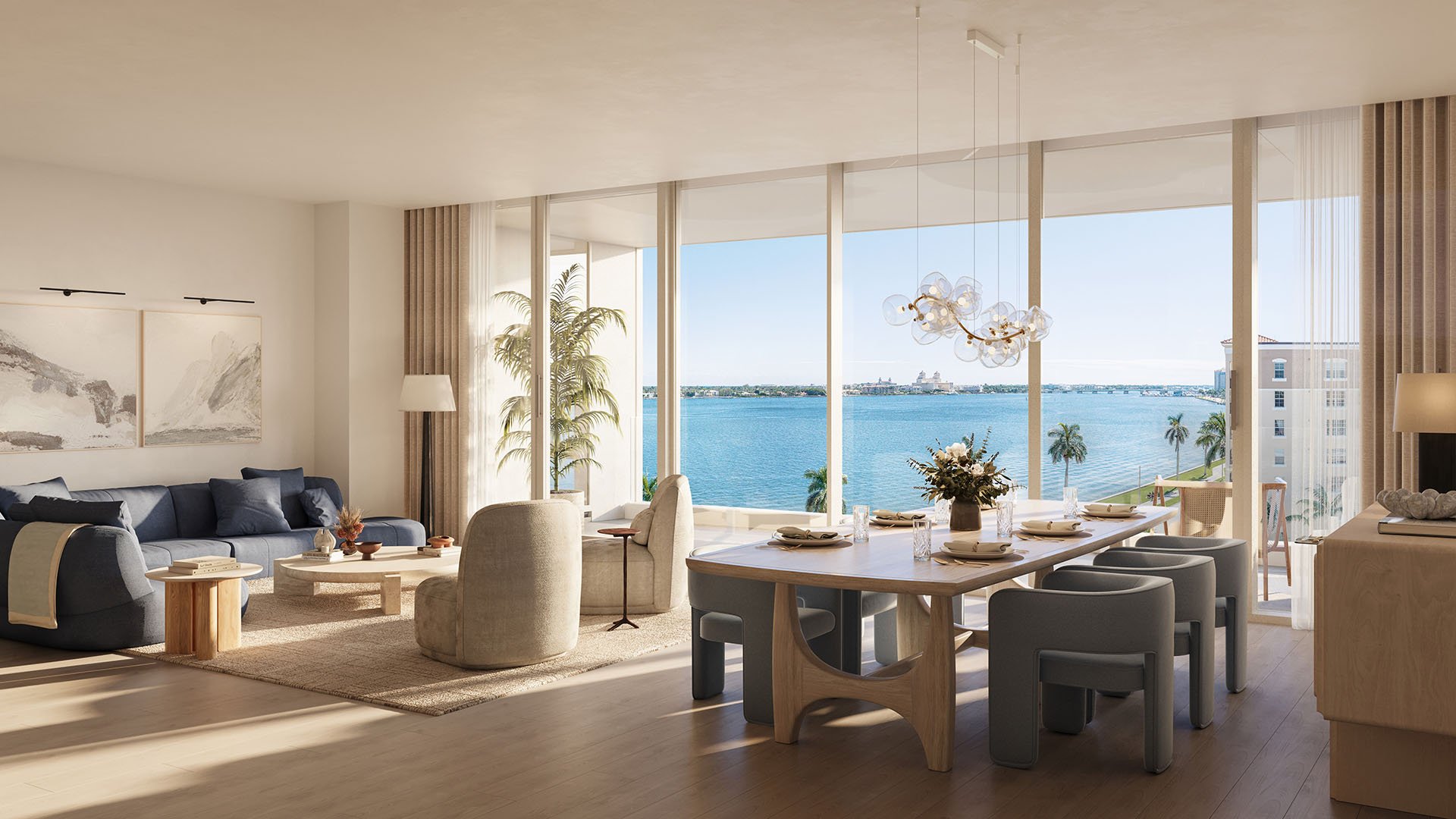
A waterfront residence should feel effortless. The more revealing ownership question is what happens when routine is interrupted: an elevator undergoes maintenance, utility power fails, or a resident needs an alternative route home. At Shorecrest Flagler Drive West Palm Beach, those questions deserve the same attention as the floor plan and outlook.
Shorecrest is a Related Ross waterfront condominium development at 1901 N Flagler Drive, West Palm Beach, FL 33407. Its residential offering includes two- and three-bedroom homes. For prospective owners, the essential distinction is between privacy of arrival and continuity of access. A private vestibule describes an arrival space; it does not, by itself, establish how many elevators can bring you there.
The appropriate position is neither reassurance nor alarm. Shorecrest’s generator capacity, residence-level backup circuits, and elevator backup-power allocation remain unconfirmed here. Unconfirmed specifications are not evidence that those provisions are absent.
Residence 203 is described as having a private elevator vestibule. That is a residence-specific feature, not a building-wide elevator specification. It does not establish a dedicated cab, the total elevator count, a separate service elevator, or the arrangement of elevator banks.
For a buyer, redundancy means a usable alternative when the usual elevator is unavailable. The question is not simply how many elevators the tower contains, but how many can serve the particular home-and under what conditions.
Request a current elevator schedule and a plan showing the residence’s relationship to each serving cab. Ask whether alternative access reaches the same vestibule or another entrance, whether credentials permit that route, and how residents would use it during maintenance. If a service elevator is proposed as the alternative, request that arrangement in writing rather than assuming it from the designation.
A useful review follows the journey from the building entrance to the residence door. An explanation that stops at the lobby leaves the most personal part of the access question unanswered.
A maintenance interruption and a utility outage require different questions. An alternative cab may resolve the first without addressing the second. Likewise, a statement about elevator backup power does not establish how many cabs remain available for resident use.
Ask the project team to describe three conditions: normal operation, one serving elevator unavailable, and utility power unavailable. For each, identify the accessible cab, the route to the home, and any restrictions on resident use. Then ask how the plan changes if maintenance and an outage overlap.
Keep the discussion grounded in your household’s needs. For an owner with limited mobility, reliable access may take priority over almost every amenity. For a family coordinating visitors, deliveries, and household staff, the relationship between resident and service circulation deserves close attention. These are buyer priorities to test, not descriptions of Shorecrest’s operating arrangements.
The strongest response is a residence-specific explanation supported by current plans-not a general assurance that the building has multiple elevators.
The phrase “backup generator” is only the beginning of a power discussion. At Shorecrest, generator capacity, elevator backup-power allocation, and circuit coverage inside individual homes remain unconfirmed.
Request written coverage for cooling, refrigeration, lighting, and outlets. Ask whether cooling applies to the entire residence or selected equipment, which appliances and receptacles are included, and whether owners face operating restrictions. These questions translate an equipment description into a practical picture of daily life.
The same review should identify expected transfer behavior, the loads assumed in any runtime estimate, fuel arrangements, and the circumstances under which services may be limited. None of those details should be inferred from the presence of a generator or a broad promise of building power.
For buyers who depend on particular equipment, the written response should address that equipment specifically. A residence can satisfy one owner’s continuity priorities while leaving another’s unresolved. The objective is not the broadest adjective, but a precise match between documented coverage and household needs.
Local comparisons sharpen the questions. Olara is marketed with private keyed elevators and a full-building generator serving every residence, common areas, and elevators. That language identifies categories of coverage worth asking about at Shorecrest, but it still requires scrutiny against technical specifications and operating limits.
At South Flagler House West Palm Beach, advertised features include an emergency backup generator for full-building power, dedicated service elevators, and efficient elevator access. Those descriptions do not quantify elevator redundancy or establish unlimited runtime or uninterrupted operation.
The comparison is about specificity, not a resilience ranking. Ask each project to answer the same residence-level questions before assigning value to different marketing terms. A buyer also considering Alba West Palm Beach can apply the same documentation standard without presuming its elevator or generator specifications. Consistent questions provide a sounder basis for a shortlist than superficially similar amenity language.
Shorecrest’s advertised offering includes more than 18,000 square feet of amenities spanning fitness, wellness, social, and meeting spaces, as well as a 75-foot rooftop lap pool and spa facilities. Those features establish lifestyle appeal, not their availability during a power interruption.
Ask which shared spaces are intended to remain accessible and operational during an outage, and what restrictions would apply. Separate power coverage from whether a space would actually be available for use. An amenity’s presence is not a promise of uninterrupted access.
Prioritize the answers. The ability to reach home, preserve refrigerated items, maintain specified lighting, and use covered cooling may matter more than continued recreation. Treat optional amenities as a separate layer of continuity rather than allowing them to obscure the residence’s essential functions.
Shorecrest’s residence count has been described as both 98 and a revised 100. Rather than treating either count as definitive, request the current configuration and confirm that the elevator and emergency-power documents correspond to it. A building-wide count alone does not explain access arrangements for an individual home.
Before committing, assemble a concise review package: current elevator schedules, emergency-power specifications, written residence-level circuit coverage, and an explanation of resident access during maintenance and outages. Have the relevant professionals review technical statements and their relationship to the purchase documents.
The ownership standard is straightforward: privacy should be understood as privacy, and resilience evaluated through documented alternatives and coverage. Shorecrest’s unresolved specifications call for precise questions, not assumptions in either direction.
For a discreet perspective on South Florida waterfront ownership, explore MILLION.
If branded residences are on your mind — as a home or as an allocation — we would be glad to share what we are seeing, privately.
Begin a quiet conversationShorecrest is a Related Ross waterfront condominium development at 1901 N Flagler Drive, West Palm Beach, FL 33407.
Shorecrest’s residential offering includes two- and three-bedroom homes.
Residence 203 is specifically described as having a private elevator vestibule. That description does not establish the arrangement for every residence.
No. A private vestibule does not by itself establish a dedicated cab, alternative elevator access, or backup-power coverage.
The building’s total elevator count and bank configuration are not established here. Buyers should request current schedules showing which cabs serve their specific residence.
Generator capacity, residence-level circuit coverage, and elevator backup-power allocation remain unconfirmed here. That does not establish that those provisions are absent.
Request written coverage for cooling, refrigeration, lighting, and outlets, including any operating restrictions. Equipment essential to the household should be addressed specifically.
Olara advertises a full-building generator serving residences, common areas, and elevators, while South Flagler House advertises emergency full-building power. Neither description should be treated as proof of unlimited runtime or uninterrupted operation.
The advertised amenities do not establish outage availability. Buyers should request written clarification of which spaces would remain powered, accessible, and operational.
Request current elevator schedules, emergency-power specifications, residence-level circuit coverage, and written access arrangements for maintenance and outages. Confirm that these materials correspond to the current building configuration.