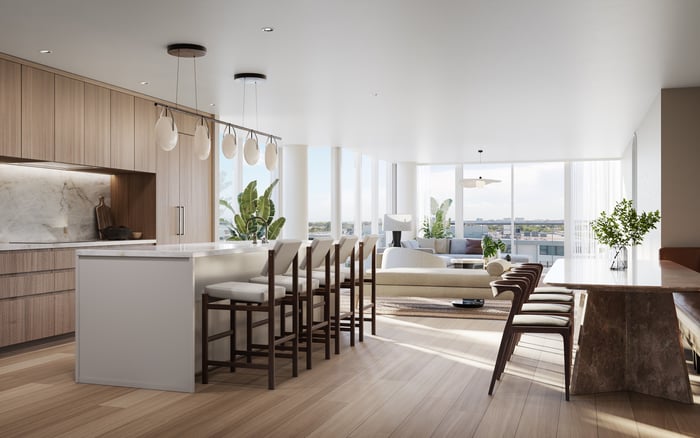
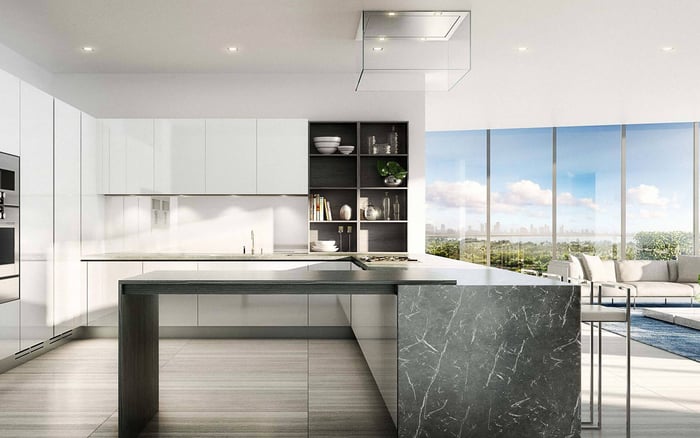
A disciplined comparison of three Bay Harbor Islands residences, centered on service expectations, residential privacy, recurring costs, liquidity, and contract diligence.

The shared buyer questions behind Alana Bay Harbor Islands, Origin Bay Harbor Islands, and Alma Bay Harbor Islands begin with a preferred way of living. Buyers can use the same framework for each property: determine how much service is useful, how privacy should function, and what the full cost of ownership may include.
The comparison should remain residence-specific. Available documents, contract terms, anticipated expenses, and operating details can differ, so broad impressions should not replace direct diligence.
Service is best evaluated as an operating model rather than an amenity label. Buyers should ask who handles arrivals, deliveries, guests, maintenance coordination, package storage, emergencies, and after-hours requests. They should also distinguish association services from conveniences that may be billed separately.
A service program should be tested against the owner’s expected schedule and use. Full-time residents, seasonal owners, and households with staff may assign different value to the same arrangement.
For each property, request the available staffing plan, management structure, service hours, vendor responsibilities, and budget information. Confirm these details through current project and contract materials before relying on them.
Privacy begins with arrival and continues through parking, guest access, deliveries, amenity circulation, elevators, and residence entry. Buyers should ask how residents and visitors are authenticated, how packages are managed, and whether resident and service routes overlap.
Building scale alone does not answer the privacy question. Access controls, circulation plans, acoustics, operating procedures, and the relationship between residences and shared spaces all deserve review.
Nearby projects such as The Well Bay Harbor Islands can broaden a Bay Harbor Islands tour. The useful question remains consistent: does the property’s proposed or current daily operation align with the buyer’s definition of discretion?
A quoted association charge should not be treated as a complete ownership budget. Buyers should obtain the most current available budget and unit-specific charge information, then confirm what is included, how reserves are treated, and whether separate services or assessments may apply.
A fuller model can account for property taxes, insurance, utilities, financing, interior maintenance, and separately contracted services. Buyers may also wish to test alternative cost scenarios rather than rely on a single estimate.
Price-per-square-foot comparisons require similar care. Floor, orientation, outdoor space, condition, fees, and timing can affect whether two residences are meaningfully comparable. Current availability and unit-specific documents should guide the analysis.
Contract structure affects the capital required before closing. Buyers should verify the current deposit schedule, payment deadlines, refund provisions, default terms, and closing requirements in the applicable contract rather than relying on prior marketing materials.
Construction and delivery timing also require direct confirmation. Any projected milestone can change, making current written information more useful than an older estimate.
Liquidity should be considered alongside acquisition cost. A buyer can review likely holding periods, resale competition, residence-specific attributes, and the expenses associated with ownership and disposition with appropriate advisers.
A practical decision matrix can assign personal weight to service, privacy, recurring expense, capital requirements, and resale flexibility. A buyer who entertains frequently may focus on guest handling and parking, while a seasonal owner may emphasize management responsiveness. A primary resident may give more weight to acoustics, delivery flow, reserves, and predictable obligations.
A competitive tour can also include Onda Bay Harbor while keeping the analysis unit-specific. The objective is not to identify a universal winner, but to determine which residence and operating model best fit the buyer’s priorities after documents, costs, and daily routines are considered.
What is the first service question buyers should ask? Ask for the available staffing plan and service hours, then identify which services are included and which may be billed separately.
Does a boutique building automatically provide greater privacy? No. Privacy should also be evaluated through access controls, circulation, acoustics, guest procedures, and management practices.
How should buyers compare Alana, Origin, and Alma? Apply the same unit-specific framework to each: service, privacy, recurring costs, contract terms, and expected personal use.
Are quoted association charges directly comparable? Not necessarily. Confirm the date, residence, inclusions, reserve treatment, and budget supporting each amount.
What belongs in a complete ownership-cost model? Consider association charges, taxes, insurance, utilities, financing, interior maintenance, and separately contracted services.
Why should deposit terms be reviewed carefully? Deposit timing affects capital planning, while refund, default, and closing provisions can affect a buyer’s obligations.
Can an earlier delivery projection be treated as current? No. Buyers should verify construction and delivery information through current written materials.
How should buyers compare price per square foot? Compare similar residences and consider floor, orientation, outdoor area, condition, fees, and the timing of the information.
Which documents deserve priority? Prioritize the current available budget, governing documents, reserve information, unit-specific charges, contract terms, and disclosures.
Why is an in-person tour still useful? A tour can help buyers assess arrival, circulation, shared spaces, acoustics, and the practical relationship between amenities and residences.
For a discreet conversation and a curated building-by-building shortlist, connect with MILLION.
If branded residences are on your mind — as a home or as an allocation — we would be glad to share what we are seeing, privately.
Begin a quiet conversation