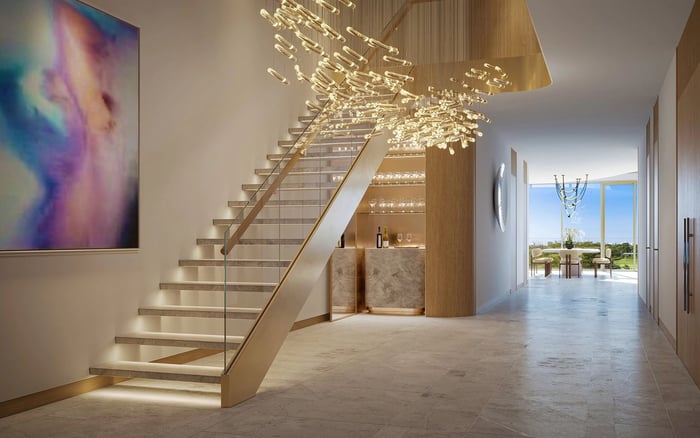
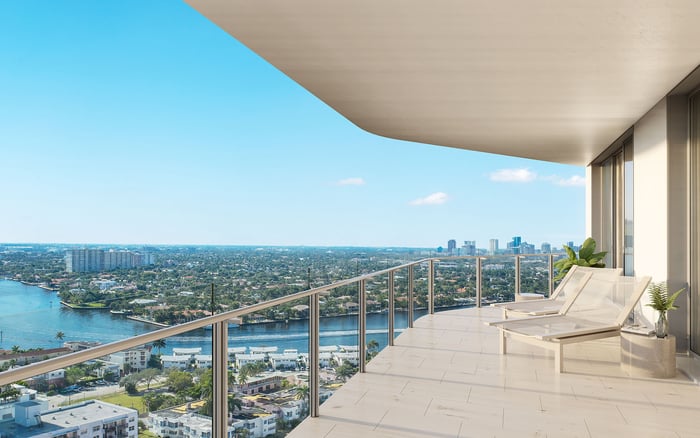
For collectors, a Fort Lauderdale residence is both a home and part of a collection-care system. Storage strategy, light exposure, environmental stability, delivery access, and building rules can materially affect whether a property supports the way its owner acquires, displays, rotates, and protects art.

For an art collector, buying in Fort Lauderdale involves more than assessing views, finishes, and entertaining space. The residence also becomes part gallery, part handling environment, and, at times, part storage facility. Daylight, humidity stability, service circulation, elevator procedures, and wall construction can determine which works live at home and which remain off-site.
Collection care is therefore an ownership issue, not a decorating detail. A beautiful waterfront residence may be compelling, yet its true fit depends on whether art can enter discreetly, hang safely, receive appropriate light, and remain in a stable environment. The strongest purchase is not necessarily the home with the most glass. It is the one whose architecture and operations support the collection’s actual needs.
Begin with the collection, not the floor plan. Identify works intended for permanent display, pieces likely to rotate, and objects requiring more controlled handling. Then assess residences against that program.
This approach can reveal easily overlooked costs: lighting alterations, shading, monitoring, supplemental equipment, specialist installation, professional transport, and off-site storage. It also clarifies whether an additional room is genuinely useful or merely appears suitable in listing photographs. Public marketing may not document UV exposure, humidity consistency, HVAC redundancy, or delivery restrictions, so each point requires property-level confirmation.
The central principle is simple: collection requirements should shape the acquisition brief before an offer establishes the budget.
A hybrid model may suit some collectors: keep selected works in the residence while placing sensitive, seasonal, oversized, or rotating pieces in professional storage. Before signing with a provider, buyers should confirm environmental conditions, security protocols, insurance responsibilities, access procedures, inventory practices, handling standards, and transport arrangements directly.
Storage decisions should reflect the requirements of the particular collection. Availability, services, and terms should be verified rather than assumed during the property search.
Floor-to-ceiling glazing can be both an architectural asset and a curatorial constraint. During a tour, consider not only the available wall area but also the direction and duration of daylight, reflections from water and neighboring glass, existing shade systems, and the relationship between windows and proposed art walls.
A lighting review should distinguish atmospheric illumination from artwork illumination. Ask whether fixtures can be repositioned, whether circuits and controls support a layered plan, and whether the building permits the required work. Here, design and architecture decisions intersect with conservation-minded ownership. The goal is not to eliminate natural light, but to understand exposure and establish a deliberate display plan before installation.
A residence’s comfort does not prove collection-level environmental stability. Buyers should investigate how consistently the home is conditioned, what happens during maintenance or interruption, whether environmental performance can be monitored, and how enclosed rooms behave relative to open living areas.
The inquiry should extend beyond equipment. Large glass elevations, frequently opened terraces, vacant periods, and storage closets can create different conditions within a single residence. Ask qualified art, mechanical, and insurance advisers to assess the particular collection and property. Do not assume that a wine room, interior den, or staff room can double as art storage without review.
In Fort Lauderdale, buyers considering Four Seasons Hotel & Private Residences Fort Lauderdale should request building-specific answers about receiving, elevator reservations, contractor access, and alterations. A project name or service profile alone does not establish suitability for a particular collection.
The same discipline applies when evaluating St. Regis® Residences Bahia Mar Fort Lauderdale, Sixth & Rio Fort Lauderdale, and The Ritz-Carlton Residences® Fort Lauderdale. A collector should map the entire route from the loading point to the final wall and confirm the applicable delivery and installation procedures directly with each property.
Across Broward, this shifts the conversation from amenities to operations. It also aligns lifestyle expectations with practical stewardship: privacy during installation, predictable access for handlers, and sufficient flexibility to rotate a collection without disrupting the home.
Before making an offer, request relevant building rules, alteration procedures, delivery requirements, elevator dimensions, service-access details, and available mechanical information. Have specialists inspect proposed display and storage locations rather than relying on photographs or assumptions.
The resulting budget should separate acquisition cost from collection-readiness cost. Include likely lighting, shading, monitoring, installation, handling, and external-storage expenses. A property requiring careful adaptation may still be the right choice, but the scope should be understood before ownership begins.
Should art requirements influence the initial property brief? Yes. Display, storage, handling, and environmental needs can change which layouts and buildings merit consideration.
Is an extra bedroom automatically suitable for art storage? No. Its light exposure, environmental stability, access, and security should be evaluated for the particular collection.
Can a collector rely on listing photographs to assess wall space? No. Measurements, glazing, door swings, fixtures, circulation, and reflected daylight require an in-person review.
Why consider professional off-site storage? It may support rotation and provide a more controlled option for sensitive, seasonal, oversized, or seldom-displayed works.
How should a buyer evaluate local storage options? Confirm availability, services, environmental conditions, access procedures, and terms directly with each provider.
What should be confirmed with a storage provider? Verify environmental controls, monitoring, security, insurance responsibilities, inventory procedures, access, handling, and transport terms directly.
What lighting questions belong in due diligence? Review daylight exposure, shading, fixture flexibility, controls, electrical capacity, reflected light, and applicable alteration rules.
Why does the delivery route matter? Loading access, elevator size, reservations, turning clearances, and contractor rules can determine whether a work can be installed safely.
Should insurance advisers review the residence? A qualified adviser can identify documentation, security, transport, storage, and occupancy questions relevant to the collection and property.
What is a practical ownership model for some collectors? A hybrid approach can combine considered in-home display with professional storage for rotating or more sensitive works.
For a confidential assessment and a building-by-building shortlist, connect with MILLION.
If branded residences are on your mind — as a home or as an allocation — we would be glad to share what we are seeing, privately.
Begin a quiet conversation