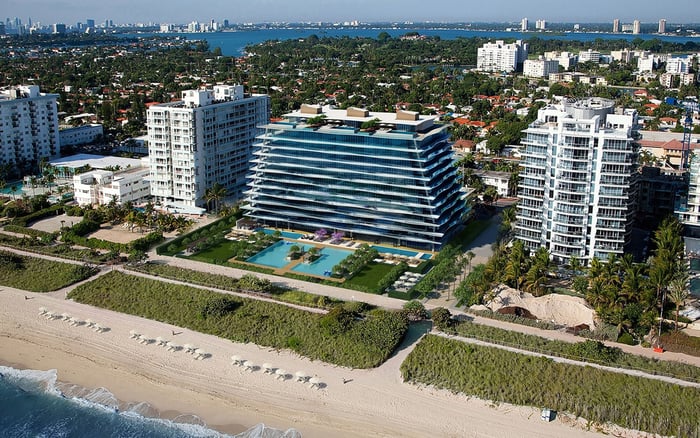
A disciplined Surfside acquisition model separates closing cash from recurring ownership costs, tests association finances beyond headline dues, and considers how insurance, reserves, assessments, and future buyer affordability may influence resale.

A disciplined Surfside acquisition begins by separating three figures: the down payment, the cash required to close, and the recurring cost of ownership. Closing costs are not simply an extension of the down payment. They include one-time fees, taxes, insurance premiums, prepaid items, and other amounts required to complete the transaction.
For a financed Florida purchase, an initial closing-cost allowance of roughly 2% to 5% of the purchase price offers a useful planning range, but it is no substitute for transaction-specific figures. Financing terms, title-policy structure, prorations, insurance, association fees, and assessments can materially alter the final amount. Retaining liquidity beyond the preliminary estimate helps absorb adjustments without compromising the broader acquisition strategy.
This distinction is especially relevant when comparing Surfside opportunities such as Arte Surfside and Ocean House Surfside. Purchase price is only the opening figure. A more revealing comparison includes closing cash, monthly obligations, insurance, assessment payments, and probable capital needs.
Replace a single percentage estimate with five working categories: title and settlement charges, government taxes, prepaid items, financing expenses, and association-related charges. This framework makes it easier to distinguish fixed figures from estimates and identify amounts still subject to timing or negotiation.
Title and settlement charges warrant a line-by-line review. Read the title quote alongside the lender estimate, association disclosures, and proposed settlement statement. Generic calculators can help at the outset, but these transaction documents contain the figures that matter at execution.
Condo buyers may also encounter charges for an estoppel certificate, document delivery, applications, approvals, or transfers, depending on the governing documents. Prepaid insurance belongs in the model as well. A condominium budget should account for HO-6 coverage and, where applicable, flood-insurance requirements associated with coastal South Florida.
Sellers need a parallel exit model. Florida seller closing costs commonly fall around 6% to 10% of the sale price when real-estate commissions are included, although actual costs remain transaction dependent. For a buyer focused on resale, that future friction should be considered at acquisition rather than discovered at disposition.
The monthly association charge is visible, but it tells only part of the story. A low fee is not automatically favorable if reserves are weak or major repairs may require future owner contributions. Review the current budget, actual expenses, reserve information, and meeting minutes together. Their relationship can reveal planned work or financial pressure that dues alone may conceal.
The reserve study warrants particular scrutiny. Consider its date and funded percentage, as weak reserve funding can indicate greater exposure to future special assessments. A special assessment is a one-time or limited-duration charge for expenses not covered by regular budgets or reserves. Its significance extends beyond the immediate payment: repeated assessments can affect future buyer confidence and affordability.
A current estoppel certificate helps identify unpaid balances, approved assessments, and other association amounts potentially due at closing. Request it-along with the governing documents, current budget, reserve information, and prior-assessment records-early enough to inform the offer and due-diligence period.
The same discipline applies across the oceanfront segment, whether the residence under consideration is Fendi Château Residences Surfside or The Surf Club Four Seasons Surfside. Brand, architecture, and service may shape desirability, but association governance and capital planning remain central to durable ownership.
When an assessment has already been approved or billed, establish responsibility in the contract rather than relying on assumptions about customary practice. Subject to negotiated terms, possible treatments include seller payment, a buyer credit, a price adjustment, or an escrow holdback.
The economic comparison should account for both amount and timing. A lower purchase price paired with a near-term assessment may be less attractive than a higher price in a well-funded building. Conversely, a clearly allocated assessment can be manageable when the buyer understands the payment schedule and preserves sufficient liquidity. This is where buyer’s-guide discipline becomes practical: every obligation should have an amount, payer, due date, and supporting document.
Long-term value depends partly on what the next purchaser can afford and readily understand. Model the residence as a future buyer might by combining monthly dues, insurance, assessment installments, and likely capital needs. This broader affordability test is more informative than comparing purchase prices alone.
For investment planning, examine the building’s history of special assessments, reserve shortfalls, and insurance-related cost increases alongside current dues. For pricing and trends analysis, consider whether rising carrying costs could narrow the future buyer pool, even if the physical residence remains compelling.
Maintain a resale-ready file from the outset. Useful materials include the milestone-inspection report, Structural Integrity Reserve Study and funding schedule, three years of association financials, the current budget, two years of insurance declarations, and a five-year assessment history. Organized disclosure can reduce uncertainty when the property returns to market.
The best closing decision balances precision today with optionality tomorrow. Confirm exact figures close to settlement, preserve a cash buffer, and avoid treating low dues as proof of financial strength. In Surfside, elegant ownership is supported by equally elegant underwriting.
Are closing costs the same as the down payment? No. Closing costs are separate and include transaction fees, taxes, insurance premiums, and prepaid items.
How much should a financed Florida buyer initially budget for closing costs? A preliminary range of about 2% to 5% of the purchase price is commonly used, subject to transaction-specific adjustments.
What documents provide the most accurate closing figures? Review the title quote, lender estimate, association disclosures, and proposed settlement statement together.
Which association charges may appear at closing? Depending on the governing documents, charges may cover estoppel certificates, document delivery, applications, approvals, or transfers.
What does an estoppel certificate reveal? It can identify unpaid balances, approved assessments, and other association amounts that may be due at closing.
Why does reserve funding matter? Weak reserves can increase the likelihood that owners will face special assessments for expenses not covered by the regular budget.
Can responsibility for an approved assessment be negotiated? Yes. Subject to the contract, options may include seller payment, a credit, a price adjustment, or an escrow holdback.
Is a low monthly association fee always preferable? No. Low dues can be misleading when reserves are underfunded or major repairs may require future owner contributions.
What insurance should a condo buyer include in the budget? Include HO-6 insurance and, where applicable, flood-insurance requirements for coastal South Florida.
How should resale influence the purchase analysis? Evaluate future buyer affordability by combining dues, insurance, assessment obligations, reserve health, and likely capital needs.
To compare the best-fit options with clarity, connect with MILLION.
If branded residences are on your mind — as a home or as an allocation — we would be glad to share what we are seeing, privately.
Begin a quiet conversation