For an international purchaser, the Kempinski decision extends beyond residence selection. The advertised deposit sequence creates five distinct U.S. dollar funding events, while 60% of the purchase price remains exposed until closing. A disciplined plan connects each conversion to the controlling agreements, preserves flexibility around construction timing and keeps closing costs outside the purchase-price hedge.
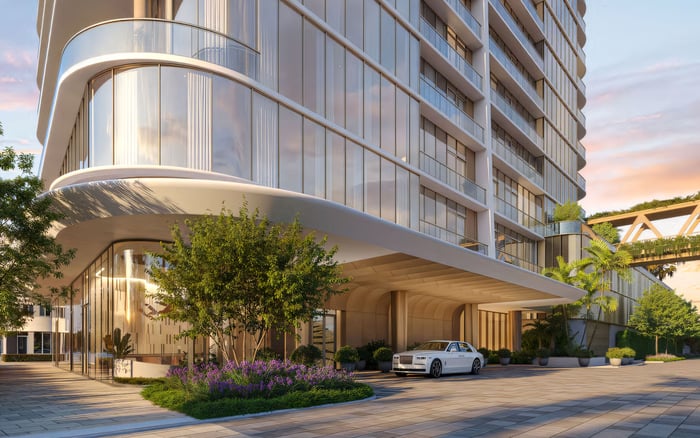
For an international buyer, acquiring at Kempinski Residences Miami Design District is both a property decision and a multiyear U.S. dollar commitment. Planned for 3801 Biscayne Boulevard, the development will comprise two towers, 132 private residences, six townhomes and 17 guest suites reserved for residents. It will also mark Kempinski’s U.S. debut in branded residences.
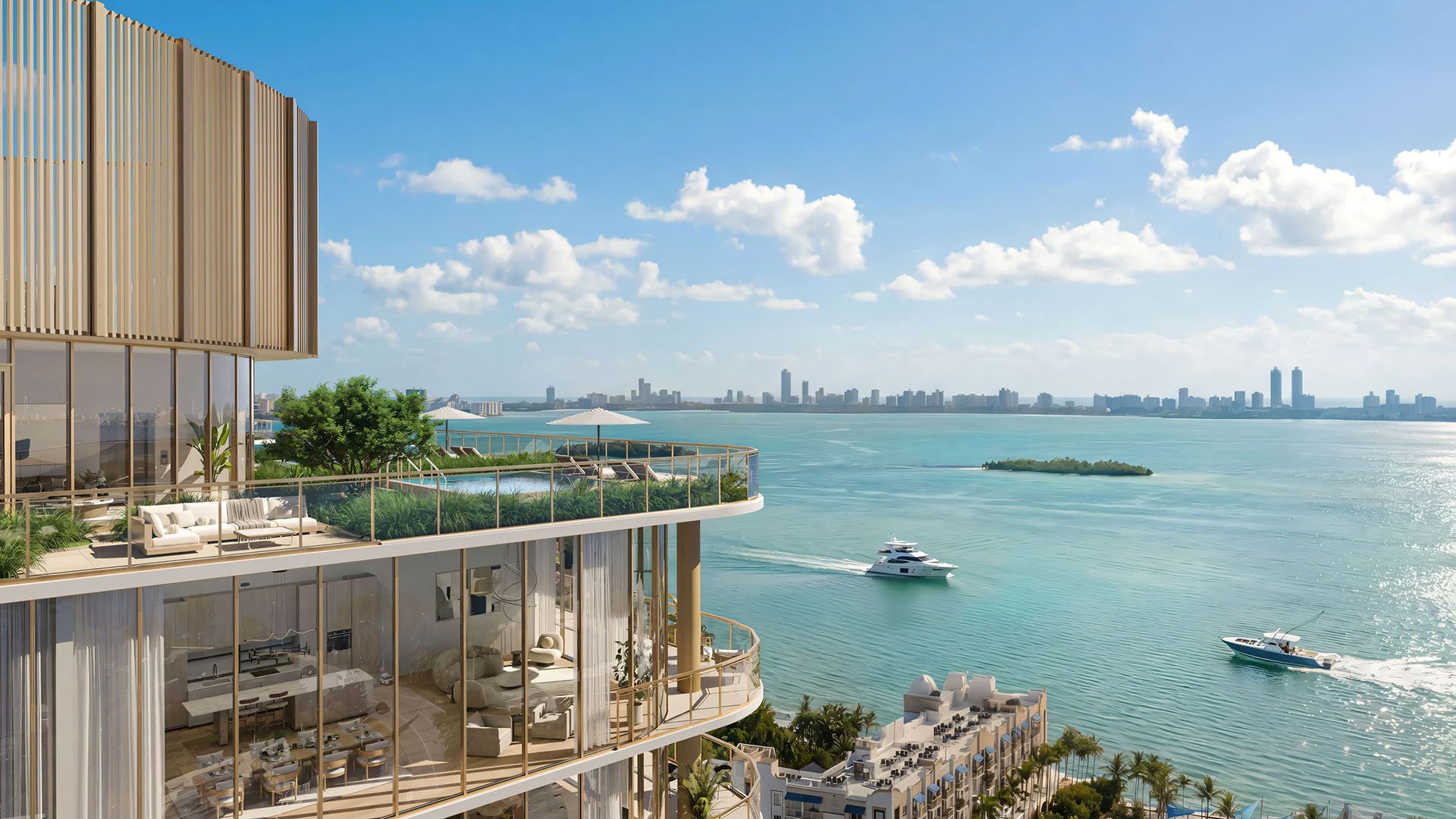
Arquitectonica designed all-corner residences with more than 100 feet of glass, expansive terraces and views toward Biscayne Bay and the Miami skyline. Entry pricing begins at approximately $3.76 million for a north-facing two-bedroom plus den, $4.98 million for a north-facing three-bedroom plus den and $5.64 million for a south-facing four-bedroom plus den. Pricing runs from roughly $1,680 to $1,957 per square foot, depending on the residence.
Those figures establish context, not the buyer’s final exposure. A serious currency plan begins with the contracted purchase price of the selected home, then accounts separately for upgrades, closing costs and a liquidity reserve. This is the essential distinction between browsing buyer’s guides and undertaking transaction-level planning.
The largest currency decision is not the reservation, but the 60% balance waiting at closing.
The schedule begins with a $50,000 reservation, followed by 20% at contract within 60 to 90 days. A further 10% is due at groundbreaking, anticipated in Q2 2027, and another 10% at top-off, anticipated in Q2 2028. The remaining 60% is due at closing, anticipated in Q4 2029.
That sequence should be modeled as five separate USD obligations: reservation, contract, groundbreaking, top-off and closing. The three percentage-based deposits place 40% of the purchase price before closing, leaving the majority for the final transfer.
Before converting the contract tranche, confirm whether the $50,000 reservation is included within the 20% deposit or paid separately and later credited. The reservation agreement, purchase agreement and escrow letter should resolve that question while defining payment deadlines, notice periods, cure rights and permitted changes to milestones.
The same discipline applies when comparing pre-construction opportunities beyond the Design District. Buyers considering Villa Miami in nearby Edgewater or The Residences at 1428 Brickell should evaluate each project through its own controlling documents rather than assume that deposit percentages, notices or completion timing are interchangeable.
On a $3.76 million residence, the percentages translate to approximately $752,000 at contract, $376,000 at groundbreaking, $376,000 at top-off and $2.256 million at closing. These figures precede confirmation of how the reservation credit is applied.
On a $5.64 million residence, the equivalent amounts are approximately $1.128 million at contract, $564,000 at groundbreaking, $564,000 at top-off and $3.384 million at closing. In both examples, the final 60% is the dominant currency-conversion event.
If the buyer’s home currency weakens against the dollar before closing, the domestic-currency cost of that unpaid balance rises. If it strengthens, the cost falls. Once a deposit has been converted and wired in dollars, the principal currency exposure shifts to the unpaid purchase-price balance.
This asymmetry deserves particular attention in an investment analysis. Residence appreciation, carrying plans and long-term use may inform the acquisition thesis, but none eliminates the need to fund a fixed USD obligation when due.
Converting a tranche early fixes its home-currency cost. Leaving it unconverted preserves both favorable and adverse exchange-rate outcomes until payment. Neither approach is universally preferable. The central questions are how much certainty the buyer requires for each obligation and how much flexibility the transaction timeline demands.
A layered plan can treat the near-term contract deposit, the two construction installments and the closing balance differently. A buyer might seek greater certainty for a payment due soon while addressing only part of the much larger closing amount. This approach can reduce concentration at a single exchange rate without locking every dollar to an estimated construction date.
Forwards, options and staged conversions require advice from a regulated FX provider. Any maturity should follow contractual notices, not merely the anticipated Q2 2027, Q2 2028 or Q4 2029 dates. Where relevant, the buyer should ask whether an instrument permits extension, early drawdown or flexible settlement if the project calendar changes.
Geography does not alter this principle. A buyer weighing Design District access against Miami Beach living at The Perigon Miami Beach still needs a project-specific conversion calendar. New-construction commitments are operational obligations, not simply future lifestyle choices.
The transaction documents should identify the escrow holder and define the precise wiring protocol for deposits. Buyers should review those details before sending funds.
Every instruction should be independently confirmed with the escrow holder using trusted contact details. A changed email, revised beneficiary or urgent request warrants direct verification. Currency planning is incomplete if the operational controls around the transfer are weak.
Foreign purchasers should address ownership structure, tax exposure and estate-planning consequences with qualified cross-border advisers before committing funds.
Before signing, establish the exact purchase price and clarify how the reservation is credited. Record every percentage, deadline, notice requirement and cure provision in the executed documents. Then translate each USD obligation into a home-currency scenario at several exchange rates, with particular attention to the 60% closing balance.
Keep anticipated upgrades, closing costs and a liquidity buffer outside the purchase-price tranches. Decide which payments require certainty and which can retain currency flexibility. If using an FX product, ensure that its timing mechanics can accommodate a shifted construction milestone. Independently confirm the escrow holder and wire instructions for every transfer.
Finally, coordinate the Florida real-estate attorney, cross-border tax adviser and regulated FX provider before committing capital. The objective is not to predict currencies perfectly. It is to arrive at each payment date with sufficient dollars, documented authority and enough flexibility to complete without forced decisions.
For discreet guidance on South Florida luxury real estate, connect with MILLION.
If branded residences are on your mind — as a home or as an allocation — we would be glad to share what we are seeing, privately.
Begin a quiet conversationThe advertised reservation amount is $50,000. Buyers should confirm whether it is included in the 20% contract deposit or credited later.
The advertised contract deposit is 20% within 60 to 90 days, subject to the controlling documents.
A 10% groundbreaking deposit is anticipated in Q2 2027, followed by 10% at top-off in Q2 2028.
The advertised schedule leaves 60% due at closing, currently anticipated in Q4 2029.
Closing requires 60% of the purchase price, making it substantially larger than either 10% construction deposit.
They are approximately $752,000 at contract, $376,000 at each 10% milestone and $2.256 million at closing, before reservation-credit treatment.
Not automatically. Any maturity should align with contractual notices and allow appropriate flexibility if timing changes.
The principal currency exposure then remains on the unpaid balance rather than the completed USD deposit.
They should confirm the named escrow holder and independently verify all wiring instructions through trusted contact details.
The article recommends coordinating a Florida real-estate attorney, cross-border tax adviser and regulated FX provider before committing capital.