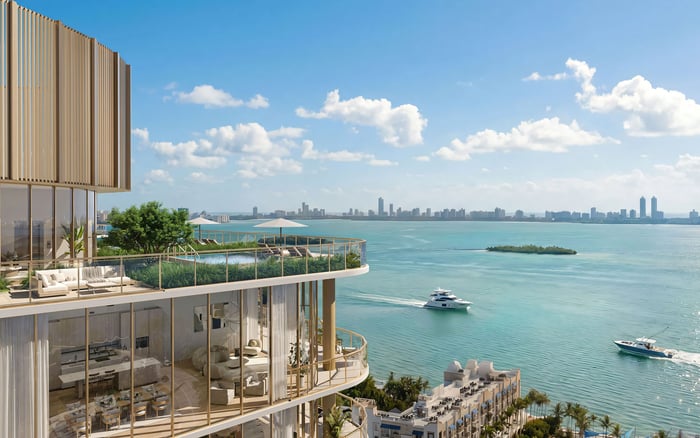
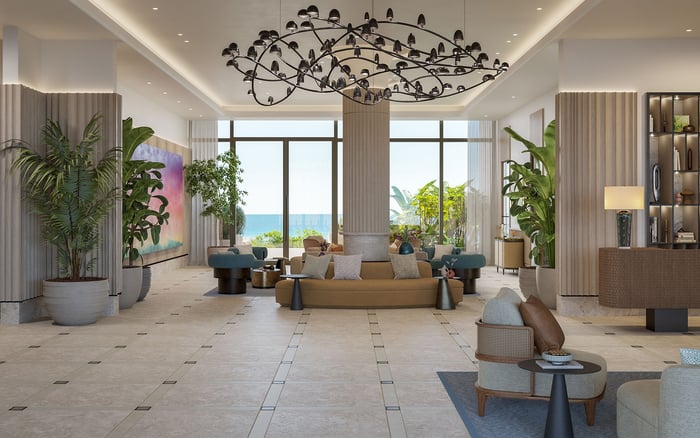
Miami Tropic Residences offers a design-minded second-home proposition, but physical privacy and transactional discretion require separate scrutiny. A buyer-focused review of showing arrangements, qualification requests, digital-document safeguards, and contractual terms.
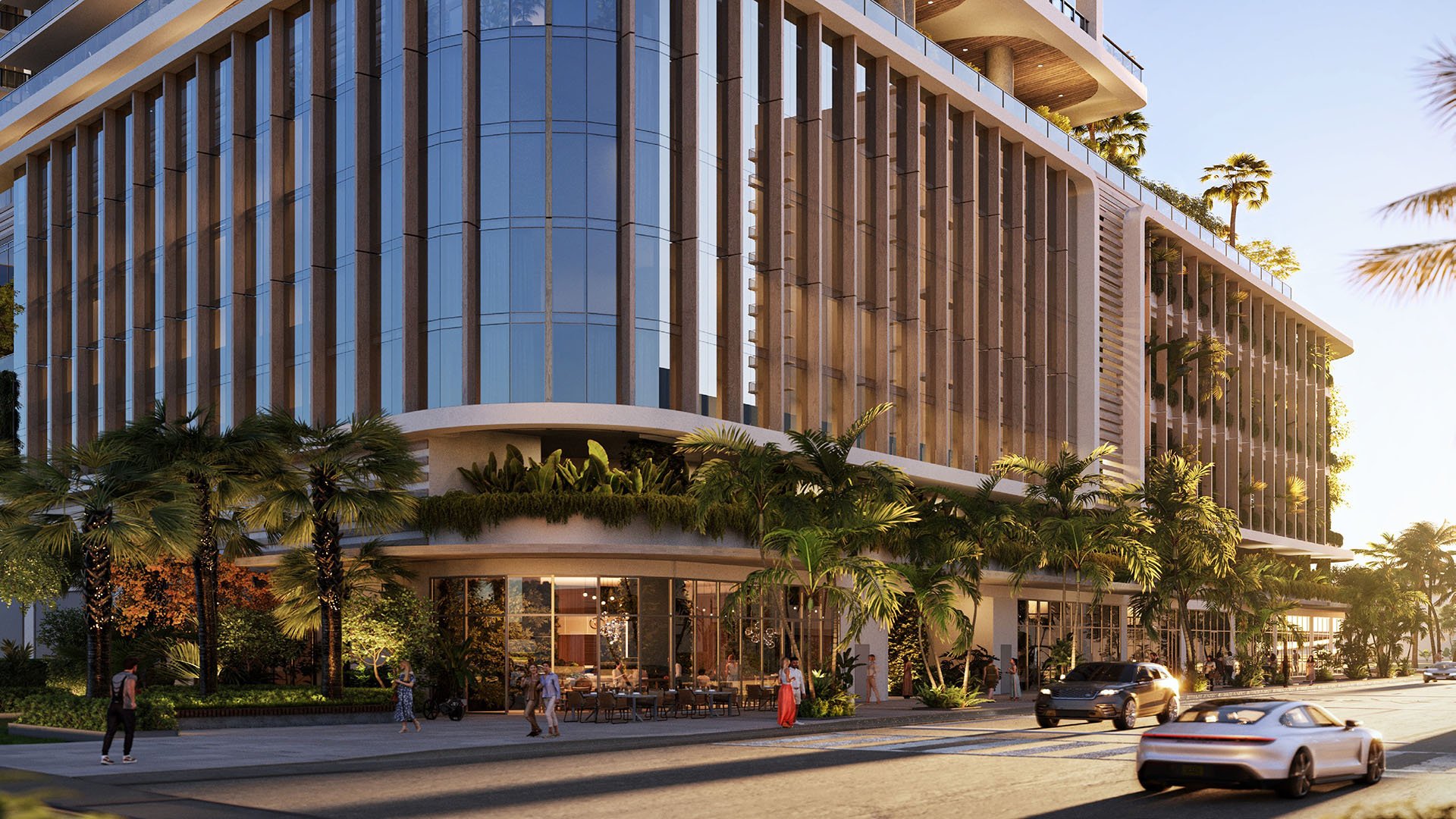
For a second-home buyer, discretion begins before the front door. It encompasses who knows about an appointment, who receives financial records, and what happens to those records if the purchase does not proceed. At Miami Tropic Residences, those questions warrant as much attention as the architecture and culinary identity.
The project is marketed at 3501 NE 1st Avenue, Miami, FL 33137, at the crossroads of the Design District and Midtown, with access to Wynwood. Terra and Lion Development Group are the developers. Plans describe a 49-story tower with 329 residences in one- to four-bedroom layouts.
The residential offering includes floor-to-ceiling windows, spacious balconies, expansive views, and kitchens inspired by chef Jean-Georges Vongerichten. Yet a private terrace is not a confidentiality agreement. Buyers should assess the home’s physical seclusion separately from the handling of identity, appointments, and transaction documents.
“Off-market” language appears in marketing associated with the project, but it does not establish a developer-certified confidential-showing policy. Treat the phrase as a prompt for specific questions, not as evidence that an appointment or purchasing identity will remain private.
Before scheduling, request written confirmation of whether access is appointment-only, whether appointments overlap, and exactly what the visit includes. Clarify who will attend, whether photography or recording is permitted, and whether your name will be shared beyond those arranging the visit. These are proposed safeguards, not confirmed project procedures.
For a buyer coordinating from another city, the practical objective is a clear appointment plan. Ask which visitor details must be supplied in advance, who stores them, and whether the appointment triggers marketing follow-up. If an adviser is arranging access, state your communication preferences explicitly; do not assume that representation automatically ensures discretion.
A useful written response should distinguish what can be accommodated from what cannot. Specific answers about attendance, photography, and visitor-data handling are more useful than verbal assurances of privacy.
Private terraces and semi-private elevators are identified in certain layouts, not established across every residence. For a buyer who values a quieter arrival, the question is whether the floor plan under consideration includes those features and how its access arrangement works.
Request the applicable plan and contractual specifications. Ask the sales team to explain elevator sharing and the relationship between the arrival area and neighboring residences. Do not read “semi-private” as exclusive access without clarification.
Apply the same discipline across a broader shortlist. A buyer also considering Villa Miami should assess each residence’s physical access separately from the confidentiality of its sales process. This is a comparison framework, not a claim that either project offers particular safeguards.
For occasional occupancy, ask how guests, household staff, and service providers would be admitted. Address those operating arrangements directly rather than infer them from an elegant floor plan.
Pre-qualified and pre-approved checkboxes appear in project-related inquiry materials. Their presence does not establish a mandatory developer financial threshold, a minimum net worth, or a requirement to provide full financial records before a showing.
Ask for a stage-by-stage account of the requirements: initial inquiry, appointment, reservation if applicable, and contract. Clarify whether each request comes from the developer, a sales intermediary, or a prospective lender. The purpose and recipient matter as much as the document itself.
Before submitting identity or financial information, ask which records are necessary, whether limited or redacted documentation is acceptable, and who is authorized to review it. If purchasing through an entity, request an explanation of any required entity and beneficial-ownership documentation. These questions should clarify requirements, not encourage avoidance of lawful disclosures.
Eligibility also has a jurisdictional dimension. Purchase eligibility depends on the buyer’s state of residency or jurisdiction, and offers cannot be made where prohibited by law. Resolve that issue early with the sales team and counsel, before circulating sensitive records or planning a purchase around assumed eligibility.
Specific digital-document security controls are not established for this project. Buyers should not assume that secure uploads, multi-factor authentication, restricted permissions, or audit logs are available simply because a transaction is high-value.
Before sending a passport, financial statement, or entity document, request a written explanation of the delivery channel and its protections. Ask whether access can be limited to named recipients, whether downloads can be restricted, and whether access activity is recorded. Clarify whether your attorney can receive access without creating additional document copies.
Retention deserves equal attention. Ask how long records are kept when a purchase does not proceed, who can authorize deletion, and whether access can be revoked when an adviser changes or negotiations end. Distinguish revoking a portal link from deleting copies already downloaded.
These are recommended due-diligence questions, not verified capabilities. The next step is to understand the actual system and have counsel assess whether it meets the buyer’s confidentiality expectations. Until then, avoid sending a comprehensive personal dossier merely to accelerate an introductory conversation.
Advertised starting prices are inconsistent. One schedule begins at approximately $914,000 for one bedroom, $1.7 million for two, $2.6 million for three, and $4.1 million for four. Another lists respective starting figures of $1.1 million, $2.2 million, $3.3 million, and $4.9 million. Neither should be treated as a current quote for a particular residence.
An advertised deposit schedule calls for 10% at contract, 10% 60 days later, 10% 120 days later, 10% at top-off, and 60% at closing. Obtain a dated price sheet and confirm current contractual payment obligations before planning liquidity around that sequence.
Marketing materials are not an offer to sell. The prospectus and applicable purchase agreement govern the purchase. Buyers should review the documents developers must furnish under Section 718.503, Florida Statutes. Counsel should examine those materials rather than rely on promotional summaries or assurances outside the governing documents.
If Cipriani Residences Brickell is also on the shortlist, apply the same questions about appointment privacy, qualification, and document custody. Brand appeal should not substitute for written answers at either address.
Miami Tropic’s location and advertised residential features give buyers a clear starting point. The privacy verdict remains conditional: proceed on documented arrangements, not the implication of an off-market introduction. A compelling second home should withstand scrutiny of both the living experience and the purchase process.
For a considered approach to South Florida second-home ownership, explore MILLION.
If branded residences are on your mind — as a home or as an allocation — we would be glad to share what we are seeing, privately.
Begin a quiet conversationThe project is marketed at 3501 NE 1st Avenue, Miami, FL 33137, at the crossroads of the Design District and Midtown, with access to Wynwood.
Terra and Lion Development Group are the developers of Jean-Georges Miami Tropic Residences.
The planned program is described as a 49-story tower with 329 residences and one- to four-bedroom layouts.
No developer-certified confidential-showing policy is established by the off-market marketing language. Request written details about attendance, photography, and visitor-data handling.
Those features are identified in certain layouts, not across every residence. Confirm the features of the specific floor plan under consideration.
No mandatory developer threshold is established by the pre-qualified and pre-approved inquiry checkboxes. Ask which documents are required at each stage and who will receive them.
Yes, eligibility depends on the buyer’s state of residency or jurisdiction, and offers cannot be made where prohibited by law. Clarify eligibility before proceeding.
Ask about secure uploads, multi-factor authentication, named-user permissions, audit logs, retention, and access revocation. These are suggested safeguards, not confirmed project capabilities.
No, published starting prices differ, and the advertised deposit schedule should be treated as indicative. Obtain a dated price sheet and current contractual terms.
The prospectus, applicable purchase agreement, and developer disclosures under Section 718.503, Florida Statutes should guide review with counsel. Promotional summaries should not replace those documents.