A buyer-focused guide to assessing balcony dimensions, furniture fit, wind exposure and seasonal comfort at Frida Kahlo Wynwood Residences, with a practical checklist for unit-specific verification.
A balcony earns its place in a luxury home when it accommodates how its owner actually lives. Morning coffee, a quiet reading chair and dinner outside place different demands on the same footprint. At Frida Kahlo Wynwood Residences, the essential question is not simply whether a home has outdoor space, but whether that space supports your intended routine.
Begin with the exact residence, its current plan and any outdoor area attached to that plan. Do not assume balcony availability or configuration from another home's presentation.
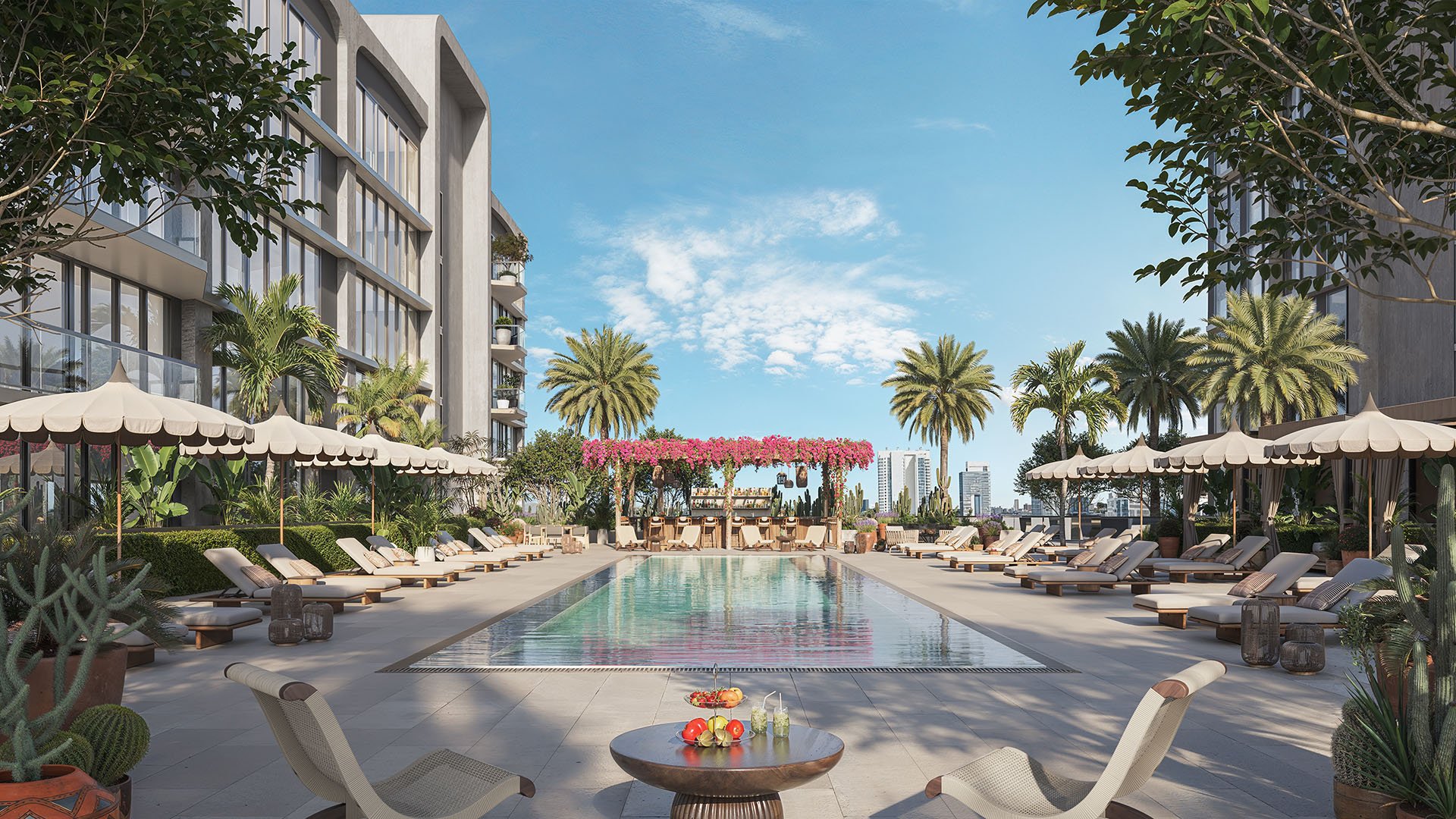
Treat a rendering as an introduction to the design, not proof of your home's dimensions, railing treatment or exposure. This checklist is a verification framework, not confirmation of a particular residence's specifications or outdoor comfort.
Exterior square footage describes area, not shape. Two outdoor spaces with similar totals can offer very different furnishing possibilities. A long, narrow footprint and a more compact rectangle do not accommodate chairs, tables and circulation in the same way.
Request a current dimensioned plan showing clear depth and width. Measurements should identify the usable space between finished surfaces and the inside face of the railing, including any changes in depth. Locate doors, columns and other features that could interrupt a furniture arrangement.
Then test actual pieces to scale. A dining chair needs room to be occupied and moved, not merely parked beneath a table. A lounge chair should not obstruct the door. Preserve access and circulation before adding a second function.
For buyers also considering 2200 Brickell, apply the same measurement standard to each candidate residence. This is a comparison method, not a claim that the balconies share dimensions or conditions.
Compare interior and exterior areas separately on current residence plans. A larger interior does not necessarily come with a larger outdoor area, and an exterior area total does not establish clear depth, dining capacity or room for simultaneous dining and lounging.
Ask what each exterior measurement includes and whether it represents the usable footprint you intend to furnish. Check presentation figures against the current contract exhibits rather than treating them as interchangeable.
Nor does the word lanai, by itself, establish protection from wind or rain. Evaluate the actual configuration instead of relying on the label.
Choose a primary outdoor activity before comparing plans. If reading is the priority, test a comfortable chair, a side table and access. If meals outside matter most, test the intended table and occupied chairs. Let the layout demonstrate capacity rather than asking the area figure to promise it.
Building height alone does not establish wind conditions at an individual balcony. Neither a floor label nor a compass direction is sufficient evidence of everyday comfort.
Ask whether a wind assessment is available and whether it addresses the specific building, floor, orientation and balcony configuration under consideration. Distinguish structural design information from an assessment of the experience of sitting outdoors. A general assurance about the building is no substitute for an answer about your intended use.
Do not assume north- or east-facing homes are calmer, south- or west-facing homes are windier, or a lanai is necessarily sheltered. Unit-specific comfort must be verified, not inferred from an exposure ranking.
If access becomes available, observe the actual outdoor space under different conditions where practical. A single pleasant visit is useful, but it does not establish year-round performance. For a pre-construction purchase, keep unresolved comfort questions explicit in the decision rather than treating them as settled advantages.
Year-round use depends on more than a furniture plan. Ask how direct sun, overhead shade and rain exposure relate to the hours you expect to spend outside. Breakfast and late-afternoon reading call for separate assessments.
Request confirmation of the unit's orientation, overhead conditions and any proposed awnings. A neighboring home's image is no substitute for documentation of your own residence.
Confirm the proposed railing or balustrade treatment for the selected residence before judging enclosure or planning furniture around a rendering.
The same discipline applies when evaluating Casa Bella by B&B Italia Downtown Miami alongside a Wynwood purchase: compare documented details for each home, not the atmosphere of presentation images. Design appeal and practical outdoor use deserve separate consideration.
If a residence is described as fully finished and furnished, do not treat that description as confirmation of a particular outdoor furniture package. Obtain a written schedule identifying what, if anything, is included for the balcony or lanai of your selected home.
Before committing to a furnishing concept, request:
The current dimensioned residence plan and corresponding contract exhibit.
Confirmation of clear outdoor depth, width, door operation and fixed obstructions.
A schedule of included outdoor pieces, with dimensions where available.
Written rules for umbrellas, screens and other proposed additions.
Requirements for securing or storing furniture, including the intended storage location.
Ask the sales team to reconcile any differences between presentation plans and contract documents. Confirm the current design and floor-labeling convention rather than inferring your home's position from a general building description.
Have your adviser review how the documents address permissible changes. The objective is to understand what is specified, what remains variable and what each means for your intended layout.
Review the documented shared amenity offering alongside private outdoor space, while recognizing that shared recreation cannot replace a balcony if privacy is central to your routine.
A smaller outdoor area may suit a carefully defined purpose. A larger one still requires a workable furniture arrangement and acceptable exposure. The strongest buying decision separates three questions: what physically fits, what the building permits and what conditions are likely to feel comfortable.
Choose the residence whose documented outdoor space best supports your priorities, without assigning a premium to unverified year-round use.
For a considered approach to your South Florida residence search, connect with MILLION.
If branded residences are on your mind — as a home or as an allocation — we would be glad to share what we are seeing, privately.
Begin a quiet conversationBalcony availability is not established here for every residence. Confirm the outdoor space attached to the specific home you are considering.
Exact clear depths are not established here. Request the current dimensioned plan and contract exhibit for your chosen residence.
Not by itself. Furniture fit depends on clear depth, width, door operation and room for occupied chairs and circulation.
Not necessarily. Compare the documented interior and exterior areas separately, then test furniture against the usable outdoor dimensions.
No orientation can be identified as the calmest from the information established here. Ask for an assessment addressing the specific residence and its balcony configuration.
No. Height alone does not establish wind conditions or comfort at an individual balcony.
No. The lanai designation alone does not demonstrate protection from wind, sun or rain.
Do not assume that a fully furnished description includes balcony furniture. Obtain a written schedule of outdoor inclusions for the selected home.
Do not assume these additions are permitted. Request written building rules and requirements for securing or storing outdoor furniture.
Review the documented amenity offering alongside your private outdoor priorities. Shared recreation is not an automatic substitute for a balcony if privacy is central to your routine.