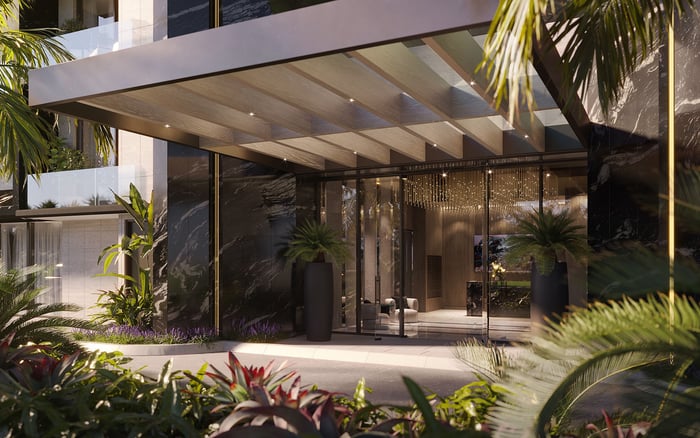
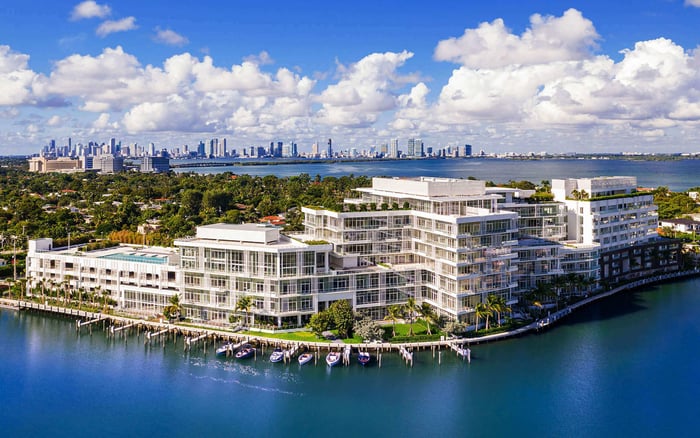
Apogee’s marina-side address is only the beginning of a yacht owner’s due diligence. Verify tender landing rights, crew credentials, service routes, refrigerated deliveries, and garage permissions before treating the residence as a seamless shoreside base.
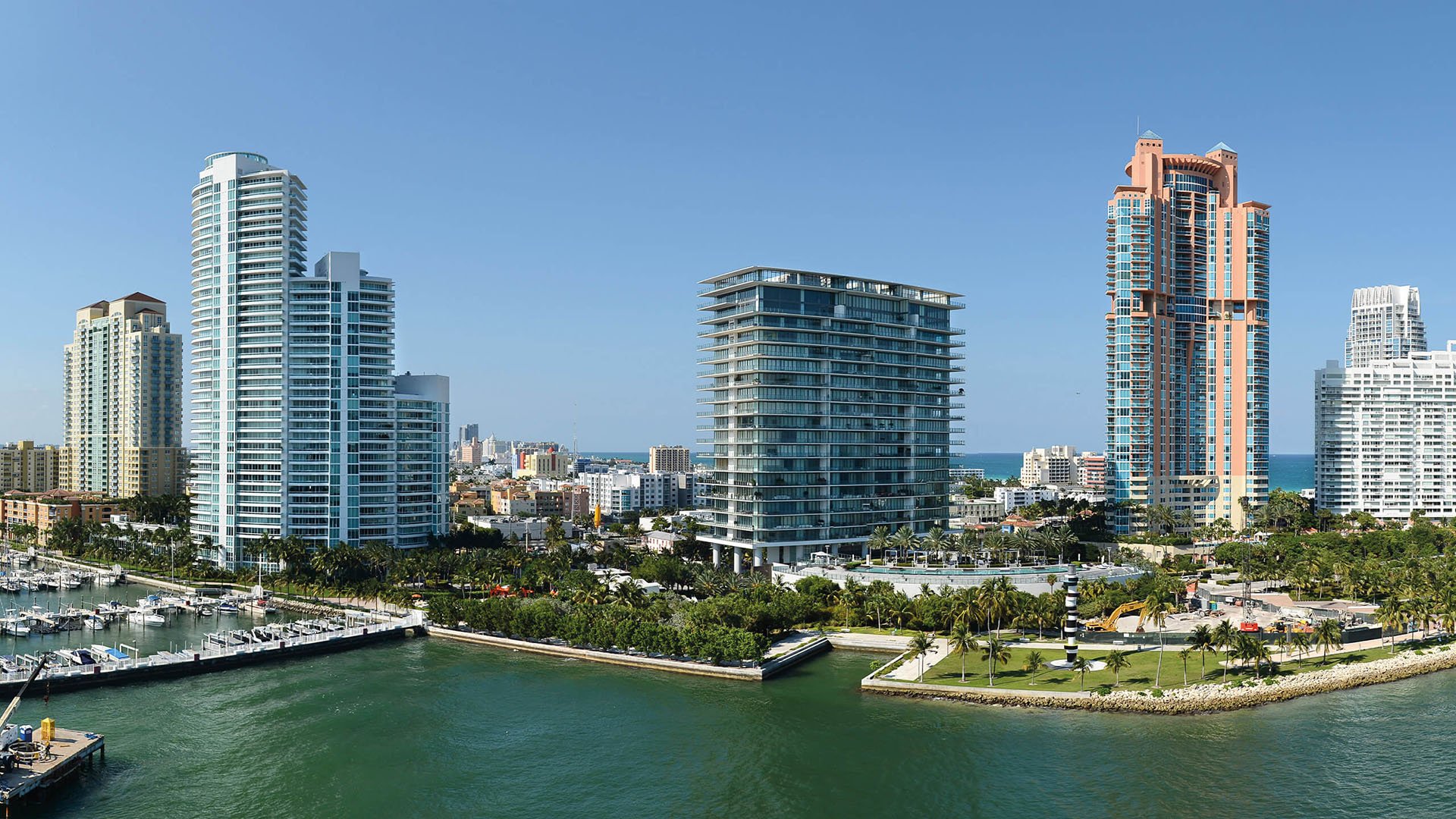
For a yacht owner, the most revealing part of a residence tour may be the journey to the front door. At Apogee South Beach, the address-800 South Pointe Drive-places the building in Miami Beach’s South of Fifth neighborhood, beside Miami Beach Marina. That setting warrants a close examination of the connection between boat and residence.
The residential proposition is distinctive: four residences per floor, flow-through layouts, and private elevator foyers. Yet those features do not establish tender landing rights, a secured marina connection, or permission for crew to move through the building as residents do.
Treat the purchase as two connected investigations: the marina arrangements that bring people ashore and the condominium procedures that take them upstairs. Proximity is a location advantage, not an access agreement. Obtain current written answers from marina personnel and condominium management before making either part essential to the purchase decision.
Start with the vessel and the proposed landing arrangement. Ask the marina to confirm whether your tender may land, where passengers may disembark, and whether a suitable berth is available. Have your captain submit the vessel’s dimensions and draft rather than rely on a general assurance that access should work.
Request confirmation of gate credentials, permitted access hours, and after-hours procedures. Establish whether owner, crew, and guest access require separate authorizations. Do not treat ownership at Apogee as evidence of deeded slips or resident tender privileges.
Then walk the actual route from the proposed slip to the building entrance. Assess gates, crossings, weather exposure, luggage handling, and the practicality of moving supplies. A pleasant daytime stroll does not resolve the logistics of a late arrival. If Continuum on South Beach is also on your shortlist, apply the same route test independently rather than carry assumptions from one address to another.
Apogee’s main lobby is reserved for residents and guests, with a service elevator designated for delivery personnel. That distinction raises an important buyer question: how does management classify a captain, steward, chef, or temporary crew member visiting the residence?
Request written rules covering registration, identification, elevator assignment, owner authorization, and overnight access. Distinguish between a crew member accompanying you, arriving ahead of you, and entering while the residence is unoccupied. Each scenario needs a clear answer.
Private elevator foyers support a discreet arrival but do not explain who can authorize access to a particular floor. Advertised fingerprint entry likewise does not establish programmable crew permissions or a revocation process. Ask management to demonstrate credential issuance and cancellation, including how promptly access can be removed after a staffing change. Confirm who handles access problems outside normal management hours.
A service elevator is a starting point, not proof that a particular provisioning operation is permitted or practical. Tour the delivery entrance and follow the full route to the residence with management. Ask your captain or household manager to join the inspection.
Verify loading arrangements, vehicle stopping locations, elevator door openings, internal dimensions, weight capacity, and booking requirements. Establish permitted delivery hours and whether suppliers need advance registration. Assess fit using the dimensions of your actual carts and containers.
Clarify whether building personnel merely admit a delivery or are authorized to receive and move it. Full-service concierge and 24-hour valet are advertised services, but neither establishes a dedicated provisioning desk or guaranteed delivery coordination. Identify who assumes responsibility at each handoff, especially when the owner is absent. The objective is a repeatable procedure, not an improvised favor on arrival day.
Refrigerated provisions deserve their own checklist. Ask who may accept perishables, where they can wait, whether refrigerated holding exists, and how recipients are notified. If the building does not confirm a suitable holding arrangement, plan a direct handoff with your household team rather than assume concierge can preserve the cold chain.
Discuss delayed deliveries as well as scheduled ones. What happens if a supplier arrives outside permitted hours, the service elevator is unavailable, or crew cannot reach the residence? Seek a defined response and a named point of contact.
Garage staging requires separate approval. A privately enclosed parking space should not be treated as unrestricted storage for food, equipment, or vessel supplies. Confirm permitted items, duration, and applicable restrictions before building a provisioning routine around it.
Residences have privately enclosed two-car garages on the parking levels, with valet available for additional cars. Inspect the garage assigned to the residence under consideration, including its entrance, clearance, and usable configuration.
A specific penthouse offering has advertised an air-conditioned 2.5-plus-car garage with temperature-controlled wine storage. That is a residence-specific configuration, not a building-wide promise. Verify the equipment and permitted use in the actual property.
For provisioning vehicles, establish whether vans are accepted and where unloading may occur. Ask about additional-valet charges and trailer restrictions without assuming trailer storage is available. If temperature-sensitive supplies are part of your routine, do not equate wine storage or air conditioning with an approved receiving facility.
Apogee’s 11-foot-deep balconies with outdoor kitchens offer an appealing setting for entertaining ashore. Sound-resistant impact glass and noise-dampening construction between floors are also features of the residences. Neither guarantees silence from marina or street activity.
Visit the residence at times that reflect your intended use. Listen with balcony doors open and closed, and assess whether the outdoor space feels comfortable during the hours you expect to entertain or rest.
Inside, test the technology rather than rely on its original description. Advertised AMX panels provide access to security, valet, spa, and other building services, but current functionality needs unit-level confirmation. Have the relevant controls demonstrated and clarify which requests still require direct contact with staff.
Ask on-site management to walk through a specific scenario: an after-hours arrival involving the owner, two crew members, luggage, and refrigerated provisions. Require an explanation of the marina gate, building entrance, crew authorization, elevator route, receiving arrangements, and any charges or advance bookings.
Keep the marina’s confirmations separate from condominium permissions, then check that the two arrangements work together. Request current rules and written clarifications for any feature essential to your intended use.
When weighing Apogee against Five Park Miami Beach, compare documented operating arrangements rather than assumed service levels. For the serious buyer, the decisive luxury is knowing that the journey from vessel to residence will work under the conditions that matter.
For a discreet, residence-specific perspective on your South Florida search, connect with MILLION.
If branded residences are on your mind — as a home or as an allocation — we would be glad to share what we are seeing, privately.
Begin a quiet conversationApogee is at 800 South Pointe Drive in Miami Beach’s South of Fifth neighborhood, beside Miami Beach Marina.
The building’s location does not establish resident tender privileges or deeded slips. Obtain separate written confirmation of landing rights and berth availability from the marina.
Confirm landing authorization, vessel dimensions and draft limits, gate access, and after-hours procedures. Walk the route from the proposed slip to the residence entrance.
The main lobby is described as reserved for residents and guests, while delivery personnel use a service elevator. Management must clarify how crew are classified and which entrance and elevator they may use.
Advertised fingerprint entry does not establish crew-specific permissions or credential-revocation procedures. Request a demonstration of authorization and cancellation for the residence.
Inspect the delivery entrance, loading arrangements, and service elevator dimensions and capacity. Confirm supplier registration, booking requirements, delivery hours, and responsibility for receiving goods.
Refrigerated holding is not established by the advertised services. Confirm whether it exists, who receives perishables, and how delayed deliveries are handled.
A privately enclosed garage does not establish unrestricted storage or staging permission. Obtain management approval for the proposed items and use.
Residences are described as having enclosed two-car garages. An air-conditioned 2.5-plus-car garage with temperature-controlled wine storage is a specific penthouse configuration, not a building-wide standard.
Ask management to explain an after-hours arrival involving crew, luggage, and refrigerated provisions. Confirm every handoff from marina access through delivery to the residence.