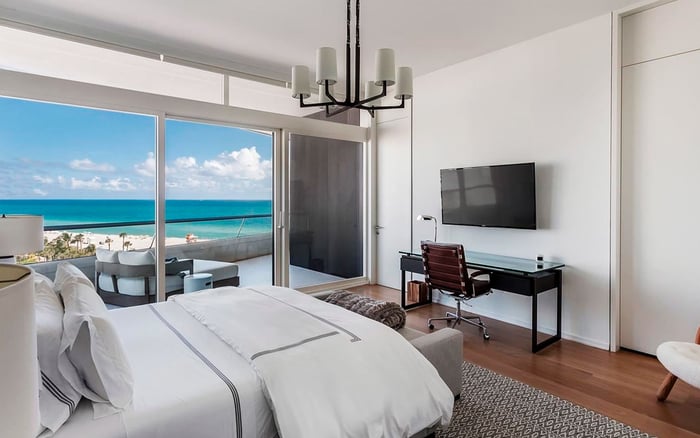
For buyers considering 619 Residences and Five Park Miami Beach, pet permissions, disability-related accommodations and seasonal leasing require separate reviews. Written rules, rather than hospitality expectations or public listing descriptions, should guide the decision.

A South Florida residence should accommodate the rhythms of its owner’s life: winter arrivals, extended absences, visiting family and, often, an animal companion. For buyers considering 619 Residences by Foster + Partners + Nobu Hospitality and Five Park Miami Beach, that fit deserves the same attention as a floor plan or view.
Three questions require separate answers: whether an ordinary pet is permitted, how a disability-related animal accommodation is handled, and whether the intended occupancy or rental pattern is allowed. A favorable answer to one does not resolve the others. Nor does a hospitality name establish residential pet services, accommodation procedures or rental flexibility.
Before committing, define the intended ownership pattern. Identify the animals that will accompany the household, whether guests may bring animals, and whether the residence will remain private or be leased during absences. Those details turn a broad lifestyle conversation into a focused document review.
Five Park’s publicly described pet rules conflict: pets are allowed with possible restrictions; a maximum weight of 20 pounds may apply; or pets are prohibited while service animals are welcomed under applicable law.
None of these descriptions constitutes a complete, association-confirmed policy. The 20-pound figure, in particular, remains unconfirmed and is not a reliable basis for deciding whether a household’s dog can live in the building.
Request the current governing documents, adopted animal rules and applicable amendments. Ask management to identify the provisions covering animal count, species, weight, breed, registration and any ordinary pet charges. Establish whether owner, tenant and guest animals are treated differently. The response should address the specific residence and intended use, not simply repeat “pet-friendly.”
If an animal’s presence is non-negotiable, resolve its eligibility before relying on the purchase to support that lifestyle. Have counsel reconcile any written management response with the governing documents and applicable law.
At 619, treat pet permissions, pet-care services, assistance-animal procedures and leasing terms as separate questions requiring written answers. Do not import Five Park’s possible restrictions or assume that a hospitality brand’s practices elsewhere govern a privately owned residence.
Ask which documents establish the residential rules and whether the supplied provisions are proposed or currently in effect. If pet care matters, distinguish permission to keep an animal from any service arrangement. Ask whether a contemplated service is included, separately contracted or not part of the residential offering.
Apply the same discipline to a broader search involving Setai Residences Miami Beach. Compare each property’s written residential provisions independently. A recognizable hospitality identity does not establish equivalent animal or leasing policies.
An ordinary pet policy is not the correct framework for every animal. Miami Beach defines a service animal through training to perform work or tasks for a person with a disability. Under that definition, a service animal is not a pet; emotional support, comfort or companionship alone does not constitute trained work or tasks.
Housing protections use the broader category of assistance animals. This can include animals providing disability-related emotional support as well as those performing work or tasks. A qualifying housing accommodation generally requires an exception to a no-pets policy, without ordinary pet fees or pet deposits. Ordinary pet breed and weight restrictions generally cannot be applied to a qualifying assistance animal.
These housing protections are distinct from ADA public-access rights. An emotional-support-animal housing accommodation does not establish unrestricted access to every amenity or public-facing space. Ask how residential common areas and any separately operated spaces are addressed, and have counsel review the relevant legal distinctions.
Accommodation does not remove conduct requirements. A specific animal presenting a direct threat or substantial property-damage risk that cannot be reduced or eliminated through reasonable accommodation may be denied. Miami Beach’s service-animal control requirements generally contemplate a harness, leash or tether, with exceptions where the disability or animal’s work requires another effective means of control.
Ask who receives accommodation requests, how they are reviewed and what supporting information may lawfully be requested when the disability-related need is not apparent. Seek a written explanation rather than an informal assurance during a sales conversation.
For an owner who arrives seasonally, clarify how an approved accommodation is communicated to management and relevant staff. Ask how household members, tenants or guests should raise their own accommodation needs and how questions about particular common areas are resolved.
The objective is a discreet, legally appropriate procedure. Have counsel assess requests for documentation, charges or restrictions against current law. Neither project’s procedures should be inferred from general legal principles alone.
A minimum lease term governs rentals, not how many months an owner must personally occupy a residence. Spending a winter in one’s own home and offering it to a tenant for that same winter are different uses requiring different questions.
Five Park’s reported leasing terms include an unconfirmed six-month minimum. If confirmed in the current association documents, that minimum would exclude a 30-to-90-day rental strategy. The reported phrase “one annual tenant” also remains unconfirmed and does not establish the precise lease-frequency rule.
A six-month minimum does not, by itself, mean two rentals are permitted each year. Request the actual provisions governing lease duration, frequency, renewals, approvals and any waiting period. Review 619’s leasing provisions independently rather than carrying these unconfirmed Five Park terms across the comparison.
Building permission is only one layer of rental diligence. Miami Beach prohibits certain short-term vacation rentals through its land-development regulations. Association approval alone does not establish that a proposed rental is lawful.
Confirm the rules applicable to the specific address and proposed arrangement. Do not assume Miami Beach zoning applies to 619. If leasing income matters to the purchase, test the intended calendar against both the building documents and applicable local requirements before underwriting that income.
Create a final review file containing the governing documents, current pet rules, accommodation procedures, guest-animal provisions and leasing restrictions. Keep written answers to household-specific questions alongside those documents, and ask counsel to resolve inconsistencies.
The better fit is the residence whose documented rules support the life you intend to lead. For private seasonal enjoyment, focus on arrival routines, animal permissions and access arrangements. For rental flexibility, give equal weight to lease terms and local legality. Neither objective should rest on a marketing label.
For a discreet conversation about aligning South Florida ownership with your household’s needs, connect with MILLION.
If branded residences are on your mind — as a home or as an allocation — we would be glad to share what we are seeing, privately.
Begin a quiet conversationPublic descriptions conflict, so ordinary pet permission should be confirmed through current governing documents and written management clarification.
No. The figure is a third-party claim and should not be treated as an association-confirmed restriction.
No. Review 619’s animal policies, accommodation procedures and leasing provisions independently.
No. Buyers should distinguish permission to keep an animal from any separately documented pet-care offering.
Service animals perform trained disability-related work or tasks. Housing assistance-animal protections can also cover animals providing disability-related emotional support without that task training.
A qualifying housing accommodation cannot carry ordinary pet fees or pet deposits. Ordinary pet breed and weight restrictions generally cannot be applied either.
Not automatically. Housing protections and ADA public-access rights are distinct, and access questions should be reviewed for the particular space.
An accommodation may be denied if the specific animal poses a direct threat or substantial property-damage risk that reasonable accommodation cannot reduce or eliminate.
No. A minimum lease term governs rentals, not the duration of an owner’s personal stay; Five Park’s publicly described minimum still requires document confirmation.
Not necessarily. The proposed rental must also comply with applicable local requirements, and Miami Beach prohibits certain short-term vacation rentals.