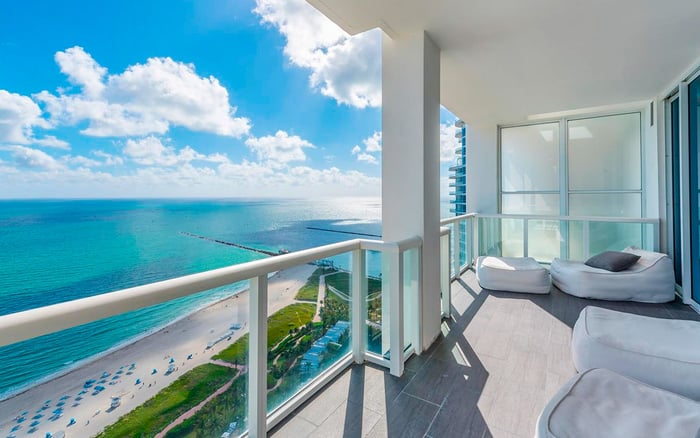
For San Francisco buyers, Surfside offers a discreet oceanfront alternative with a compelling tax backdrop, but the decisive calculation extends well beyond purchase price. This guide frames domicile planning, layered property taxes, association costs, market tiers, and lifestyle fit.
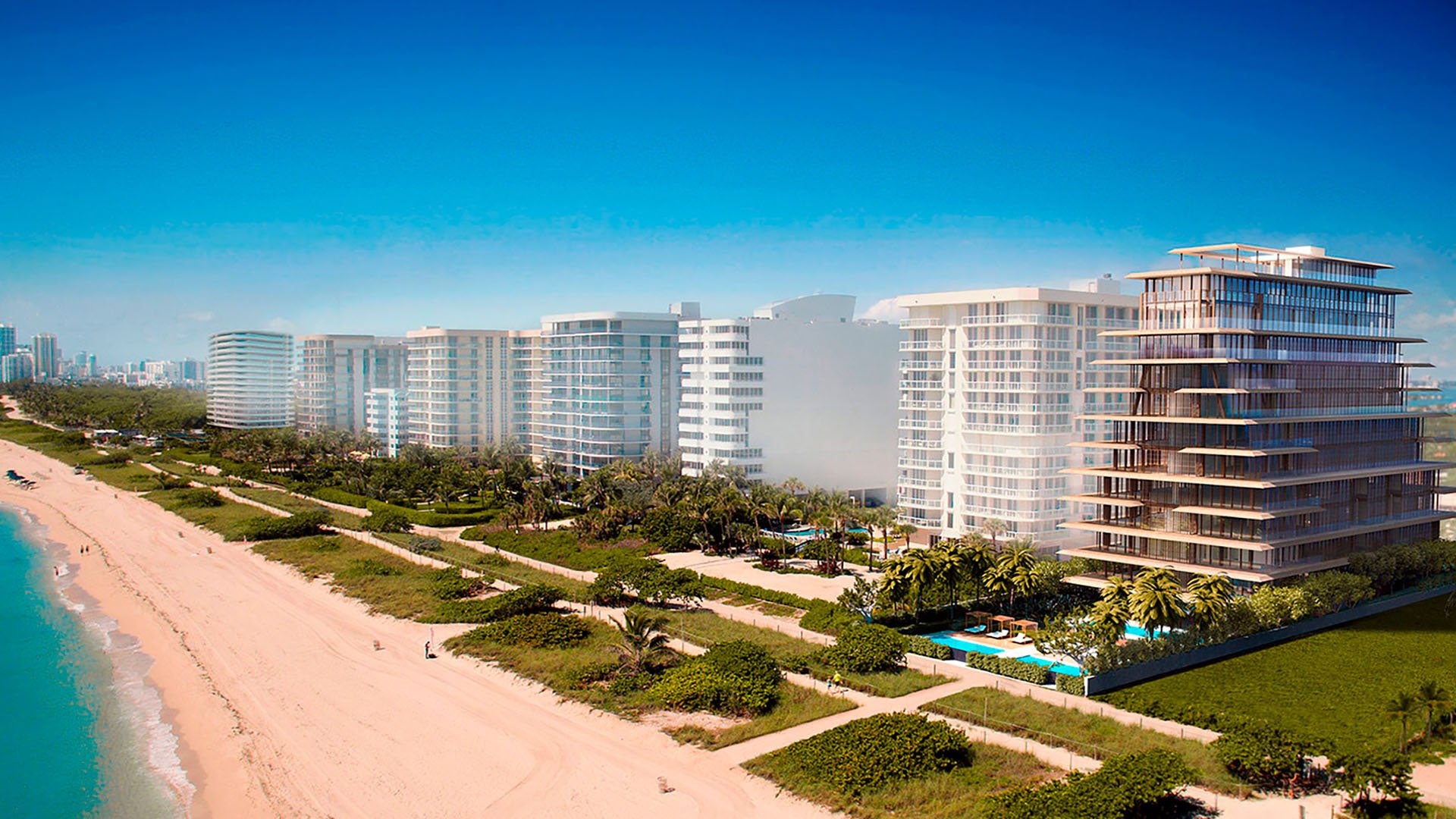
For a San Francisco buyer, Surfside presents an elegant proposition: a compact oceanfront community, a quieter rhythm than central Miami Beach, and Florida’s lack of personal state income tax. Yet purchasing a residence does not, by itself, resolve California tax residency or establish Florida domicile.
The prudent sequence begins with qualified California and Florida tax counsel before changing the facts of daily life. Ownership structure, time spent in each state, business ties, and personal connections may all factor into a professional analysis. The residence should support a defensible plan, not stand in for one.
This distinction is especially important for a second-home buyer who expects to retain meaningful California connections. Potential income-tax savings should be evaluated separately from the property’s annual operating burden and transaction economics.
Surfside adopted an FY 2025 operating rate of 4.0000 mills-equal to $4 for every $1,000 of taxable value-with no voted-debt millage. At that rate, the town portion on $5 million of taxable value would be approximately $20,000 annually.
That illustration does not represent the total bill. County, school, and other overlapping levies must also be included, and taxable value is not necessarily identical to purchase price. Buyers should request a property-specific estimate rather than apply the town rate to a listing price and treat the result as complete.
The town reduced its operating rate from 4.1000 to 4.0000 mills for FY 2025 while anticipating higher revenue as taxable value rose approximately 15.8 percent. The lesson is straightforward: a lower rate does not ensure a lower bill. This discipline belongs in every serious buyer’s guide.
In Surfside, acquisition price is only the opening figure. A credible annual model should combine the complete property-tax estimate, association dues, insurance, anticipated assessments, and the owner’s operating expenses. Financing costs, where relevant, belong in a separate scenario.
Boutique oceanfront buildings can carry substantial association expenses because fewer owners share the costs of staffing, reserves, amenities, beach facilities, and major capital projects. Confirm precisely what monthly dues cover, including valet, beach service, utilities, spa access, and any hotel-integrated services. Similar headline dues can secure markedly different service packages.
The diligence file should include the association budget, reserve funding, structural integrity reserve study, milestone inspection status, assessment history, insurance, and planned capital work. Older properties may offer a lower entry price, but recertification work, reserve shortfalls, or special assessments can materially reshape the ownership calculation.
Rental assumptions likewise require document review. Association policies vary, so mixed personal and rental use should never be modeled on the assumption that short-term leasing is permitted.
Surfside is small, tightly held, and defined by limited inventory and only a few dozen annual sales. Sourcing exact floor plans, exposures, and views may therefore take time. Negotiating leverage can vary sharply by residence rather than follow a neighborhood average.
The market broadly separates older condominiums concentrated around $1 million to $3 million from newer ultra-luxury residences beginning around $5 million, with a distinct $10 million-plus tier. Typical pricing has ranged from approximately $800 to more than $2,500 per square foot, while ultra-prime residences can exceed $3,000 per square foot. These figures are time-sensitive market snapshots, not appraisals.
At the trophy end, The Surf Club Four Seasons Surfside occupies roughly nine acres with about 965 feet of ocean frontage. Mid-2026 asking prices ranged from approximately $5.7 million to $31.9 million, while a late-2025 penthouse transaction at roughly $86 million demonstrated the market’s exceptional ceiling.
Fendi Château Residences Surfside provides another reference point for branded residences: a 12-story building with 58 flow-through residences. Its indicated average asking price was approximately $4,160 per square foot, with mid-2026 asking prices ranging from about $12.75 million to $27.5 million.
Surfside is best understood as low-rise, boutique, residential, and beach-oriented rather than as a dense resort environment. It suits buyers seeking a quiet, walkable base who accept limited nightlife. It is not a direct substitute for San Francisco’s urban intensity.
The comparison set should reflect how the home will actually be used. A buyer weighing privacy and design might inspect Arte Surfside alongside established inventory, while Ocean House Surfside and The Delmore Surfside can broaden the property conversation. Each should be assessed through current documents and residence-specific economics, not reputation alone.
For an investment-led purchase, liquidity warrants attention. Thin supply can make rare residences difficult to acquire, but it can also yield fewer comparable transactions when pricing an eventual sale. A long holding period and a genuine preference for the lifestyle provide a more resilient foundation.
The strongest offer is not necessarily attached to the lowest asking price. Compare at least three scenarios through the same framework: total cash required, complete annual carrying cost, known capital exposure, permitted use, and the residence’s fit with the buyer’s intended calendar.
The result should make sense even before potential state income-tax advantages are considered. If the home works as a residence, the building’s obligations are transparent, and the domicile strategy is separately supported by counsel, Surfside can become a highly considered East Coast counterpart to San Francisco.
Does buying in Surfside end California tax residency? No. A Florida purchase alone does not resolve residency or domicile; seek advice from qualified California and Florida tax counsel.
Does Florida impose personal state income tax? Florida’s lack of personal state income tax may reduce income-tax drag for a relocating California resident, subject to individual advice.
What was Surfside’s FY 2025 operating millage rate? The adopted rate was 4.0000 mills, with no voted-debt millage.
Is the town millage the entire property-tax rate? No. County, school, and other overlapping levies also contribute to the bill.
What is the town tax on $5 million of taxable value? At 4.0000 mills, the town portion is approximately $20,000 annually, excluding other levies.
Why can boutique-building dues be substantial? Fewer owners may share the costs of staffing, reserves, amenities, beach facilities, and major capital work.
Which association records deserve close review? Review the budget, reserves, structural study, milestone inspection status, assessments, insurance, and planned projects.
Can buyers assume short-term rentals are allowed? No. Leasing rules vary by association and must be confirmed in current condominium documents.
What lifestyle does Surfside suit best? It favors buyers seeking a quiet, walkable beach base with residential character and limited nightlife.
Are market price ranges reliable valuation tools? They provide useful context but remain time-sensitive snapshots, not substitutes for residence-specific valuation.
For a discreet conversation and a curated building-by-building shortlist, connect with MILLION.
If branded residences are on your mind — as a home or as an allocation — we would be glad to share what we are seeing, privately.
Begin a quiet conversation