A buyer-focused comparison of advertised workspace amenities at the two Ritz-Carlton residences, with a practical framework for verifying backup power, internet continuity, and privacy before purchase.
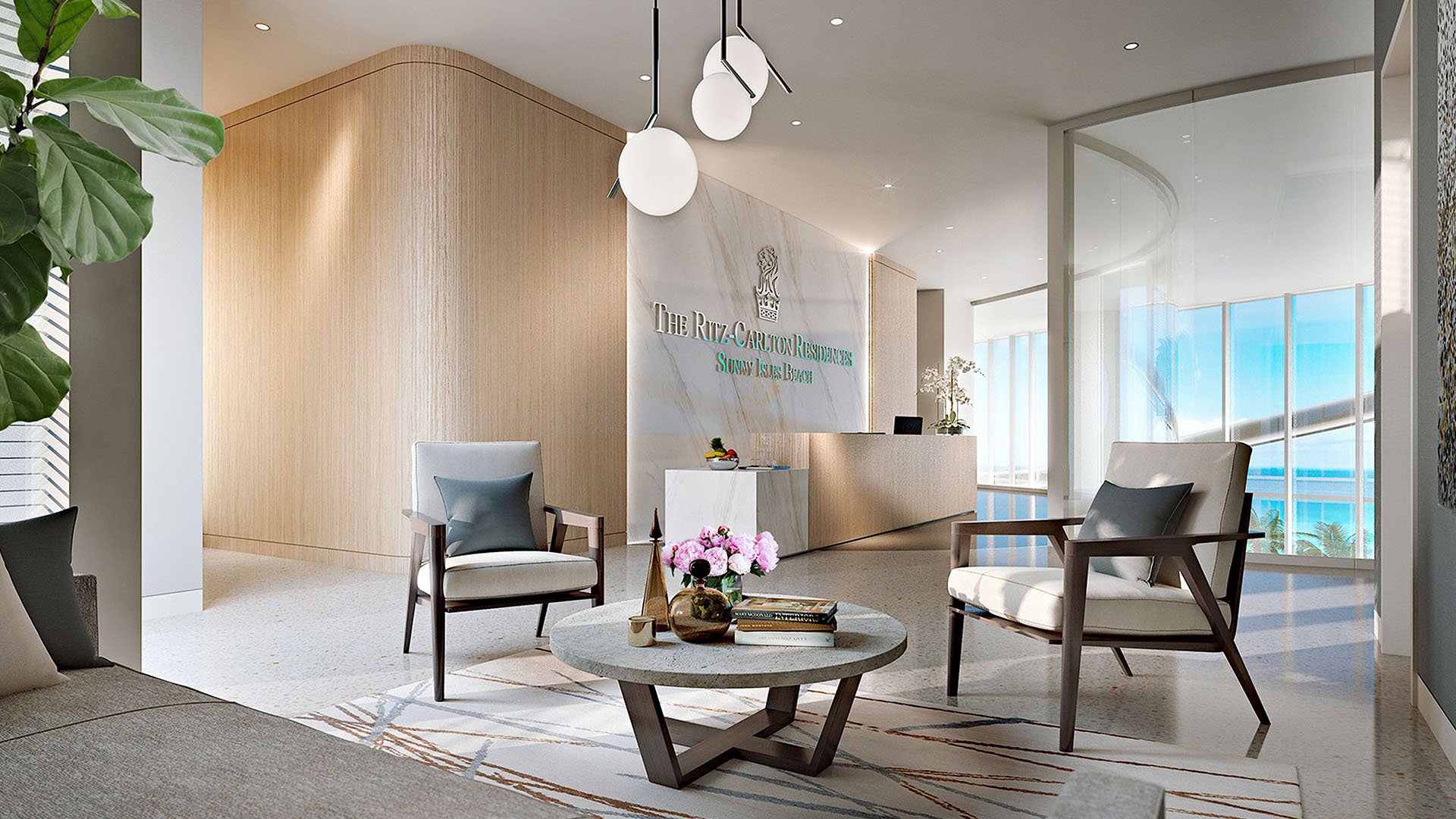
For a buyer whose residence must accommodate confidential calls, international schedules, and uninterrupted decision-making, luxury has an operational dimension. A beautifully appointed lounge can support an elegant working afternoon. It does not, by itself, establish privacy, dependable internet, or the ability to keep working when normal power is unavailable.
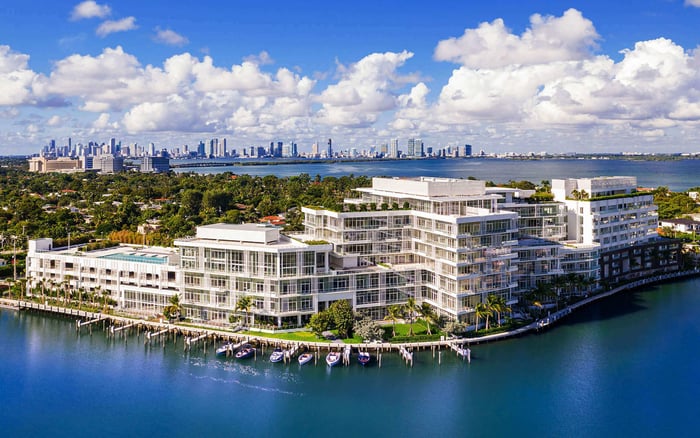
The Ritz-Carlton Residences® South Beach and The Ritz-Carlton Residences® Sunny Isles offer a useful comparison through that lens. Both advertise amenities relevant to residents who work from home, but their descriptions emphasize different settings. South Beach identifies business services within a broader hospitality-oriented program; Sunny Isles names a business center on its private club level.
The distinction is meaningful, but narrow. Neither amenity description establishes superior telecom resilience. A discerning purchase decision separates three questions: where work happens, how private that setting is, and which systems remain functional during an outage.
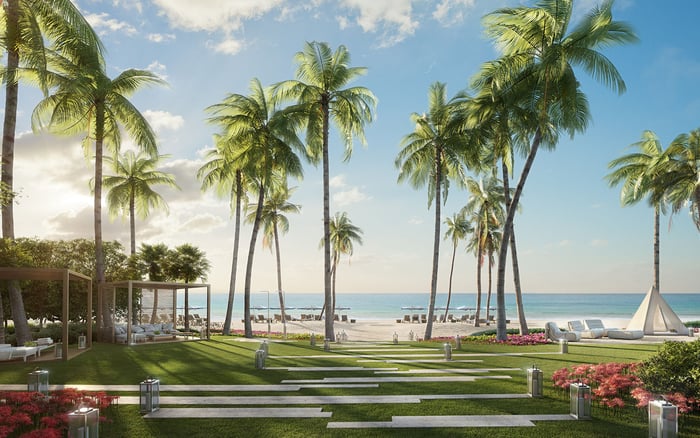
At The Ritz-Carlton Residences® South Beach, the advertised offering includes more than 50,000 square feet of resident amenities managed by The Ritz-Carlton, alongside 24-hour doorman and concierge services. That scale and level of service matter to daily convenience, but neither should be read as a measure of workspace capacity.
The amenity package includes business services, an entertainment lounge, and a chef’s kitchen, as well as a poolside social lounge with multimedia technology. The operative word is social: multimedia capability does not establish that a room is a dedicated office, suitable for confidential conversations, or available for exclusive use.
Private-office counts, conference-room inventory, workstation capacity, and dedicated workspace Wi-Fi specifications remain unspecified. A buyer should ask what business services include, where they are delivered, and whether any enclosed room can be reserved. Treat the distinction between assistance and dedicated space as a purchase question, not a semantic detail.
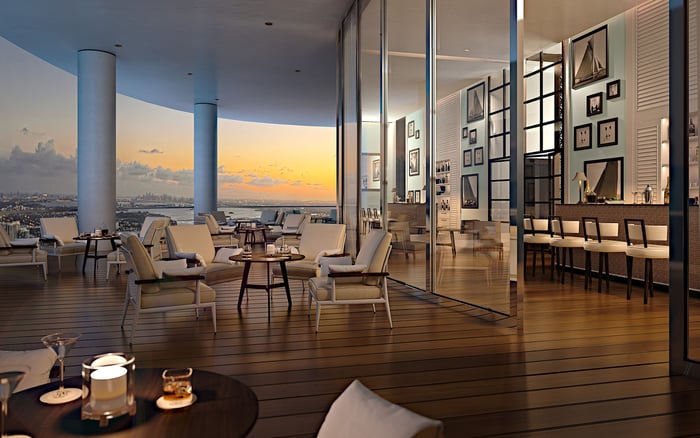
The Ritz-Carlton Residences® Sunny Isles advertises a business center on its private club level. A media room and library provide additional shared settings beyond individual residences. The private club program also includes a lounge and bar, private dining area, preparation kitchen, and guest suites.
For a buyer in Sunny Isles Beach, the named business center offers a clearer starting point for workspace inquiries. It is not, however, proof of enclosed offices, sound isolation, or reliable availability. Enclosed-office counts, conference-room inventory, printing infrastructure, and business-center acoustic treatment remain unspecified.
The advertised amenities also include a private lobby lounge, but private in this context should not be assumed to mean exclusive occupancy or freedom from interruptions. Ask to see the business center during the hours you expect to use it. Confirm whether calls are permitted, whether reservations are available, and whether the library or media room has separate operating rules.
The South Beach hotel must remain separate from the residential comparison. Advertised amenities at The Ritz-Carlton, South Beach hotel include complimentary Wi-Fi, business services, a business center, and an emergency backup power generator. Those hotel amenities do not establish residential generator coverage, supported circuits, or backup power for telecommunications equipment inside a residence.
The same discipline applies at Sunny Isles. Its amenity description does not verify generator-backed business-center internet, emergency-powered telecom rooms, or physically diverse carrier entrances. These are disclosure gaps, not evidence that the systems are absent.
Request a written emergency-load schedule rather than accepting a general statement that a building has backup power. The schedule should address telecom equipment, network-room cooling, business-center outlets, lighting, HVAC, Wi-Fi, elevators, and access control. Ask separately whether any in-residence equipment receives emergency power. A useful answer identifies the supported equipment and spaces; it does not leave the buyer to infer continuity from the presence of a generator.
Connectivity diligence should begin with available carriers and the installation rules for the particular residence. Ask whether more than one carrier can serve the unit and whether service entrances are physically separate. A choice of providers does not confirm separate physical routes.
Next, request outage logs and documented internet availability during generator operation. Ask management to distinguish normal-operation performance from conditions during a power interruption. Any description of backup connectivity should specify whether it applies to the residence, the business center, another shared space, or only selected building systems.
For buyers also considering Setai Residences Miami Beach, the same written questions can keep a broader Miami Beach search consistent. This is a transferable diligence standard, not a claim that another property has equivalent infrastructure. Compare answers to the same questions, not the confidence of different amenity descriptions.
Define the work requirement before judging the room. Someone reviewing documents between appointments has different needs from a resident conducting sensitive negotiations or successive video meetings. Assess the setting against those activities, not merely its furniture or atmosphere.
Request the enclosed-room inventory, reservation policy, operating hours, guest rules, and any limits on consecutive bookings. During a visit, assess speech privacy, background activity, and whether a reserved room is genuinely separated from circulation. Confirm the availability of any printing or meeting equipment you need rather than assuming it accompanies the business-center label.
Then revisit the same space under an outage scenario. Ask whether it remains accessible and functional, including its outlets, lighting, Wi-Fi, and HVAC. Confirm how residents reach it and whether access control remains operational. The objective is a usable working environment, not simply a room that remains nominally open.
On advertised workspace language alone, Sunny Isles is more explicit because it names a business center. South Beach describes business services and multimedia-equipped social space within a substantial amenity offering. Neither description supports a conclusion that one residence provides better internet continuity, more private offices, or stronger generator-backed connectivity.
Before making a decision, assemble written answers on room availability, carrier arrangements, emergency loads, and outage access. Keep confirmed provisions separate from unanswered questions, and distinguish residential systems from hotel amenities throughout. The most compelling fit is the residence whose documented capabilities match your working life, alongside its architecture, service, and setting.
For a discreet approach to matching South Florida residences with your lifestyle and working requirements, connect with MILLION.
If branded residences are on your mind — as a home or as an allocation — we would be glad to share what we are seeing, privately.
Begin a quiet conversationThe Ritz-Carlton Residences® Sunny Isles advertises a business center on its private club level. South Beach lists business services rather than a specifically identified business center.
South Beach lists business services and a poolside social lounge with multimedia technology. Its amenity descriptions do not establish that the lounge is a dedicated office.
South Beach advertises more than 50,000 square feet of resident amenities managed by The Ritz-Carlton, plus 24-hour doorman and concierge services. That figure does not establish workspace capacity.
The supplied amenity description does not specify enclosed-office counts or conference-room inventory. Buyers should request those details directly.
The amenity descriptions do not support ranking either property as more resilient. Carrier routes, emergency power coverage, and outage performance require separate confirmation.
No. The hotel’s generator listing does not establish coverage for the residences, their supported circuits, or in-unit telecommunications equipment.
Request coverage details for telecom equipment, network-room cooling, business-center outlets, lighting, HVAC, Wi-Fi, elevators, and access control. Ask separately about equipment inside the residence.
Ask about available providers, physically separate service entrances, and installation rules. Request outage logs and documented internet availability during generator operation.
Neither space should be assumed to provide exclusive use or freedom from interruptions. Confirm permitted activities, reservations, operating hours, and privacy before relying on it for work.
No. Missing public specifications are disclosure gaps, not proof that backup power, redundant carriers, or private meeting rooms do not exist.