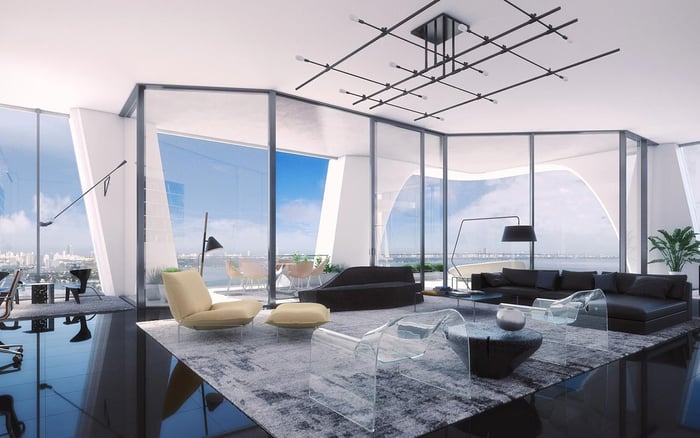
A discreet buyer’s framework for comparing privacy expectations, security technology, and guest screening at The Ritz-Carlton Residences® South Beach and South Flagler House West Palm Beach without assuming protocols that have not been verified at the project level.

For buyers considering The Ritz-Carlton Residences® South Beach and South Flagler House West Palm Beach, the most valuable question is not which address sounds more private. It is which project can document the privacy experience a buyer expects to live with every day.
In South Florida’s ultra-prime market, privacy functions as residential infrastructure. It shapes arrival, guest flow, staff access, package handling, vendor movement, and how confidently a family can occupy a home without feeling exposed. Yet privacy is not created by reputation alone. It is built through documents, physical planning, staffing policy, technology governance, and the daily discipline of building operations.
The two named residences belong in separate due-diligence files. The Ritz-Carlton Residences® South Beach and South Flagler House West Palm Beach may sit together in a buyer’s comparison set, but their privacy, security technology, and guest screening standards should not be merged in the buyer’s mind. A separate project page such as The Ritz-Carlton Residences® West Palm Beach can also be useful context for understanding why similarly named or branded residences still require project-level review.
A disciplined buyer should resist importing assumptions from one project to another. Even within the same broader South Florida luxury corridor, residences can differ meaningfully in resident entry, guest registration, garage flow, staff protocols, and building technology.
For The Ritz-Carlton Residences® South Beach, the brand creates a hospitality context, but it does not automatically answer the operational questions that matter to a privacy-sensitive owner. A buyer should ask what is specific to that South Beach building, what is contractual, and what may be subject to association policy or future management discretion.
For South Flagler House West Palm Beach, the inquiry should be equally project-specific. The project’s West Palm Beach setting may be part of the buyer’s lifestyle analysis, but it does not substitute for governing documents, rules, technology descriptions, and management procedures that control how the residence will function.
A useful internal shorthand may separate the files as Miami Beach and West Palm Beach. Those labels are not conclusions. They are reminders that each asset must be tested on its own terms.
Privacy begins before a resident reaches the front door. Buyers should ask how residents, guests, drivers, vendors, household staff, and delivery personnel are expected to move through the property. The purpose is not to demand theatrical secrecy. It is to understand whether daily life can remain calm, predictable, and discreet.
The most important questions are practical. Is there a written visitor policy? How are guests announced, approved, logged, or declined? Can residents pre-authorize recurring visitors? Are domestic staff, trainers, chefs, nurses, tutors, and dog walkers handled under the same policy as social guests, or under a separate credentialing process? Who can override a denial, and is that override recorded?
Buyers should also ask how privacy is handled during events, holidays, construction in neighboring units, move-ins, and high-traffic periods. A building may feel serene during a private showing and function differently when occupancy and service activity increase. The strongest buildings are not merely elegant when quiet. They remain orderly when busy.
For high-profile owners, another question matters: what happens when an unexpected guest, photographer, fan, vendor, or media figure appears? Without making unsupported assumptions about special screening, a buyer can still ask whether the building has a written escalation protocol for unwanted attention.
Luxury buyers often hear broad references to advanced systems. The stronger approach is to ask what technology is used, who controls it, how data is stored, and what rights residents have in relation to it.
The buyer’s counsel should request clear explanations of access-control systems, camera coverage policies, visitor-management platforms, alarm integrations, vehicle procedures if applicable, and any resident-facing applications. If a sales presentation references a specific system, the buyer should confirm whether it is included in the delivered project, optional, subject to change, or controlled by the association after turnover.
Data governance is now central to privacy. Security technology can protect residents, but it can also create records of movements, guests, staff, and routines. Buyers should ask how long visitor logs are retained, who can access them, whether data can be shared with third parties, how legal requests are handled, and whether residents receive notice of policy changes.
The same scrutiny applies to outages and cybersecurity. A residence may rely on elegant digital tools, but a serious due-diligence process asks what happens if systems fail. Are there manual procedures? Are staff trained for a technology outage? Is there a documented process for software updates and credential revocation when an employee, vendor, or household staff member no longer needs access?
For a new-construction purchase, some operational details may evolve before completion or turnover. That makes written confirmation especially important. Buyers should understand what is promised, what is planned, and what will be determined later by ownership or association governance.
Guest screening can sound defensive, but in a refined residence it is really about preserving quality of life. The objective is to reduce friction at arrival, protect residents from unnecessary exposure, and ensure that staff can distinguish between welcomed guests and uninvited parties.
A buyer should ask whether guest approval is resident-controlled, staff-controlled, or a hybrid. The household may want different rules for family, business associates, children’s friends, medical support, overnight guests, and event staff. The buyer should also ask whether guest information can be entered in advance, whether guests must present identification, and whether the process differs for pedestrians, rideshare arrivals, private drivers, and service providers.
The documents matter. If guest screening is central to the buyer’s decision, the policy should appear in enforceable rules or clearly described management procedures. A verbal description is useful at the showroom level, but it should not be the final basis for an investment decision.
The buyer should also clarify the rental and occupancy framework, if relevant. Even when a purchaser has no intention to lease, the building’s rules around rent, guests, and transient use can affect the resident experience. This is not a prediction about either named project. It is a reminder that privacy is shaped by the entire building culture, not only by one owner’s habits.
The best due diligence brings together three perspectives. The sales team can explain intended positioning and resident experience. Management can explain how the building is expected to operate. Legal counsel can determine what is binding, what is discretionary, and what can change.
Buyers should review condominium documents, association rules, management agreements where available, privacy policies, technology disclosures, and any materials that describe resident services. They should ask what happens after turnover, who has authority to amend rules, and what level of owner vote may be required for major operational changes.
A discreet residence should feel effortless, but its reliability depends on unglamorous details. Who trains the staff? Who audits compliance? What happens when a resident’s personal assistant changes? How are keys, fobs, app permissions, and vendor authorizations revoked? Are owners notified of policy revisions? How are complaints escalated?
This is also where an exclusive-area expectation should be translated into measurable standards. Exclusivity is not simply a neighborhood mood or a brand aura. It is the cumulative result of controlled access, respectful staff culture, resident alignment, and rules that are both clear and enforceable.
The Ritz-Carlton Residences® South Beach and South Flagler House West Palm Beach can both belong on the same shortlist for a sophisticated South Florida buyer, but they should be evaluated as distinct homes with distinct operating realities. The right question is not which one sounds more private. The right question is which one can demonstrate the procedures, technology governance, and guest protocols that match the buyer’s personal threshold for discretion.
For some families, privacy means a quiet arrival and a low-friction guest process. For others, it means tight staff credentialing, limited data exposure, careful visitor logs, and a clear escalation plan for unwanted attention. There is no universal answer. There is only alignment among expectation, documentation, and daily execution.
Should buyers assume The Ritz-Carlton Residences® South Beach has a specific security protocol? No. Buyers should verify privacy, security technology, and guest screening through project-level materials rather than relying on brand assumptions.
Is South Flagler House West Palm Beach the same type of due-diligence exercise? It deserves its own review. The West Palm Beach project should be treated as a separate asset with separate documents and operating procedures.
What should a privacy-sensitive buyer ask first? Ask how residents, guests, staff, vendors, and deliveries move through the property. Then ask which rules are written and enforceable.
Are biometric systems or facial recognition confirmed for either project? They should not be assumed. Any claim about those technologies should be confirmed directly in project-specific materials.
Why does guest screening matter in luxury real estate? Guest screening affects daily calm, resident discretion, and how smoothly legitimate visitors are welcomed while unwanted access is controlled.
Should legal counsel review privacy and security language? Yes. Counsel can distinguish binding obligations from marketing language, management discretion, and rules that may change later.
How should buyers evaluate security technology? They should ask what systems are used, who controls the data, how long records are retained, and what happens during outages.
Can association rules affect privacy after purchase? Yes. Rules, management policies, and turnover governance can influence visitor access, vendor procedures, and technology decisions.
Does a prestigious address guarantee a discreet lifestyle? Not by itself. Discretion depends on documented procedures, staff training, resident culture, and consistent enforcement.
What is the best next step before signing a contract? Request written answers on guest policies, access control, data handling, and rule-change authority before treating privacy as settled.
For a tailored shortlist and next-step guidance, connect with MILLION.
If branded residences are on your mind — as a home or as an allocation — we would be glad to share what we are seeing, privately.
Begin a quiet conversation