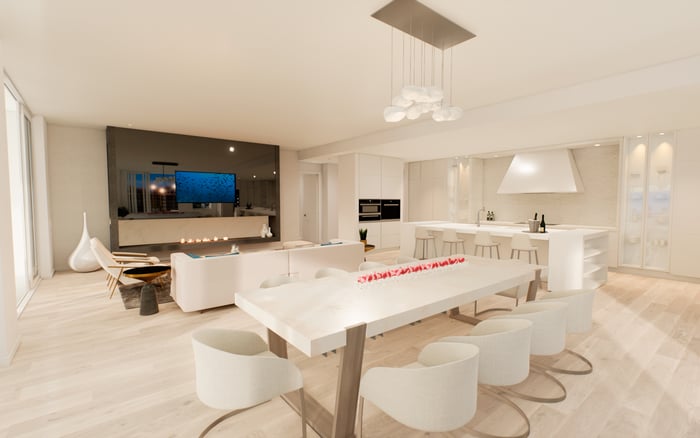
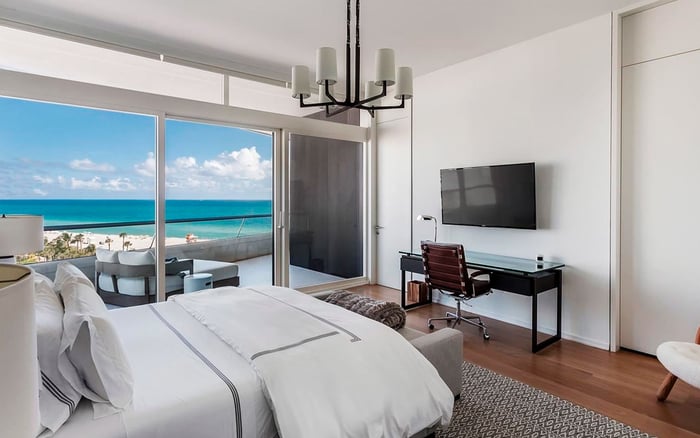
A residence-level comparison of acoustic privacy at two branded addresses, separating published specifications from measured performance and identifying the documents buyers should request before choosing a home.

The most persuasive luxury is often what a residence allows you not to notice: activity beyond the bedroom, equipment above a ceiling or movement along a shared corridor. For buyers considering The Ritz-Carlton Residences® Miami Beach and The Residences at Mandarin Oriental Boca Raton, acoustic privacy deserves the same scrutiny as proportions, finishes and views.
The distinction is between a promising specification and demonstrated performance. At Mandarin Oriental, the stated noise-reduction promise concerns exterior noise. At Ritz-Carlton, the specifications include a variable-refrigerant-flow HVAC system and oversized solid-core doors. Neither set of specifications establishes a verified advantage in sound isolation between neighboring residences.
That is not a finding of inadequate construction. It is a reason to move the comparison from brand identity to the exact home, its surrounding spaces and the documentation available to support a decision. Quiet should be evaluated as a residence-specific quality, not assumed from the address.
Completed in 2019, The Ritz-Carlton Residences® Miami Beach contains 110 condominium residences with one- to five-bedroom plans. Approximately 60 floor-plan variations range from roughly 1,700 to more than 10,000 square feet. That variety makes exact-plan diligence especially important: a building-level feature list cannot answer every residence-level question.
The VRF HVAC specification identifies the system type, but does not disclose measured operating sound levels, residence-specific fan-coil locations, refrigerant-pipe routing, vibration-isolation details or vertical-riser adjacency. Buyers should ask where equipment and services sit relative to sleeping and working areas, rather than treating the HVAC designation as a guarantee of quiet.
The same discipline applies to expansive hurricane-resistant windows and doors. Storm-resistance attributes do not establish acoustic performance. Window STC/OITC ratings and measured façade acoustic results remain undisclosed in the available specifications.
Lualdi oversized solid-core doors are another tangible specification, but door acoustic ratings and corridor-wall assemblies remain undisclosed. The useful question is not whether the door sounds substantial in a description, but what documented performance applies to the installed assembly.
The Residences at Mandarin Oriental Boca Raton is presented as a 12-story residential project with a promise of “enhanced noise reduction from outside activities.” That wording addresses exterior noise; it is not a quantified promise about sound transmission between residences.
The specified floor-to-ceiling aluminum-frame windows and insulated sliding doors with dark-bronze tinting describe the glazing package without supplying window STC/OITC ratings, laminated-glass composition or façade-specific acoustic specifications. The exterior-noise promise warrants a request for supporting documentation, but does not settle the neighboring-residence question.
Specified ceiling heights are approximately 10 feet on standard levels, 11 feet on certain upper levels and 12 feet 2 inches in the penthouse collection. Those dimensions are subject to mechanical ceiling drops, soffits, decorative ceilings, lighting installations and construction variations. Generous height is not evidence of acoustic separation or equipment placement.
The specifications do not locate fan-coil units, ventilation equipment, plumbing stacks or other services relative to individual bedrooms and primary suites. For a buyer seeking a restful suite, those locations are more useful to the decision than an unqualified ceiling-height comparison.
A sound-conscious purchase should address three distinct questions: what enters from outside, what travels between residences and what originates in building systems or nearby shared spaces. A specification that answers one does not necessarily answer the others.
For exterior isolation, request window STC/OITC ratings and any available façade-specific testing. For privacy between residences, request party-wall STC ratings, floor/ceiling IIC ratings and field acoustic test results. That latter set is not disclosed in either project's available public specifications, so a verified inter-residence acoustic ranking is not supported.
For mechanical sound, request equipment schedules, operating-noise criteria and vibration-isolation details applicable to the selected residence. Keep the comparison consistent: a specified feature, a design criterion and a field-test result are different kinds of evidence. Know which is being offered before drawing a conclusion.
An elegant sales plan is a starting point, not a complete adjacency study. Request architectural floor plates, reflected-ceiling plans and mechanical, electrical and plumbing plans. Ask for service-space locations on the same level and relevant levels above and below, particularly around the primary suite.
The review should identify elevator cores, stairwells, refuse rooms, service corridors, major risers, amenity areas and major mechanical rooms. Where applicable, establish the relationship to rooftop equipment, loading areas and parking ramps. These are diligence questions, not assertions that a particular home at either project adjoins such spaces.
At Ritz-Carlton, which residences adjoin the principal shared and service areas remains unresolved in the available public information. At Mandarin Oriental, bedroom-to-service relationships likewise remain unresolved in the available specifications. In both cases, a larger residence or a higher floor is not, by itself, evidence of greater quiet.
A Miami Beach buyer also considering The Perigon Miami Beach can apply the same document request to each candidate. The purpose is consistency, not an unsupported acoustic comparison among addresses.
Begin with the spaces that matter most to your routine: the primary bedroom, a guest suite or a study. Ask the seller or project team to identify adjacent uses and service routes for those rooms, then connect each response to a plan or specification. An unresolved question should remain unresolved, not become an assurance through repetition.
Request available acoustic test results and noise-remediation records alongside the construction documents. For a residence that can be visited, consider listening with windows closed and the HVAC operating, particularly in sleeping areas. A visit provides useful context, but should supplement rather than replace documented acoustic evidence.
For a broader Boca Raton search that includes Alina Residences Boca Raton, maintain the same questions and evidence standards. The strongest comparison assesses each candidate against the buyer's actual privacy priorities.
Ultimately, neither a hotel brand nor a refined material palette answers what a bedroom will hear. The preferable home is the one whose specific layout, mechanical relationships and available acoustic evidence best support the desired level of retreat.
For a discreet, residence-focused South Florida search, explore MILLION.
If branded residences are on your mind — as a home or as an allocation — we would be glad to share what we are seeing, privately.
Begin a quiet conversationThe reviewed public materials do not support a verified ranking. Neither provides party-wall STC ratings, floor/ceiling IIC ratings or field acoustic test results.
The promise addresses noise from outside activities. It does not establish a quantified inter-residence isolation rating.
No; the reviewed materials identify the system type but do not disclose measured operating sound levels or residence-specific equipment locations.
Hurricane resistance is not a substitute for acoustic ratings or testing. Ritz-Carlton's reviewed materials do not disclose window STC/OITC ratings.
The materials specify Lualdi oversized solid-core doors but do not disclose their acoustic ratings or corridor-wall assemblies.
The specifications include floor-to-ceiling aluminum-frame windows and insulated sliding doors with dark-bronze tinting. Window STC/OITC ratings are not disclosed in the reviewed specifications.
Request architectural floor plates, reflected-ceiling plans, mechanical, electrical and plumbing plans, equipment schedules and service-space locations relevant to the selected residence.
Screen for elevator cores, stairwells, refuse rooms, service corridors, major risers, amenity areas and mechanical rooms. Check rooftop equipment, loading areas and parking ramps where relevant.
Neither size nor floor height alone establishes greater quiet. Exact layouts, equipment relationships and acoustic evidence should guide the assessment.
No; private construction documents or acoustic testing may contain information not disclosed in the reviewed public materials.