Smart-home due diligence starts with clear responsibilities. Buyers considering ALINA should ask what comes with the residence, who controls connected systems, how access transfers at closing, and who remains accountable after move-in.
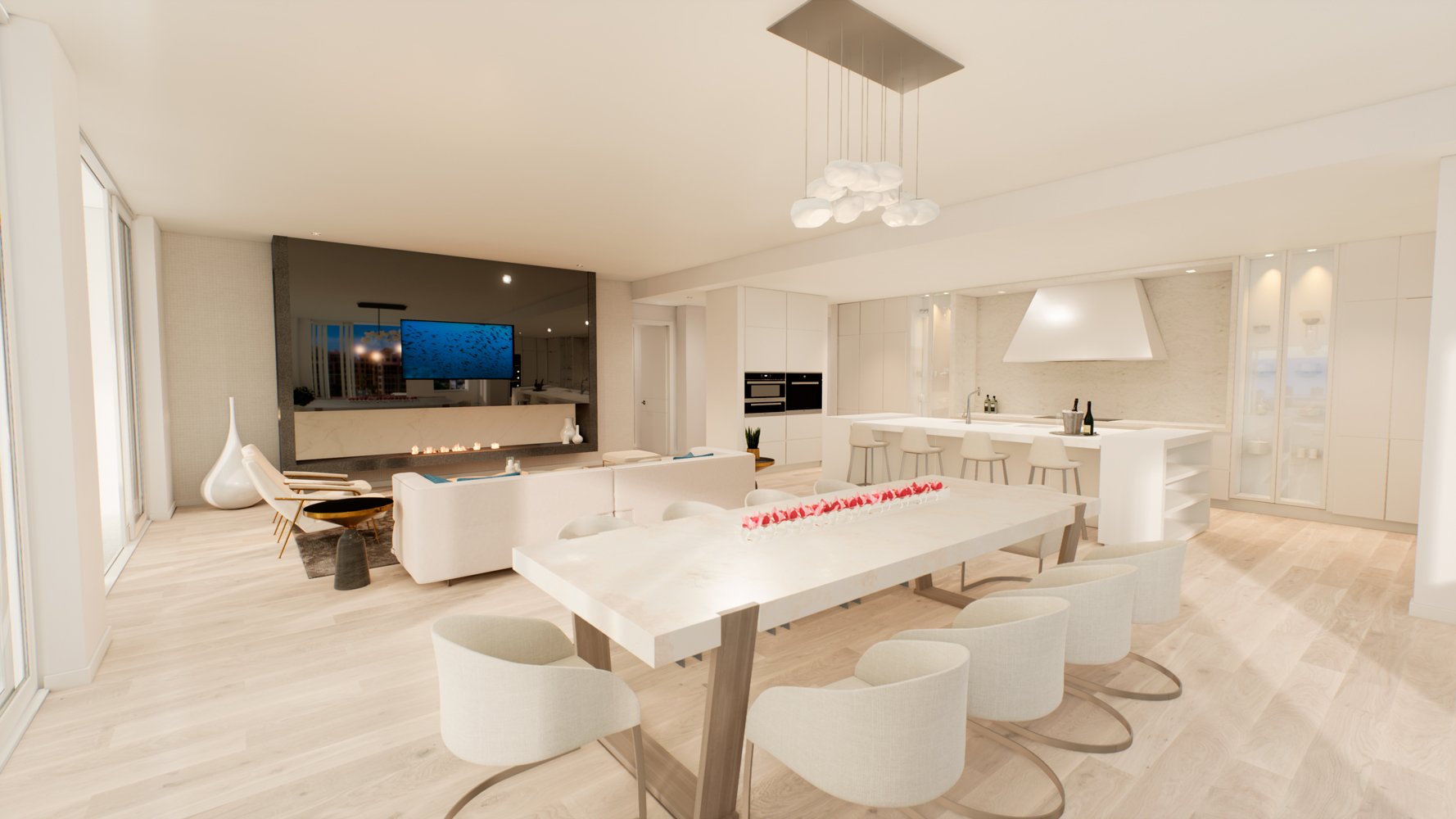
In a luxury residence, technology should feel effortless. Lighting responds, the climate stays comfortable, and arranging a service takes little effort. For buyers considering Alina Residences Boca Raton, the more consequential questions lie behind that experience: who administers the systems, who can access them, and what changes when ownership changes?
Begin by asking the developer and building manager to confirm which connected systems and services are available to the specific residence. This checklist is a framework for verification, not a statement that ALINA has particular equipment, cybersecurity controls, or account policies.
Physical and digital security deserve separate conversations. The buyer’s objective is not to assume a problem, but to establish clear boundaries, identify accountable parties, and obtain a documented transfer of control.
Start with a residence-specific technology schedule. A description such as “smart home-ready” does not establish which devices, controllers, subscriptions, or installation services are included. Ask whether controls for lighting, drapery, thermostats, and electronics are included, optional, or absent in the home under consideration.
Ask the developer to distinguish four categories: building-wide infrastructure, developer-delivered equipment, optional upgrades, and seller-installed equipment. Each may have a different administrator, service agreement, or support contact.
The practical questions are straightforward:
Which connected devices and control systems are included in the purchase?
Which functions require an upgrade, subscription, or separate installation agreement?
Who initially creates the owner account and holds administrator privileges?
Can the owner choose an independent service provider, and what restrictions apply?
Request model details, warranties, and a demonstration in the actual residence rather than relying solely on a sales presentation. Do not treat an installation shown in another residence or penthouse as evidence of standard equipment throughout ALINA.
If property-wide Wi-Fi is available, ask how a resident’s devices relate to guest connections, staff systems, and building operations. Availability alone does not establish how those connections are protected.
Ask the building manager who administers the network and resident accounts: management, onsite personnel, or an outside provider. Then ask whether private residential devices, guest traffic, building systems, and any charging infrastructure are separated-and who can explain those boundaries in writing.
Treat network segmentation, authentication requirements, and patching schedules as open due-diligence questions, not presumed safeguards or evidence of a deficiency.
Ask who is responsible for software and firmware updates, how maintenance is scheduled, and how residents are notified of material service changes. Confirm whether resident accounts support multifactor authentication and how access is withdrawn for departed staff or vendors.
A buyer also considering Glass House Boca Raton should bring the same questionnaire to that discussion. Compare documented responsibilities rather than treating similar technology language as evidence of equivalent controls.
If a building app is offered, confirm what is operational today. Ask whether it provides access to services, amenities, camera views, or transportation information, and whether any functions connect to controls inside the residence.
Ask for a demonstration using an ordinary resident’s permissions. A presentation with elevated staff access may not show what the buyer will actually see or control.
For any camera function, ask which views are available, who authorizes access, and whether viewing activity is recorded. Request an explanation of data collection, retention periods, deletion procedures, and any third-party access. The presence of a camera feature alone establishes none of those policies.
Household administration deserves equal attention. Can an owner give a family member or assistant limited permissions? Can temporary access expire automatically? What is the procedure after a phone is lost? Resolve these questions before an app becomes part of the household’s daily routine.
For a resale residence, ask the seller to identify every installed controller, connected device, remote-access account, and service relationship. Then have the relevant installer or support provider explain which accounts can transfer and which must be recreated.
A useful handover plan should address former-owner access, installer privileges, recovery email addresses, stored credentials, and outstanding subscriptions. Ask who will revoke obsolete permissions and how completion will be demonstrated. Changing one password is not proof that every access path has been addressed.
Confirm who will hold administrator rights after closing. Where vendor access remains necessary, ask whether it can be authorized for a defined task or period rather than left unexplained.
Buyers weighing The Residences at Mandarin Oriental Boca Raton alongside ALINA can apply the same ownership test: what authority does the purchaser receive, and what remains with management or a service provider? This is a comparison framework, not a claim about either property’s controls.
For an owner who travels frequently, remote convenience should come with a clear support arrangement. Ask which in-home functions continue locally if internet service or an app becomes unavailable, and have essential manual controls demonstrated.
Clarify the boundary between any concierge assistance and technical administration. Do not assume that a service role includes troubleshooting private automation, resetting accounts, or approving vendor access; ask who is responsible for each task.
If EV charging is available, ask whether it requires a separate account, who administers it, what usage information is retained, and how credentials are removed when ownership changes. Confirm the account and data practices separately from the amenity’s availability.
Finally, request a contact sequence for suspected unauthorized access or a service interruption. Who receives the first call, who can disable an account, and who communicates with the owner while the issue is addressed?
Before committing, assemble a concise technology file: the residence equipment schedule, management’s network and app responsibilities, relevant privacy policies, support terms, and the proposed account-transfer procedure. For any unresolved detail, identify who will answer it and when.
The strongest response is not necessarily the longest technical explanation. It identifies the system, the accountable party, the owner’s authority, and the continuing service obligation. Consider having an independent technology adviser review those answers alongside the purchase team.
Luxury should reduce friction without obscuring control. For buyers considering ALINA, the right questions allow connected living to be evaluated with the same care as layout, finishes, and service.
For a discreet perspective on South Florida residences and buyer priorities, explore MILLION.
If branded residences are on your mind — as a home or as an allocation — we would be glad to share what we are seeing, privately.
Begin a quiet conversationAsk the developer and building manager to confirm the residence’s equipment, network access, and any app or charging services. Request written details rather than assuming a feature is included.
Not necessarily. Ask for a residence-specific schedule separating included equipment, optional upgrades, and seller-installed systems.
No. Physical security services should be evaluated separately from network security and account administration.
Ask management to identify the network administrator and account provider. Responsibility for updates and resident support should also be confirmed in writing.
Ask management how residential devices, guests, staff systems, and building infrastructure are separated. Request a written explanation rather than assuming particular controls are in place.
If an app is offered, ask which service, amenity, camera, and transportation functions are live today. Also confirm whether it connects to any in-unit controls.
Ask which views residents can access, who grants permission, and whether viewing activity is logged. Request the applicable retention and deletion policies.
No. A unit-specific automation installation does not establish what is included in other residences.
It should address administrator rights, former-owner and installer access, recovery details, and subscriptions. Ask the responsible provider to demonstrate that obsolete permissions have been removed.
Ask which functions work without internet access, who provides technical support, and how temporary permissions are managed. Obtain a clear contact sequence for outages or suspected unauthorized access.