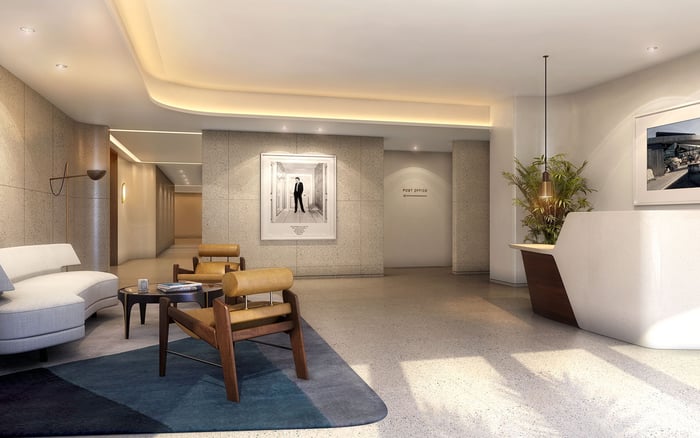
A buyer-focused comparison of parking rights, valet key custody, and chauffeur logistics at the Ritz-Carlton residences in Fort Lauderdale and South Beach, separating advertised service from documented ownership entitlements.

For a buyer accustomed to a seamless arrival, parking is part of the residence itself. The experience begins before the lobby: where a chauffeur waits, who receives the key, how a second vehicle is accommodated, and whether the arrangement survives a resale. These details deserve the same attention as a floor plan.
The shared question at the Ritz-Carlton residences in Fort Lauderdale and South Beach is not simply whether valet is offered. Both residential offerings include that service. The more consequential question is what a particular purchase includes, how vehicles are handled, and which obligations are documented rather than inferred from the brand.
Valet service is an amenity, not proof of a particular parking right. A disciplined comparison separates three subjects: the legal entitlement, custody of the vehicle and keys, and the practical sequence of arrival and departure.
At The Ritz-Carlton Residences® Fort Lauderdale, residences occupy the upper floors of the hotel at 1 North Fort Lauderdale Beach Boulevard. The residential offering comprises approximately 62 residences: 34 condominium-hotel residences and 28 private residences. The former occupy floors 15-17, with private residences on floors 18-25.
That distinction makes unit-level review particularly important. Concierge, housekeeping, in-residence dining, and valet are part of the hotel service offering, but their availability does not establish an individual owner's parking allocation.
One residence is advertised with four parking spaces. That is a useful prompt for due diligence, not a building-wide promise. For that residence, request the instrument supporting all four spaces and clarify whether the allocation covers identifiable spaces, a vehicle allowance, or another arrangement. For any other residence, start with its own documents rather than borrowing that number.
The Ritz-Carlton Residences® South Beach is a planned oceanfront development at 1671 Collins Avenue, Miami Beach, with 30 residences across 15 floors. Its advertised service model includes a 24-hour doorman, concierge, and valet parking.
Parking for residence 16A is described as “Parking - Valet.” That wording describes a service; it does not establish whether a deeded space accompanies the purchase. Nor does it answer how many vehicles an owner may keep, whether self-parking is available, or where cars will be stored.
The address distinction also matters. The Ritz-Carlton, South Beach hotel is at 1 Lincoln Road, distinct from the residential project's 1671 Collins Avenue. Buyers should not import hotel parking terms into a residential purchase without written confirmation that those terms apply.
Request the condominium declaration, parking exhibits, unit-specific allocation, and applicable valet agreement. Ask counsel to identify whether the arrangement is deeded, assigned, licensed, or service-only, and explain what that classification means for the proposed purchase.
Then resolve the practical consequences. Is a particular space identified? Does the entitlement attach to the residence or depend on a separate agreement? Can it be changed, reassigned, or withdrawn? Does it survive resale, leasing, or a change in management? An answer about today's practice is no substitute for an answer about enforceable rights.
The same questions belong in a broader Fort Lauderdale comparison. A buyer also considering Four Seasons Hotel & Private Residences Fort Lauderdale can apply this checklist without assuming equivalent parking provisions. Compare the documents, not merely the presence of a valet amenity.
Neither property's key-storage procedures, access controls, or logging practices are established by the available details. Resolve these questions directly rather than inferring the answers from service positioning.
Ask where keys are held, which personnel may access them, and whether each handoff is recorded. Clarify whether an owner may retain a key, whether a digital-key alternative is accepted, and how authorization works when a family member, assistant, or chauffeur requests the vehicle.
For a car kept at a second residence, extend the discussion to prolonged storage and permission to move the vehicle. Request the damage and theft provisions, the reporting procedure, and the parties responsible for handling a claim. The objective is a clear chain of custody, including what happens when normal routines change.
Chauffeur logistics require more detail than a curbside handoff. Obtain written confirmation of the residential drop-off and retrieval point, whether storage is on-site or remote, and whether a dedicated residential entrance exists. None of these arrangements should be presumed from the valet offering alone.
Then trace an ordinary journey: the driver arrives early, waits, receives the owner, and departs. Where may the driver stand or park? Is lobby access permitted? Who communicates that the vehicle is ready? Can a waiting chauffeur remain with the car, or must it enter the valet system?
Ask about retrieval targets, after-hours procedures, and resident priority during hotel events. If access permits, observe an arrival during the hours relevant to your routine. For a planned development, request the proposed operating protocol and distinguish it from a service already in operation.
At the Fort Lauderdale hotel, published on-site valet rates are $59 overnight and $29 for day parking. At the South Beach hotel, published rates are $65 for daily valet, $50 for visitor parking, $27 for outlet parking with validation, and $75 for oversized-vehicle parking.
These are hotel figures, not verified condominium-owner charges, and published prices may change. Do not use them to calculate residential ownership costs without an applicable owner schedule.
Request a written breakdown of included vehicle allowances, additional-car fees, guest charges, and any separate service costs. Confirm vehicle-size limits and EV-charging availability, access, and billing rather than treating either as an automatic extension of valet service.
Before committing, assemble the parking entitlement, current or proposed operating rules, fee schedule, and key-custody terms into one review. Ensure the documents address the exact residence, intended vehicle count, and expected use by family, guests, and drivers.
Neither advertised valet service nor a space count alone settles the full arrangement. The strongest purchase decision pairs documented rights with an operating model suited to the household. That is the distinction between an elegant arrival and an unresolved dependency.
For a discreet perspective on South Florida residential choices, explore MILLION.
If branded residences are on your mind — as a home or as an allocation — we would be glad to share what we are seeing, privately.
Begin a quiet conversationYes. Both identify valet service, but that does not establish deeded spaces, self-parking rights, or exclusive garage access.
They occupy upper floors of The Ritz-Carlton, Fort Lauderdale at 1 North Fort Lauderdale Beach Boulevard.
No building-wide entitlement is established. Four spaces are advertised for one residence, and any purchase requires verification of its own allocation.
It is marketed as a planned oceanfront development at 1671 Collins Avenue, Miami Beach, with 30 residences across 15 floors.
No. Its “Parking – Valet” description does not establish a deeded-space entitlement.
Request the condominium declaration, parking exhibits, unit-specific allocation, and applicable valet agreement. Have counsel clarify the nature and transferability of the entitlement.
The available details do not establish those procedures. Buyers should request written confirmation of storage, authorized access, handoff logging, and key-retention options.
Confirm drop-off and retrieval points, waiting areas, lobby access, storage location, and any dedicated residential entrance. Also clarify after-hours procedures and retrieval targets.
No. The hotel figures do not establish condominium-owner costs, included vehicle allowances, or guest parking terms.
No. The hotel lists 1 Lincoln Road, while the residential project is marketed at 1671 Collins Avenue; hotel arrangements should not be assumed to apply.