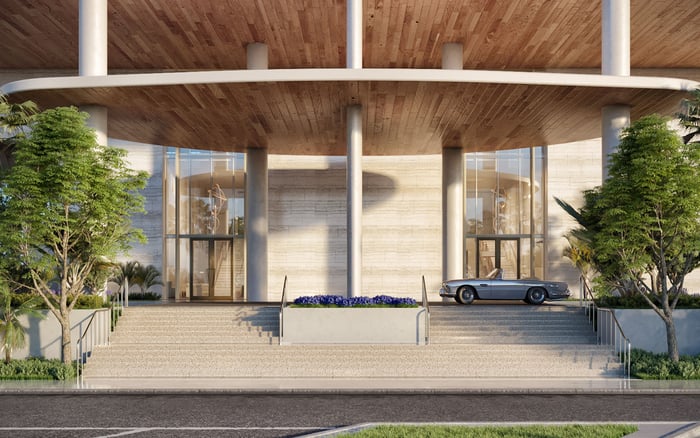
Selene Oceanfront Residences and Viceroy Residences Fort Lauderdale offer distinct starting points for documentation-focused buyers, alongside three Fort Lauderdale comparison projects. The decisive diligence concerns warranty terms, independent turnover engineering, and written responsibility for post-closing claims, not hospitality branding alone.

For a Fort Lauderdale buyer, full-service living promises ease: attentive arrivals, discreet assistance, and a residence that remains manageable between visits. The more consequential measure of service, however, emerges after closing, when a mechanical concern, unfinished item, or possible construction defect requires a clearly identified decision-maker.
The distinction is fundamental. Concierge assistance supports daily life; warranty administration determines which party must address a covered condition. A refined lobby cannot establish the duration of coverage, and a hospitality name cannot substitute for engineering scrutiny. The strongest purchase file connects the apartment, the building, and the responsible legal entities without treating them as interchangeable.
A refined lobby cannot establish the duration of coverage, and a hospitality name cannot substitute for engineering scrutiny.
For buyers comparing residences across Broward, the objective is more than an impressive service menu. It is documented continuity between delivery, association control, and the handling of subsequent issues.
This shortlist is a framework for comparison, not a verified ranking of warranty quality or completed turnover engineering. Selene and Viceroy have the specific disclosures discussed below; the other three entries are comparison projects whose service scope, warranty documents, and claim procedures require separate review. Inclusion does not establish that every project meets the same full-service or documentation standard.
1. Selene Oceanfront Residences: Fort Lauderdale Beach
Selene offers an explicit warranty statement for buyers to investigate. Its advertised benefits for direct-developer purchasers include multi-year warranty protection. That statement invites examination of the actual coverage documents; it is not a complete description of covered components or exclusions.
A professional association-management provider has been selected for Selene. Resident services include concierge assistance, dedicated lobby staff, and curated lifestyle experiences; amenities include two elevated ocean-view pool terraces and The Wave social lounge. These offerings support its full-service positioning. Before committing, buyers should separately request warranty commencement dates, claim instructions, and the party responsible for each category of work.
2. Viceroy Residences Fort Lauderdale: Concierge and property-management services
Viceroy's offering includes a cultural and experiences concierge, a mail and receiving desk, lifestyle curation, and property management. For an owner seeking a service-oriented residence, these functions provide a useful starting point for evaluating daily operational support.
Its inclusion here rests on those disclosed services, not on an established project-specific warranty schedule or a completed turnover engineering assessment. Buyers should ask whether management receives construction-related notices, where those notices are forwarded, and who has authority to approve corrective work. The practical question is whether a concern can move from resident communication to the responsible party without ambiguity.
3. Andare Residences Fort Lauderdale: Compare the coverage documents
Make the same component-by-component warranty request at Andare rather than carrying over assumptions from another development. Its inclusion as a comparison does not establish particular warranty terms or defect-resolution procedures. Confirm the service scope separately and identify which entity receives each type of claim.
4. Sixth & Rio Fort Lauderdale: Examine engineering and records
The same engineering and records questions remain useful when considering Sixth & Rio. Do not presume that a particular turnover stage or assessment exists without examining the corresponding documents. Request the available records and clarify how unit-level concerns and common-building conditions would be handled.
5. Four Seasons Hotel & Private Residences Fort Lauderdale: Separate hospitality from construction obligations
Assess hospitality separately from contractual and statutory construction obligations. Brand recognition alone does not establish engineering findings, warranty coverage, or an escalation protocol. Ask which party administers construction-related notices rather than assuming the hospitality contact has that responsibility.
Florida's Condominium Act establishes implied warranties from developers and, separately, contractors, subcontractors, and suppliers. Coverage depends on both the component and the responsible party. Buyers should therefore resist reducing the framework to a single phrase such as a three-year building warranty.
Developer warranties generally cover each unit for three years from completion of the building containing that unit. Roof, structural, and building-serving mechanical, electrical, and plumbing components have distinct completion- and turnover-based timing rules and statutory limits. One-year coverage applies to certain items and materials, not universally to every nonstructural improvement.
New-construction buyers should request a component-by-component schedule identifying the relevant completion date, applicable coverage period, exclusions, and notice recipient. Counsel should assess how the statutory framework and contractual documents apply to the particular purchase. Buyers should not assume that closing starts every warranty clock.
The transfer of association board control is important, but turnover diligence extends beyond that moment. Construction records, association records, and applicable warranties should be examined together. An independent engineering review helps the association evaluate construction conditions and potential defects, adding technical substance to the administrative transition.
For buyers, the useful distinction is between a document's existence and its implications. Ask what engineering work has been commissioned, which areas were examined, whether observations remain unresolved, and how corrective work will be documented. A completed assessment is not, by itself, proof that every identified condition has been corrected.
Keep the scope clear. Apartment-level concerns and common-building conditions may require different contacts and follow-up. Ask the association or developer to identify where relevant records are held and how an owner can request them.
Branded residences can make attentive service central to the buying decision. But the service operator, association manager, developer, and construction participants should not be presumed to have identical obligations. A named manager does not establish who must resolve a construction-defect claim.
Ask for a written escalation path before closing. It should identify the initial contact, the notice recipient for each warranty category, the information required to submit a concern, and the person responsible for communicating its status. Clarify how unresolved matters move beyond the first point of contact. These are diligence requests, not promises of a particular response time.
A practical file should bring together the purchase documents, applicable warranty materials, completion dates, maintenance requirements, available turnover records, and written claim instructions. Keep unit-level inspection findings separate from common-area engineering observations, while making both easy to retrieve.
Condominium inspections can assess HVAC, plumbing, and electrical systems. High-rise inspection services may also include balcony access and shared-area observations where accessible. These inspections complement warranty and turnover-document review; they neither replace those exercises nor establish coverage for a particular condition.
Maintenance deserves equal attention. Statutory warranties are conditioned on routine maintenance unless that maintenance is the developer's or developer-controlled association's responsibility. Ask who performs each task and retain the relevant records. A polished ownership experience is strongest when its supporting paperwork is equally orderly.
The decision standard is straightforward: choose service you value, then require documents that explain responsibility. For a discreet, documentation-focused discussion of Fort Lauderdale ownership, connect with MILLION.
If branded residences are on your mind — as a home or as an allocation — we would be glad to share what we are seeing, privately.
Begin a quiet conversationSelene advertises multi-year warranty protection for direct developer purchasers. Buyers should still examine the actual coverage schedule, exclusions, and claim procedures.
Its offering includes a cultural and experiences concierge, a mail and receiving desk, lifestyle curation, and property management. These services do not establish project-specific warranty coverage.
No; inclusion is a starting point for diligence, not confirmation of equivalent coverage or completed engineering review. Each project's documents and service scope require separate examination.
They generally cover each unit for three years from completion of the building containing that unit. Buyers should have counsel confirm the applicable dates and terms.
No; roof, structural, and building-serving mechanical, electrical, and plumbing components have specific timing rules and statutory limits.
No; one-year coverage applies to certain items and materials, rather than universally to all nonstructural improvements.
It should examine construction records, association records, and applicable warranties. Independent engineering review helps evaluate construction conditions and potential defects.
No; a unit inspection can assess interior systems and other accessible areas, but it complements rather than replaces warranty and turnover-document review.
Statutory warranties are conditioned on routine maintenance unless that maintenance is the developer's or developer-controlled association's responsibility. Records help document the maintenance performed.
Buyers should request initial contacts, applicable notice recipients, submission requirements, and responsibility for status updates. They should also clarify how unresolved concerns move beyond the first contact.