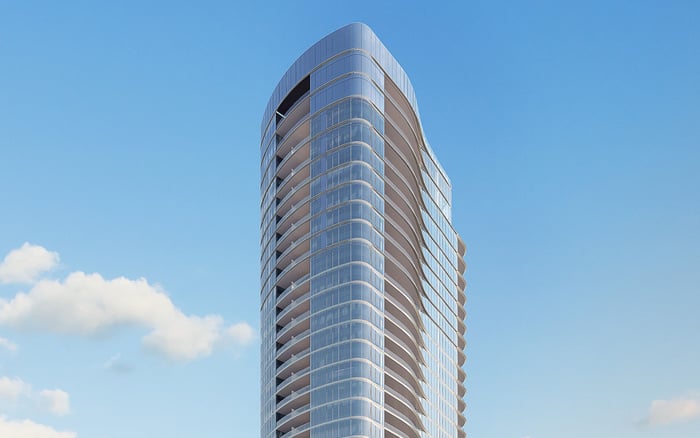
A buyer-focused guide to evaluating internet redundancy, privacy governance, service reliability, and resale implications at The Residences at Mandarin Oriental, Miami.

At The Residences at Mandarin Oriental, Miami, luxury should extend beyond views, finishes, service, and brand prestige. For a buyer who may use the residence as an executive office, family-office command center, telemedicine suite, media environment, or secure communications base, internet infrastructure is no longer a convenience. It is part of the home’s operating system.
That distinction is especially important in a branded luxury residential setting associated with Mandarin Oriental in Miami, where expectations for privacy, continuity, and service are elevated. A buyer evaluating The Residences at Mandarin Oriental, Miami should look past advertised speed and ask how connectivity is delivered, protected, supported, and documented. A gigabit headline is not the same as resilient infrastructure.
For new-construction purchasers, the opportunity is to ask these questions before closing, while technical answers may be easier to obtain from the development, association, operator, or technology vendors. In a market where digital use cases increasingly shape comfort and confidence, the strongest evaluation combines physical redundancy, provider choice, network segregation, operational support, privacy governance, and upgrade flexibility.
The first question is not whether the building can offer fast internet. It is whether the tower has more than one physical fiber path into the property. Multiple retail internet providers can still rely on the same conduit, utility room, riser, or island-entry route. If they do, the building may appear diversified on paper while retaining a single point of failure in practice.
At The Residences at Mandarin Oriental, Miami, that question carries particular weight because of the Brickell Key setting. Island connectivity may need to interface with mainland Miami infrastructure, making pathway diversity an important due-diligence topic. Buyers should ask where fiber enters the property, whether routes are physically separate, and whether risers have backup capacity for future expansion.
A refined buyer does not need to become a network engineer. The goal is to request clear written answers: how many fiber providers serve the building, whether the paths are truly diverse, and which parts of the system may still be shared. In luxury real estate, specificity is the difference between a sales description and a durable ownership advantage.
A high-end residence may need more than a building-wide bulk internet package. Some owners will want private dedicated service, resident-selected enterprise-grade connections, or the ability to maintain a secondary provider for business continuity. The key is to verify what the building supports rather than assume optionality exists.
If the property offers multiple ISP options, buyers should still ask whether those providers use distinct pathways or shared infrastructure. If a bulk service is included, buyers should ask whether it can coexist with private connections inside the unit. If an owner wants to support trading screens, encrypted communications, remote board meetings, or high-volume media streaming, the technical structure should be compatible with that lifestyle.
This is where investment thinking becomes practical. A residence that can credibly support demanding digital uses may appeal to a narrower but highly qualified resale audience. For certain buyers, the ability to run a secure, reliable digital life from a Miami home is not a perk. It is a condition of purchase.
Privacy diligence begins by distinguishing building-wide networks from in-unit networks. In a modern luxury tower, security systems, access control, cameras, smart-home systems, guest Wi-Fi, amenity connectivity, staff systems, and resident Wi-Fi may all coexist. The question is whether they are properly separated and governed.
A buyer should ask who manages resident network infrastructure, who can access logs, and whether resident traffic is segregated from hotel, staff, amenity, and guest systems. These are discreet but important questions, particularly in a branded residential environment where service layers may be more complex than in a conventional condominium.
The in-unit technology platform deserves equal scrutiny. Is it open and configurable, allowing an owner’s advisor to tailor cybersecurity, routing, Wi-Fi, and smart-home controls? Or is it locked into a building-managed ecosystem that limits privacy settings and future upgrades? Flexibility affects both cybersecurity and long-term functionality.
For a waterview residence where the physical experience is serene, the digital environment should be equally composed. Invisible infrastructure should protect the owner’s privacy without forcing a compromise on convenience.
Even strong infrastructure depends on operational discipline. Buyers should ask how outages are handled, who responds first, and whether issues are escalated through the condo association, property manager, operator, or internet provider. On-site technology support can matter, but only when responsibilities and escalation paths are clear.
Service-quality diligence should include provider service-level expectations, outage-response procedures, and resident communication protocols. A sophisticated buyer may also ask whether network rooms are generator-backed, whether telecom equipment is supported by UPS protection, and whether cooling remains adequate during a power event. These questions are not excessive in a premium Miami tower. They reflect the way owners actually live and work.
The point is not to demand a perfect answer to every technical scenario. It is to understand which systems are resilient, which depend on outside providers, and which remain the owner’s responsibility inside the residence. In Brickell, where global capital, finance, hospitality, and design converge, luxury service increasingly includes digital continuity.
Resale positioning is stronger when connectivity claims can be documented. Vague phrases such as “high-speed internet” or “state-of-the-art technology” do little for a discerning buyer who wants confidence. Written confirmation of provider options, pathway diversity, network segregation, support procedures, and upgrade flexibility carries more weight.
For The Residences at Mandarin Oriental, Miami, the most valuable due-diligence file may include written answers from the appropriate building representatives, relevant technical summaries, association policies, and any available provider documentation. Future buyers may not read every detail, but their advisors will recognize the difference between marketing language and verified capability.
Resale is not only about the view line, floor height, or finish package. It is also about whether a residence can support the next owner’s private, connected, mobile life. A buyer who documents internet redundancy today may be preserving optionality for tomorrow.
The most practical approach is to make connectivity part of the same review as insurance, governance, maintenance, and building systems. Ask how many fiber providers serve the building. Ask where fiber enters. Ask whether the pathways are physically diverse. Ask whether providers share conduits, utility rooms, risers, or any island-entry infrastructure.
Then move to privacy and operations. Ask who manages resident networks, who can view logs, and how resident traffic is segregated from other systems. Ask whether smart-home integrations are open or locked. Ask whether the association or operator has cybersecurity policies for building systems, vendor access, and resident data handling.
Finally, ask how the building performs under stress. Are network rooms generator-backed? Is there UPS protection? Is telecom cooling maintained during a power event? Who communicates with residents during an outage? Who has authority to escalate service problems?
For a luxury buyer, these questions are not signs of skepticism. They are signs of seriousness. The most elegant residences are those where essential systems work quietly, reliably, and privately.
Why does internet redundancy matter at The Residences at Mandarin Oriental, Miami? Because a luxury residence may function as a workplace, media environment, telemedicine setting, or secure communications base.
Is having multiple internet providers enough? Not necessarily. Buyers should ask whether those providers use physically diverse fiber paths or share the same infrastructure.
Why is Brickell Key relevant to connectivity diligence? Its island setting makes pathway diversity important because utilities and fiber may connect back to mainland Miami infrastructure.
What should buyers ask about privacy? Ask who manages network infrastructure, who can access logs, and whether resident traffic is segregated from guest, staff, amenity, and hotel systems.
Should smart-home systems be reviewed? Yes. Buyers should determine whether in-unit technology is open and configurable or locked into a building-managed platform.
What service questions are most important? Ask who handles outages, what escalation path exists, and whether provider service expectations are documented.
Should backup power be part of the review? Yes. Buyers should ask about generator-backed network rooms, UPS protection, cooling, and functionality during power events.
Can internet infrastructure affect resale? Yes. Documented redundancy can support stronger resale positioning than general claims about fast or modern connectivity.
What should a buyer request in writing? Request answers on fiber providers, entry points, pathway diversity, riser capacity, network segregation, cybersecurity policies, and support procedures.
Is this only relevant for technology-focused buyers? No. Privacy, reliability, and future upgrade flexibility are now core considerations for many luxury condominium owners.
For a tailored shortlist and next-step guidance, connect with MILLION.
If branded residences are on your mind — as a home or as an allocation — we would be glad to share what we are seeing, privately.
Begin a quiet conversation