
Gala season offers a revealing scenario for evaluating a Brickell residence: can confidential work, visiting guests, and building operations coexist without friction? Private arrivals, documented network redundancy, and clear management protocols deserve as much attention as finishes.
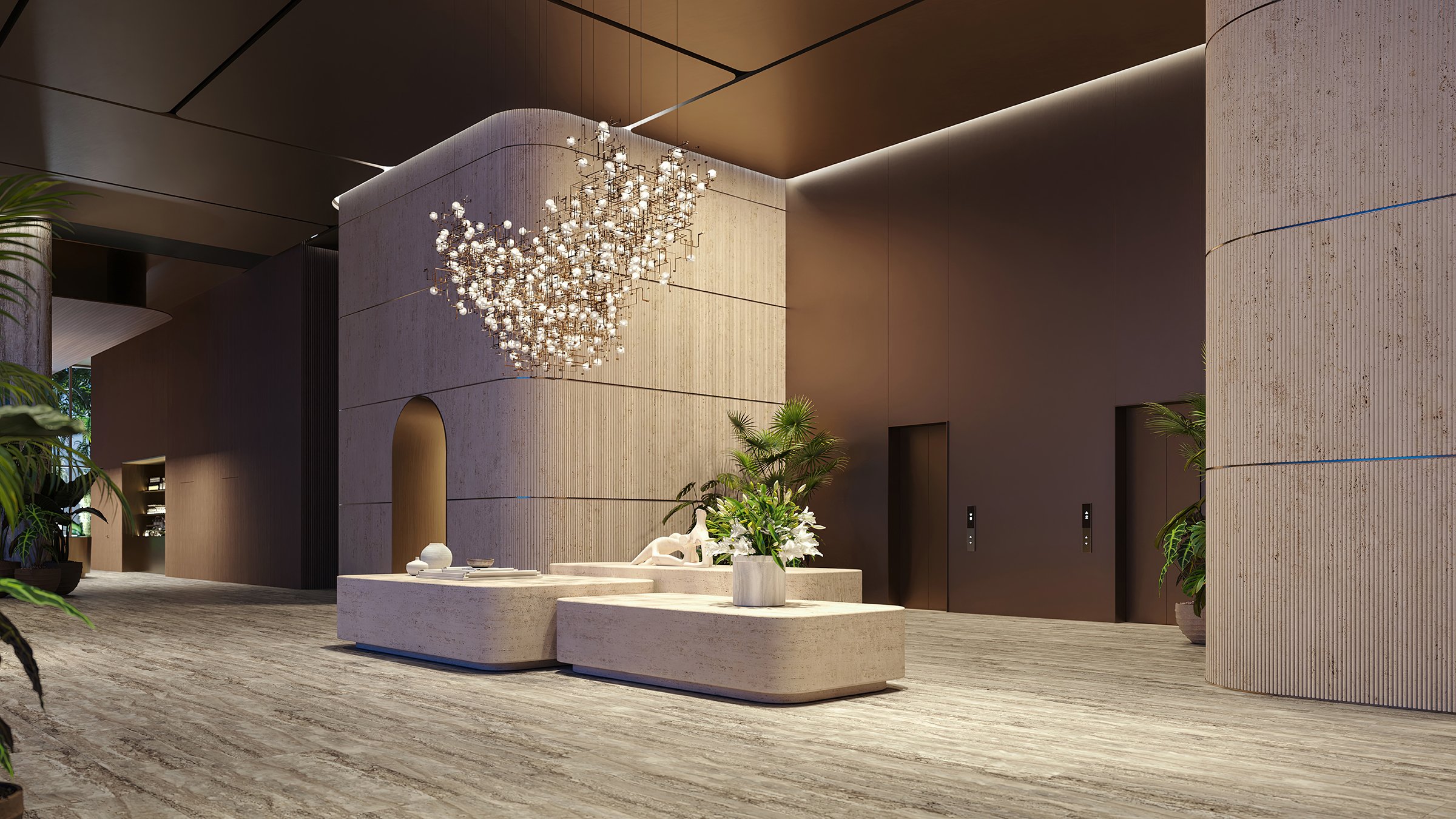
Imagine a confidential video call running late as dinner guests arrive, a caterer requests access, and a car waits downstairs. For a Brickell owner, that hypothetical gala-season evening is a useful test of residential luxury. The question is not simply whether the building offers a concierge, but whether its systems keep work, hospitality, and private life distinct.
Gala season is a scenario here, not evidence of measured congestion or event-night performance. Amenity descriptions are a starting point. They do not establish actual privacy, network uptime, or the quality of a particular shift’s staffing.
The most useful buyer’s standard is straightforward: identify the physical provisions, request the operating rules, and test what reaches the residence itself. A beautiful arrival is only part of the proposition. The more consequential luxury is the ability to host without surrendering control of the home.
Privacy begins before the office door. Where a residence offers a private elevator vestibule or biometric access, assess the arrival space and access procedures separately. Neither feature, on its own, establishes sound isolation or visitor permissions.
Walk the route from elevator to desk. Consider whether an arriving guest can see into the work area, whether a delivery requires crossing living space, and whether conversations carry through the entrance. Test sound transmission at both the office and residence doors, ideally with ordinary conversation on either side.
For a buyer considering The Residences at 1428 Brickell, the same questions belong in the floor-plan review. Request project-specific answers rather than assuming an arrival arrangement delivers confidentiality. Visual separation, acoustic privacy, and access control are distinct requirements; each needs its own check.
If a building offers a business center, co-working lounge, or private meeting room, evaluate it as an alternative to working inside the residence. An alternative workspace, however, is not proof that a sensitive call will remain private.
Ask how rooms are booked, whether reservations have time limits, and how access is handled during an owner’s meeting. Then assess audibility from adjacent spaces and the route through shared amenities. A room can be convenient without being suitable for confidential work.
Inside the home, test the actual workstation rather than relying on a lobby connection. Check a video call with the office door closed and the intended devices connected. Descriptions such as smart-wired residences or common-area fiber connectivity do not establish the service available at a particular desk or its behavior during an interruption.
A fiber-optic backbone, common-area Wi-Fi, and systems intended to improve mobile reception address connectivity and coverage-not necessarily redundancy. Ask which provisions the property actually offers and what each supports.
If management describes a building-wide network with physically diverse connections and automatic failover, request the technical documentation. A design intended to maintain connectivity is not a demonstrated uptime result, nor does it establish which residential or operational systems it serves.
Request carrier details, documentation of physical route diversity, and the automatic-failover procedure. Establish whether redundancy reaches each residence or supports only selected building systems. Ask what interruption a resident should expect during a switchover and how management verifies the arrangement.
Finally, separate network resilience from power resilience. Confirm backup-power coverage for telecom equipment, access controls, elevators, and common-area Wi-Fi. Two connections do not establish that the equipment serving them will remain powered.
Destination-controlled elevators, a dedicated service elevator, electronic access controls, and video surveillance are provisions to ask about-not proof of fully segregated guest and service routes.
Trace a visitor’s journey from curb to residence, then repeat it for a caterer or delivery. Identify where routes meet, who authorizes access, and what happens when a visitor arrives early. A dedicated service elevator alone does not confirm separate loading, vendor entrances, or enforced catering protocols.
When evaluating Cipriani Residences Brickell, request the same circulation walkthrough and written operating rules. The test is not whether one building resembles another, but whether that property’s arrangements suit the owner’s hosting habits.
Confirm whether guest permissions can be time-limited, floor-limited, and revoked remotely. Those capabilities should be demonstrated, not inferred from access-controlled elevators.
Where guest check-in, hospitality management, valet, or a digital concierge is offered, confirm the service hours and responsibilities. A service list, by itself, does not establish how smoothly simultaneous requests will be handled.
Ask management to walk through a specific evening: an owner remains on a call, several guests arrive separately, and a service provider needs approval. Who contacts the owner? Who can approve an exception? Where does a guest wait without entering a residential area prematurely?
For a prospective owner at 2200 Brickell, these questions are equally useful to put to the management team. Request details on valet staging, visitor screening, event guest limits, elevator reservations, and access-log retention. Written procedures provide a stronger basis for comparison than assurances of attentive service.
Before committing, assemble three practical records: a privacy walkthrough, a telecom specification, and a guest-and-service circulation plan. Each should distinguish what is physically provided, what management permits, and what remains to be tested.
Do not reduce the decision to an amenity count. A private vestibule answers a different question from a private meeting room; a cellular antenna answers a different question from diverse network connections. None substitutes for clear responsibility when something stops working.
The residence-management test is ultimately about boundaries: preserving the working day while allowing the evening to unfold graciously. Favor the home whose team can explain those boundaries precisely, document them, and demonstrate the relevant functions.
Explore Brickell residences with MILLION through the lens of privacy, connectivity, and considered arrival management.
If branded residences are on your mind — as a home or as an allocation — we would be glad to share what we are seeing, privately.
Begin a quiet conversationA hypothetical evening with overlapping calls, guests, and service arrivals tests how residential systems work together. It is not evidence of measured event-night congestion or performance.
No; a private arrival space does not establish acoustic privacy or visitor-permission capabilities. Assess sightlines, sound transmission, and access procedures separately.
Assess sightlines and sound transmission at the office and residence entrance. Test a video call at the intended workstation rather than relying on connectivity elsewhere in the building.
Confirm booking rules, time limits, and access during a reservation. Check whether conversations can be heard from adjacent spaces.
No; buyers should request carrier details, physical route-diversity documentation, and automatic-failover information. Confirm whether redundancy reaches the residence.
Request technical documentation, the switchover procedure, and details of how management verifies the arrangement. Confirm which residential and operational systems it supports.
No; confirm backup-power coverage separately for telecom equipment, access controls, elevators, and common-area Wi-Fi.
Not by itself; separate loading, vendor entrances, and enforced delivery protocols still need verification. Walk both guest and service routes to identify where they meet.
Ask management to explain who contacts the owner, approves exceptions, and directs waiting guests during simultaneous arrivals. Confirm service hours and responsibilities in writing.
Ask whether permissions can be time-limited, floor-limited, and revoked remotely. Also request visitor-screening procedures, event guest limits, elevator-reservation rules, and access-log retention details.
.jpg&width=700&height=438&fit=cover)