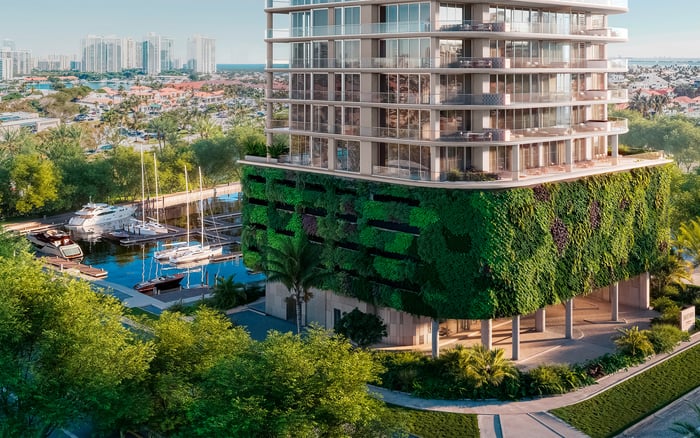
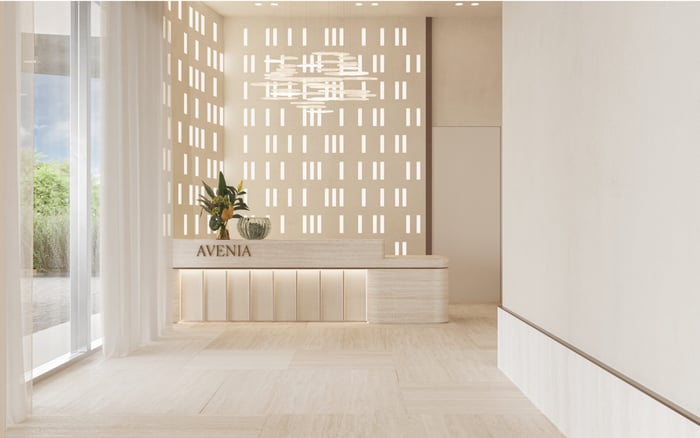
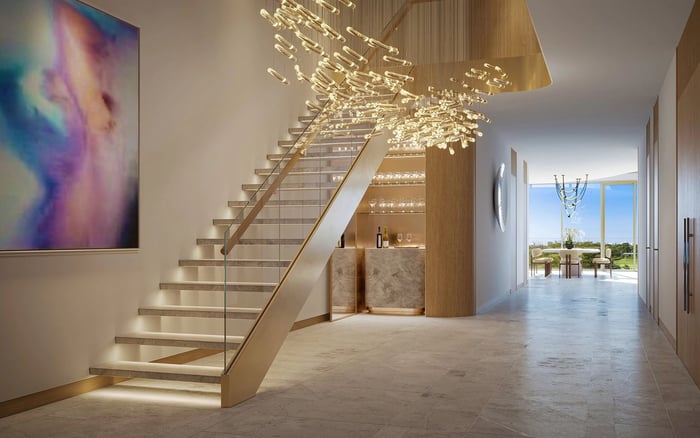
Avenia Aventura advertises private elevator lobbies, dedicated service entrances, and service quarters. For buyers considering trust or LLC ownership, the essential diligence is whether title arrangements, staff authorization, and building circulation support the household’s daily routine.
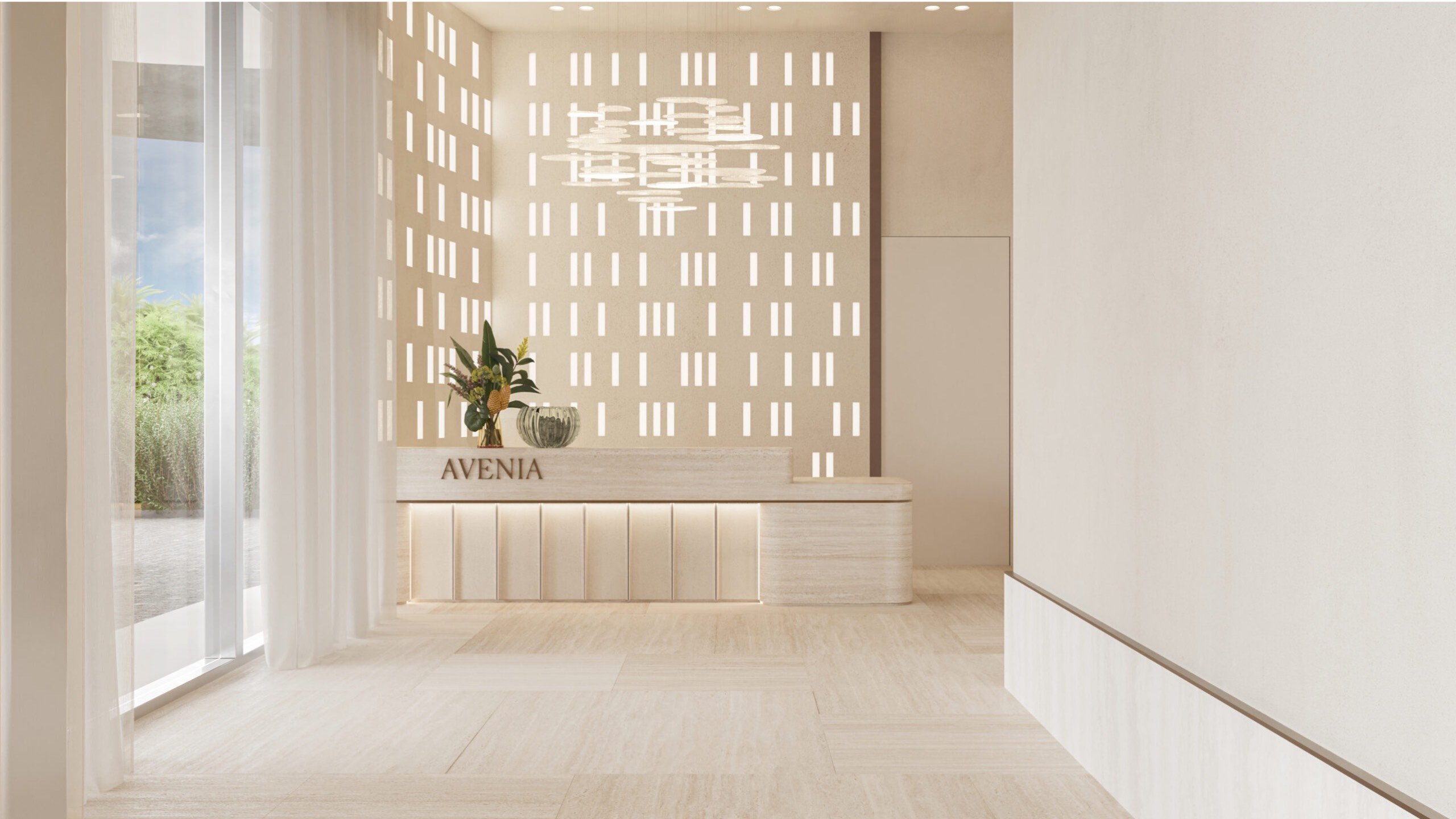
For a household with a chef, housekeeper, dog walker, or property manager, privacy depends on more than the front door. It depends on who can authorize entry, how personnel reach the residence, and whether those arrangements work when the owner is away. Buying through a trust or LLC adds another question: who is recognized as having authority to act for the owner?
At Avenia Aventura, a planned condominium at 20605 NE 34th Avenue, Aventura, Florida 33180, advertised residence features include a private elevator lobby, dedicated service entrance, and service quarters. These design provisions matter, but they do not establish a complete household-access system. Trust or LLC eligibility, detailed staff protocols, and owner-absent vendor access still require written confirmation.
The distinction is straightforward: an ownership structure and an entry credential answer different questions. Neither substitutes for the other.
Avenia is marketed as “Interiors by FENDI Casa,” with Vertical Developments identified as the developer. Its advertised 24/7 concierge and valet services suggest an emphasis on attended arrival. They do not establish around-the-clock access rights for household employees or contractors.
A buyer also considering Fendi Château Residences Surfside should make the same distinction between design identity and operating permissions. The comparison should not rest on assumptions about either property’s protocols, but on whether each can document the arrangements the household needs.
For Avenia, evaluate three layers separately: authority under the purchase and ownership documents, the physical service route, and the rules governing entry. A residence may appear well suited to staffed living while still requiring clarification on one or more of these points.
Before selecting the purchaser’s name, have counsel obtain written confirmation that an LLC may sign the purchase agreement and take title directly. If an individual signs first, ask whether assignment to an entity requires consent, a fee, or continued individual liability. These are diligence questions, not confirmed Avenia requirements.
For a trust, request the required trust documentation, evidence of trustee authority, and owner-identification disclosures. Ask whose approval is needed at the purchase stage and what information the association will require for its records. Do not assume a preferred estate-planning arrangement is automatically an accepted purchase structure.
Then connect ownership to daily administration. If title is held by an LLC, which individual may approve recurring vendors? If a trustee holds title, may another designated person manage the household’s access permissions? Ask how those designations are recorded, changed, and revoked.
The objective is a documented chain of authority, not merely an accepted name on the contract. Counsel should evaluate the structure’s legal and tax implications separately from the building’s access arrangements.
A dedicated service entrance identifies a feature at the residence. It does not establish how staff reach that entrance from the street, parking, or loading area. Likewise, a private elevator lobby does not prove that resident and service circulation remain separate throughout the building.
Request plans identifying the proposed route, or a walkthrough when available. Trace an employee’s path from arrival through check-in, any elevator transfer, the floor corridor, and the service door. Ask where that path intersects the primary resident arrival sequence and whether those intersections vary by time of day or delivery type.
A separate service elevator and a fully segregated service corridor remain unconfirmed. Service quarters also warrant a separate discussion of permitted use; their inclusion should not be taken as authorization for a particular staffing arrangement.
For buyers weighing Turnberry Ocean Club Sunny Isles alongside Avenia, conduct the same route-tracing exercise independently at each property. The comparison becomes meaningful when it tests actual household movement rather than similar-sounding amenity language.
The decisive question is whether an authorized household employee or recurring vendor can use the service route to reach the residence while the owner is absent, without entering the primary resident arrival sequence. Under what approvals and during which hours is that access permitted?
Request written rules covering the following:
Standing credentials, identification checks, expiration, and renewal.
Remote authorization, delegation to a household manager, and immediate revocation.
Permitted hours, escort requirements, and distinctions between employees and contractors.
Parking, loading, deliveries, equipment movement, and contractor documentation.
Emergency entry and the procedure when the designated contact cannot be reached.
These are operating details to confirm, not established buyer rights. Discuss a regularly scheduled housekeeper, a one-time installer, and an emergency repair technician individually rather than grouping them under a broad promise of concierge assistance.
Test the answers against a realistic day: the owner is away, the housekeeper arrives first, groceries follow, and an appliance technician needs access later. Ask who authorizes each arrival, where each person waits, and whether anyone requires an escort. This exercise exposes ambiguities before commitment.
Avenia is advertised as pet-friendly. That description does not establish independent entry privileges for a dog walker, permission to hold standing credentials, or the hours during which a recurring pet-care vendor may enter. Request those permissions separately.
The advertised private marina has 14 slips, and a pickup/drop-off slip is also described. Neither feature establishes a household-vendor arrival route by water. If marine arrivals matter to the household, ask whether personnel may arrive that way and how check-in would connect to the residence’s service entrance.
The broader amenity offering includes a rooftop pool, spa, and expansive sun deck, plus a fitness center and wellness facilities. Keep these lifestyle features distinct from employee or vendor access. Permission to enter a residence should not be interpreted as permission to use shared amenities.
Avenia’s legal notices and sponsor disclosures are separate from its promotional residence and amenity descriptions. Review the relevant purchase provisions, condominium documents, and written operating rules together. Ask counsel to identify which terms address the household’s requirements and which questions remain unresolved.
Before committing, seek a clear answer in each category: the proposed owner may purchase, the appropriate individuals may authorize access, the service route is understood, and recurring personnel can operate within stated rules. If a necessary arrangement remains uncertain, weigh that uncertainty before proceeding. Do not treat a verbal assurance as settled policy.
The luxury here is operational discretion: a home whose arrival experience and household routines work together without relying on assumptions.
For a discreet conversation about South Florida residences and buyer priorities, connect with MILLION.
If branded residences are on your mind — as a home or as an allocation — we would be glad to share what we are seeing, privately.
Begin a quiet conversationTrust and LLC purchase eligibility is not established by the advertised project features. Obtain written confirmation and have counsel review the applicable purchase and condominium documents.
Ask whether the LLC may sign and take title directly. If an individual signs first, clarify assignment consent, potential fees, and any continued individual liability.
Ask which trust documents, evidence of trustee authority, and owner-identification disclosures are required. Confirm who may designate and manage household access permissions.
Yes, a dedicated service entrance is an advertised residence feature. Its route through the building and any connection to a separate service elevator are not established.
No. A private elevator lobby alone does not establish complete separation between resident and staff routes.
Yes, service quarters are advertised. Buyers should separately clarify permitted use and any applicable staffing or occupancy rules.
Owner-absent access for household staff is not established. Request written rules addressing standing credentials, remote authorization, permitted hours, and escorts.
No such access right is established by the advertised concierge service. Vendor hours and approval procedures require separate written confirmation.
No independent dog-walker access privilege is established by that description. Ask about recurring credentials, identification, authorization, and entry hours.
The advertised 14-slip marina and pickup/drop-off slip do not establish vendor arrival rights. Ask whether such arrivals are permitted and how check-in would work.