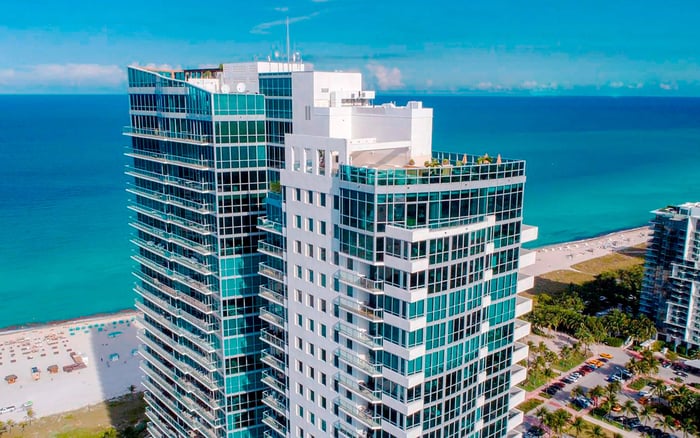
A private-client guide to Florida association governance for Miami Beach owners and buyers, covering condominium and HOA voting distinctions, proxy review, targeted records requests, and the safeguards behind remote participation.

A Miami Beach residence offers more than a private address. It also places an owner within a framework of collective decisions. For a buyer considering 57 Ocean Miami Beach, understanding that framework belongs alongside reviewing the residence itself: how votes are cast, how participation is documented, and how an owner can inspect the record afterward.
The essential distinction is between convenience and compliance. A signed proxy, a video invitation, or an electronic receipt can provide useful evidence, but each must fit the rules governing the association and the particular decision. These are questions of Florida association governance, not a separate Miami Beach municipal voting regime.
This briefing provides general guidance, not a determination about any named property's procedures. For a disputed vote, counsel should evaluate the governing documents and the law effective on the meeting or election date. Procedures applicable in 2026 should not automatically be applied to an earlier meeting.
First establish whether the property is governed as a Chapter 718 condominium, a Chapter 720 homeowners' association, or a Chapter 719 cooperative. Similar-looking residences do not warrant interchangeable legal assumptions. Cooperative procedures require their own review, rather than an application of the condominium or HOA rules discussed here.
Next, identify the decision being made. An owner vote and a board vote are not the same event. Ask which threshold applies, how quorum will be established, and what the governing documents require.
For someone evaluating Faena House Miami Beach, the diligence question is not simply whether participation is convenient. It is whether the applicable documents and procedures explain how an owner's participation becomes a valid, recorded vote. No particular voting arrangement should be assumed from a property's name or presentation.
Residential condominium owners generally may not vote by general proxy. Where proxy voting is permitted, limited proxies must substantially conform to the state-adopted form, subject to statutory exceptions. A proxy should identify the relevant meeting and carry the signature and date of the owner or authorized voting representative.
Proxy review therefore requires close attention to the documents. Check the form, meeting identification, signature, date, submission evidence, and applicable delivery requirements. Before alleging invalidity, determine whether the alleged defect conflicts with the rules governing that vote. A signature alone does not resolve every compliance question.
HOA members generally have the right to vote in person or by proxy unless the statute or governing documents provide otherwise. Membership decisions generally require a majority of the voting interests present in person or by proxy at a meeting with a quorum, unless the statute, articles, or bylaws establish another threshold.
A proxy does not eliminate quorum requirements. Keep two questions separate: whether enough voting interests participated for the meeting to act, and whether the proposal received the required approval.
A focused written records request is more useful than a broad demand for everything concerning an association. Identify the meeting date and decision, then specify the materials needed to understand notice, participation, and the outcome.
Request notices, agendas, approved minutes, sign-in sheets, proxies, ballots, voting certificates, quorum calculations, and tabulations, together with available recordings and electronic-voting records. Condominium official records include ballots, voting certificates, proxies, and other records relating to owners' votes.
For a prospective purchase at Setai Residences Miami Beach, a buyer can ask the seller and advisers to coordinate an appropriate governance review. A prospective buyer should not assume the same inspection rights as an existing owner.
Retention also matters. HOA ballots, sign-in sheets, proxies, and other paper or electronic voting records generally must be retained for at least one year after the election, vote, or meeting. Condominium video-conference meeting recordings are official association records; where approved minutes exist, the recording must be retained for at least one year after the meeting under the applicable procedures.
These retention rules are not interchangeable across all record categories. Nor does a records request create unrestricted access to confidential material or every platform log. Inspection rules and exclusions still apply.
Condominium owner meetings may be conducted by video conference under the applicable statutory procedures. At such a meeting, an owner may vote electronically through the procedures authorized by section 718.128. A video connection and an authorized electronic vote are distinct parts of participation.
The online-voting system must authenticate the owner's identity and protect the integrity of the vote. It must also provide a way to verify, at least 14 days before the voting deadline, that the owner's device can communicate successfully with the system. For owners who travel, this is a practical calendar item: confirm the testing opportunity before departure rather than troubleshoot at the deadline.
The board's authorization must establish procedures addressing notice, owner consent, and opting out. Once the condominium board authorizes online voting, it must honor an owner's request to vote electronically in subsequent elections unless that owner opts out. An owner voting electronically under section 718.128 counts as attending for quorum purposes.
When considering The Perigon Miami Beach, ask about the applicable arrangements rather than assume remote voting is available. Request the authorizing resolution, consent record, authentication information, device-testing notice, voting receipt, and available audit records, subject to inspection limits.
HOA online voting likewise requires member consent, identity authentication, and board authorization by resolution. Its procedures must provide for device-communication verification at least 14 days before the deadline. A member voting electronically under the HOA online-voting statute counts as present for quorum purposes.
Do not confuse this with board voting by email. HOA directors may communicate by email, but they may not cast board votes on association matters by email.
When a result is disputed, preserve the owner's evidence before drawing conclusions. Retain notices, submission confirmations, voting receipts, screenshots, and association correspondence. Organize them chronologically around the meeting and voting deadline.
Then compare that file with the association's available records. A useful review traces the sequence from notice through participation, quorum, tabulation, and approved minutes. It distinguishes an unanswered question from a demonstrated procedural defect and leaves the legal consequences to a properly informed assessment.
For private clients, the objective is straightforward: participation that can be planned, documented, and reviewed without unnecessary uncertainty. Governance deserves attention before a purchase, not only after a contested decision.
For a discreet perspective on Miami Beach ownership and residential opportunities, connect with MILLION.
If branded residences are on your mind — as a home or as an allocation — we would be glad to share what we are seeing, privately.
Begin a quiet conversationNo. They are Florida association-governance rules relevant to Miami Beach properties, not a separate municipal voting regime.
Identify whether the association is a Chapter 718 condominium, Chapter 720 HOA, or Chapter 719 cooperative. Then check the decision type, governing documents, and law effective on the meeting date.
Generally, they may not. Where proxy voting is permitted, limited proxies must substantially conform to the state-adopted form, subject to statutory exceptions.
Review the form, meeting identification, signature, date, submission evidence, and applicable delivery requirements. The signature should be that of the owner or authorized voting representative.
Yes, unless the statute or governing documents provide otherwise. A proxy does not eliminate the need to satisfy quorum and the applicable approval threshold.
Identify notices, agendas, approved minutes, sign-in sheets, proxies, ballots, voting certificates, quorum calculations, tabulations, and available recordings or electronic-voting records. Access remains subject to applicable inspection rules and exclusions.
HOA ballots, sign-in sheets, proxies, and other paper or electronic voting records generally must be retained for at least one year after the election, vote, or meeting.
Yes. Under the applicable procedures, where approved minutes exist, the recording must be retained for at least one year after the meeting.
Yes, condominium owners and HOA members voting electronically under their respective online-voting statutes count as attending or present for quorum purposes. Both frameworks require a device-communication verification opportunity at least 14 days before the voting deadline.
No. HOA directors may communicate by email, but they may not cast board votes on association matters by email.