A private-client guide to evaluating EV charging, battery storage, resident billing, and expansion capacity in Hillsboro Beach, with an emphasis on documented infrastructure rather than amenity promises.
For a Hillsboro Beach buyer, an electric-vehicle charger is part of a residence’s operating infrastructure, not simply its amenity collection. The essential questions concern the electricity supply, the account receiving the bill, the capacity available for additional vehicles, and the space reserved for equipment that may come later.
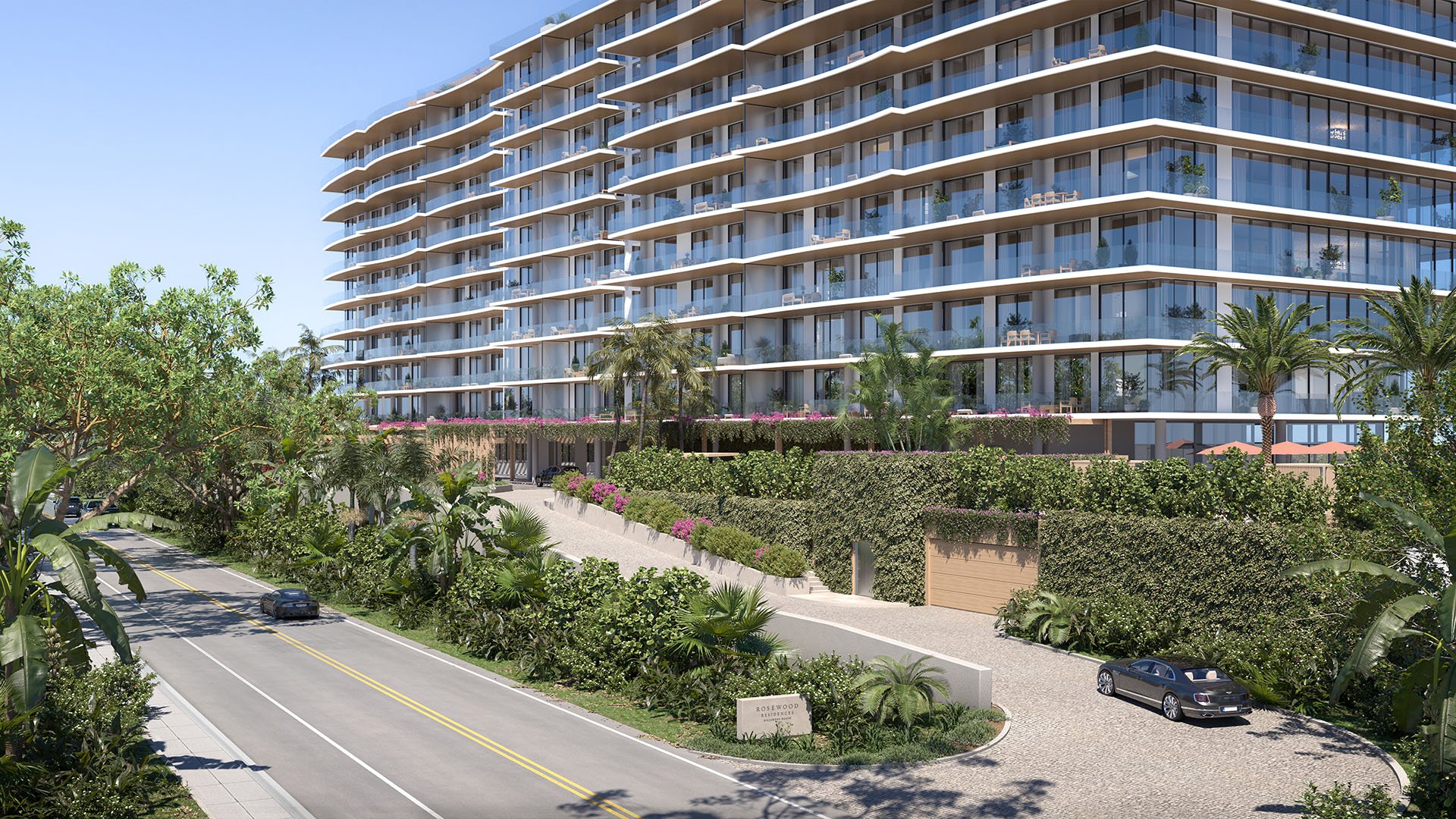
A buyer considering Rosewood Residences Hillsboro Beach should request the same documentary clarity expected of any significant building system. Ask what is installed, what is merely planned, and what requires separate approval or expenditure. This is a due-diligence framework, not a statement about that project’s charging or battery specifications.
The most useful distinction is between equipment available today and infrastructure reserved for tomorrow. A charger count alone does not explain how the garage will operate as participation grows.
Before discussing a resident charging price, establish whether electricity will pass through an individual dwelling meter, a common-area meter, or dedicated EV service. The meter arrangement should come before the billing policy. Ask the electrical team to show the proposed configuration and the association to explain how charges will reach each user.
The billing policy should distinguish electricity consumption from equipment or subscription charges, maintenance, and any project-adopted administrative costs. Request written terms for charger access, resident reimbursement, and maintenance allocation rather than infer them from the presence of charging equipment.
Charging prices elsewhere are no substitute for this review. Ask whether charging is included as an amenity or billed separately, and request an itemized explanation of any taxes, fees, or other charges. Do not presume that a home-charging tariff governs shared condominium chargers.
For a Hillsboro Beach residence, confirm whether any proposed home-charging program applies to the property type and parking arrangement. Request current eligibility terms and installation requirements before treating a program as an option for a shared garage.
An ownership budget should distinguish installation costs, recurring equipment or subscription charges, and electricity usage. Ask which items are included in a quoted monthly payment and which would appear separately on the resident’s or association’s bill.
A household considering solar, storage, and EV charging should evaluate those choices together. Confirm whether the proposed program has restrictions involving net metering or time-of-use service. Do not use a general residential rate to forecast a shared garage’s operating cost without confirming the actual service and tariff.
For a multi-space garage, ask the engineer to evaluate managed charging rather than assume every future charger must operate simultaneously at full output. The design brief should distinguish installed chargers from spaces prepared for later installation and state the operating assumptions behind both. Buyers should understand what the proposed controls are intended to deliver during their expected charging window.
The project team should confirm applicable Hillsboro Beach requirements and permit conditions before presenting a design as compliant. Request a separate assessment if a proposal includes DC fast charging rather than assuming the same design assumptions apply.
For a comparison property such as Ocean 580 Pompano Beach, bring the same questions to the review without assuming equivalent infrastructure. Ask whether future expansion has been evaluated with the utility and whether any service-upgrade costs have been determined for the project. Treat a preliminary allowance as a budget assumption, not a confirmed cost.
A battery proposal should begin with the intended loads and operating objective. Is the priority selected backup loads, coordination with renewable generation, or another documented controls strategy? Do not accept a savings estimate or promised backup duration without a property-specific tariff, load profile, battery specification, and controls plan.
Ask the electrical team to identify applicable equipment certifications, installation requirements, and labeling provisions. Request a clear account of any utility application, interconnection agreement, permits, inspections, or metering changes needed before operation. Equipment approval should not be mistaken for a promise about what the battery will power.
If renewable generation is part of the proposal, have the team confirm system-sizing criteria and authorization to operate. Avoid assuming that an equipment installation date is also the date the complete system can enter service.
Separately, ask the association and its advisers to document battery ownership, access, maintenance responsibility, replacement funding, and allocation of any benefit. Do not treat technical interconnection documents as a substitute for explicit ownership and cost-sharing terms.
Future flexibility belongs in the drawings before finishes and paving constrain the options. Ask the design team to reserve electrical-room space, dedicated EV-panel capacity, communications pathways, and conduit routes to parking spaces. Each reservation should be identifiable, not subsumed under a broad promise of future readiness.
The same discipline applies when reviewing Glass House Boca Raton as part of a broader search. In Boca Raton or Hillsboro Beach, request a clear distinction between physical space reserved for equipment and electrical capacity available to serve it. Neither establishes the other, and no project-specific capability is implied here.
Ask for spare-capacity calculations, panel-space allowances, conduit routes, communications provisions, and expansion assumptions to be documented in the electrical drawings and condominium turnover package. If storage is contemplated later, request a separate design review of the proposed location and installation requirements. Unused floor area should not be treated as approval.
Before committing, assemble a compact infrastructure file: the meter arrangement, applicable tariff, charging policy, electrical capacity assessment, expansion drawings, and any battery interconnection documentation. Have the relevant professionals reconcile discrepancies between sales descriptions, engineering plans, and association terms.
For a private client, the objective is not the largest equipment inventory. It is a clear operating arrangement, defined responsibility for costs, and a documented path for future needs. That is the standard by which charging and storage deserve to be judged.
For a discreet perspective on South Florida residences and ownership considerations, explore MILLION.
If branded residences are on your mind — as a home or as an allocation — we would be glad to share what we are seeing, privately.
Begin a quiet conversationConfirm whether chargers use individual dwelling meters, a common-area meter, or dedicated EV service. The resident billing arrangement should be designed around that configuration.
No assumption should be made without reviewing current eligibility terms. Confirm that the program applies to the property type and parking arrangement.
Separate installation costs, recurring equipment or subscription charges, and electricity usage. Request confirmation of what is included in any quoted monthly payment.
Confirm whether the proposed charging program has restrictions involving net metering or time-of-use service. Evaluate the choices together before relying on a cost estimate.
Do not use another property’s price as a substitute for reviewing the condominium’s actual service and billing terms. Request an itemized explanation of electricity costs and any additional charges.
It allows the design team to evaluate charging without assuming every future charger must operate simultaneously at full output. The proposed operating assumptions should be documented.
Ask whether the utility has evaluated the proposed expansion and whether project-specific costs have been determined. Treat a preliminary allowance as a budget assumption rather than a confirmed cost.
No. Either claim requires a property-specific tariff, load profile, battery specification, and controls strategy.
Request documentation of ownership, access, maintenance responsibility, replacement funding, and allocation of benefits. Review these separately from technical interconnection requirements.
Plan for electrical-room space, EV-panel capacity, communications pathways, and parking-space conduit. Document spare capacity and expansion assumptions in the electrical drawings and turnover package.