For a family office planning a move from Zurich to Downtown Miami, a discreet arrival depends on coordinated aviation clearance, driver positioning, luggage custody and a residence prepared before the aircraft lands.

For a family office considering a move from Zurich to Downtown Miami, the arrival deserves the same attention as the residence. The objective is not simply a short journey from aircraft to apartment, but an orderly transition: passengers, documents, luggage and household staff reach the right place without the family supervising each handoff.
Treat the arrival as an operating brief, not an assumption about what private aviation or a residential concierge provides. Separate four responsibilities: flight and clearance coordination, ground transport, luggage custody and residence acceptance. Assign a named lead to each, with one family-office contact authorized to resolve changes.
The most valuable luxury on arrival is not speed, but the absence of unresolved decisions. For a Zurich departure, specify dates and local times at both ends so the household and aviation teams work from the same schedule.
Ask the flight operator to evaluate Miami-Opa locka Executive Airport, or OPF, for the particular journey. Have the team verify aircraft suitability, runway requirements and the applicable arrival procedures before building the household schedule around that airport.
Confirm Customs clearance hours, advance-notification requirements and any arrangements needed for an arrival outside regular hours. Do not treat the arrival time as settled until the flight team has confirmed the applicable clearance arrangements.
Keep fixed-base operator, or FBO, opening hours distinct from Customs availability. A private terminal or secure ramp should not be treated as permission for a particular vehicle to approach an aircraft. Confirm each matter independently.
If Miami International Airport is considered as an alternative, ask the flight operator to verify handling and clearance arrangements there separately. Do not treat an alternative gateway as an interchangeable fallback that requires no further coordination.
The chauffeur’s instructions should identify the selected FBO, its exact address, an approved waiting position and the person authorized to call the vehicle forward. OPF’s general airport address is not a sufficient destination instruction when the family is arriving through a specific facility.
Ask whether pickup will occur at the terminal entrance or another authorized location. Ramp-side collection, vehicle access credentials and waiting permissions require confirmation; they are not benefits to infer from the word private. Agree on a holding plan if clearance takes longer than expected, and keep the residence team informed without prematurely releasing its receiving staff.
Ask the transport provider for a transfer-time estimate based on the selected terminal, destination and anticipated departure time. Schedule the building handoff around an updated departure-from-terminal message rather than touchdown alone.
For a buyer considering Aston Martin Residences Downtown Miami, the question is practical: which entrance should the arriving vehicle use, and who will be there to receive the household? Obtain the answer for the specific residence and arrival date.
Consider a two-vehicle arrangement when the party’s luggage would compromise passenger comfort. One vehicle carries the family and immediate essentials; the other carries released luggage with a designated custodian. This is a planning option, not a standard airport or building service.
Before departure, prepare a discreet inventory identifying each piece and its destination room. Decide who holds travel documents, valuables and first-night necessities, subject to applicable clearance requirements. Avoid a system in which several people assume someone else has counted the bags.
At the airport, reconcile the inventory after luggage is released and before vehicles depart. At the residence, repeat the count with the receiving representative. Any proposed storage between these points should have an agreed location, access arrangement and responsible person.
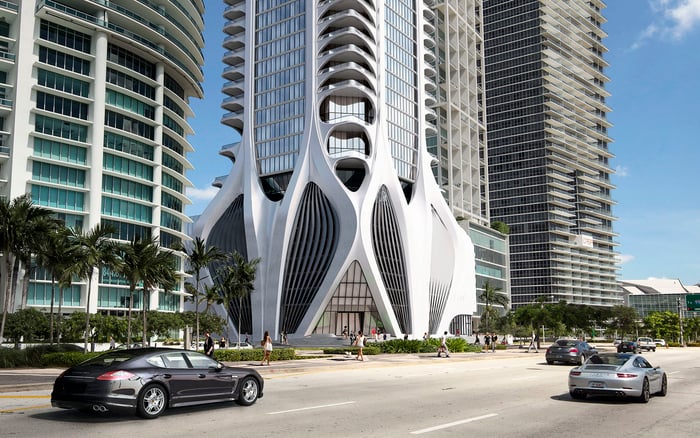
When assessing One Thousand Museum Downtown Miami, ask how the planned luggage delivery would be handled, including any service-elevator reservation or separate delivery entrance. An impressive residential setting does not establish a luggage-transfer protocol for your household.
Accept a residence as ready through a pre-arrival inspection, not a reassuring message that preparations are underway. Consider a written checklist covering access credentials, climate control, hot water, lighting, connectivity, housekeeping and the rooms needed immediately. Record each unresolved issue and name the person responsible for closing it.
Coordinate the household’s preparations with building permissions. Agree on staff access, deliveries, loading areas and elevator use in advance where relevant. If furnishings or equipment are arriving separately, keep those movements distinct from the family’s arrival unless management has confirmed a workable combined plan.
For Waldorf Astoria Residences Downtown Miami, frame these questions as purchase due diligence and future operating requirements, not assumptions about present occupancy or available services. Confirm the particular unit’s delivery and occupancy status before attaching a relocation calendar to it.
The same discipline applies when the search extends into Brickell. A household evaluating Baccarat Residences Brickell should establish what will be available on its intended arrival date and which arrangements must be made independently. A project name alone cannot answer operational questions.
The arrival brief should accommodate a delayed departure, a revised clearance window, a vehicle substitution or a residence that fails its final inspection. Each scenario needs an escalation contact and an agreed decision point. Do not make the family the default coordinator while it is in transit.
If passengers and bags travel separately, decide who accompanies each movement and how any delay is communicated. If the residence cannot be accepted as ready, have an alternative accommodation plan in place rather than improvising at the terminal.
Keep sensitive information proportionate to each role. The driver needs approved pickup instructions and a destination; the receiving team needs access authorization and an arrival update. Share household documents and detailed inventories only where operationally necessary.
For this kind of relocation, the strongest residential fit is one whose confirmed arrangements suit the household’s actual movements. Ask the same questions across the shortlist: where does the car stop, who receives the family, how do bags reach the apartment, and who resolves an after-hours problem?
Turn the answers into a residence-specific arrival brief before committing to the first journey. Architecture establishes the setting; clear responsibilities make it usable from the first evening.
Explore a residence search shaped around your household’s arrival requirements with MILLION.
If branded residences are on your mind — as a home or as an allocation — we would be glad to share what we are seeing, privately.
Begin a quiet conversationAsk the operator to verify aircraft suitability, runway requirements, handling and applicable arrival procedures. Build the household schedule around the confirmed arrangements.
Have the flight team confirm clearance hours and advance-notification requirements for the specific arrival. Keep those arrangements separate from terminal opening hours.
No; ask the flight team to verify whether it can be arranged and what notice is required. Do not settle the household arrival schedule before receiving confirmation.
Do not infer Customs availability from terminal operating hours. Confirm each separately for the intended arrival.
Ramp-side pickup should not be assumed. Confirm the authorized pickup location, vehicle permissions and waiting arrangements with the selected facility.
Request an estimate from the transport provider for the selected terminal, destination and anticipated departure time. Update the residence team when the vehicle leaves the terminal.
A second vehicle is an option when luggage would compromise passenger comfort. Assign a custodian and reconcile the inventory at both airport release and residential receipt.
Consider access credentials, climate control, hot water, lighting, connectivity, housekeeping and immediately needed rooms. Building access and any loading or elevator arrangements should also be confirmed.
Ask the flight operator to verify suitability, handling and clearance arrangements separately. Do not assume a change of gateway requires no additional coordination.
No; the suggested procedures are due-diligence questions and planning practices, not verified services at the linked projects. Confirm unit readiness, occupancy timing and building arrangements individually.