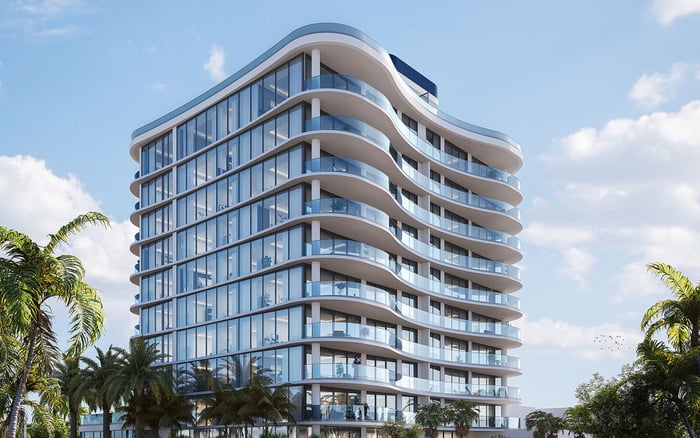
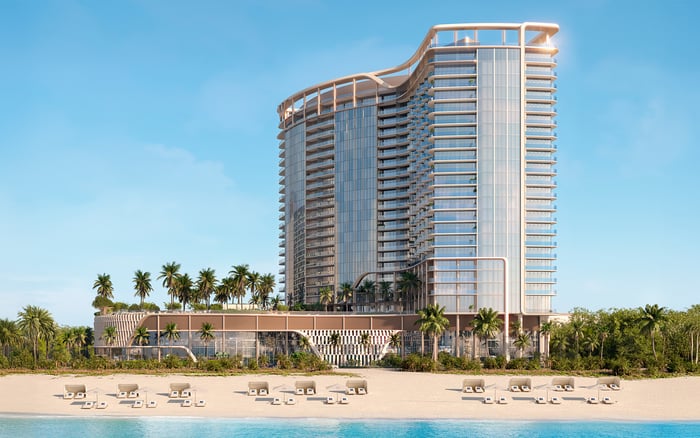
A primary-residence review of W Pompano Beach Hotel & Residences, focused on the records, equipment elevations, insurance terms, and emergency operating plans buyers should examine before committing.

For a primary-residence buyer, luxury includes returning to a functioning home after a disruption. At W Pompano Beach Hotel & Residences, the essential review extends beyond finishes and hospitality services to three less visible considerations: flood-claim history, critical equipment exposure, and the arrangements for restoring residential operations.
The project is planned at 20 North Ocean Boulevard, Pompano Beach, FL 33062. It is marketed with 74 two- to four-bedroom residences of approximately 2,400-3,400 square feet, alongside descriptions of three penthouses with rooftop pools. Buyers should confirm the complete residence count in the offering documents rather than assume how the penthouses are counted.
For a year-round household, the question is not simply whether the residence suits daily life. It is whether the building's documented protections and operating commitments support that life when normal services are interrupted.
The reviewed materials do not establish a verified, project-specific history of flood, water-loss, or storm-damage claims. That does not mean there have been no prior claims. Silence is not a substitute for a documented insurance record.
Start by separating the proposed building from any predecessor property. Ask which insured entity, structure, policy period, and address each loss record covers. A historical claim associated with the site should not automatically be assigned to the proposed residence. Equally, a new development does not make the site's history irrelevant to diligence.
Request available insurer loss runs, claim descriptions, remediation records, and evidence of completed repairs where applicable. Have counsel and an insurance adviser reconcile these records with the seller's disclosures and insurance documents. For each relevant loss, establish what happened, what was repaired, whether the claim remains open, and whether any continuing obligation could affect owners.
The objective is a coherent record-not an unqualified assurance that the property has never experienced water damage.
The reviewed materials do not establish the garage elevation, property-specific flood zone, elevation certificate, or actual locations of critical equipment. There is therefore no basis to state that generators, switchgear, or other essential systems sit in the garage or are exposed to flooding there.
The more precise question is this: which systems could be affected if water entered a lower-level space, and what protects them?
Before applicable contractual deadlines, request the flood-map panel, survey, elevation certificate if available, civil plans, and mechanical, electrical, and plumbing plans. Include equipment schedules and garage floodproofing details. Ask the design team to identify equipment elevations using a consistent vertical reference, allowing meaningful comparisons among floor heights, flood elevations, and equipment heights.
Focus on electrical distribution, elevator-related equipment, water systems, fire protection, and any backup-power installation. Review access for inspection and repair as well as physical protection. Keeping equipment dry is only part of the continuity question; buyers also need to understand how essential services would be restored.
Pompano Beach's flood-resistant development code generally requires new residential construction and substantial improvements to elevate the lowest floor to the higher of base flood elevation plus one foot or 18 inches above the highest crown of adjacent streets.
In special flood-hazard areas, enclosed spaces below required elevated floors are generally restricted to parking, limited maintenance storage, or access to living areas. Mechanical, plumbing, and electrical systems associated with permitted lower-level spaces must be elevated to at least base flood elevation plus one foot. Applicable construction must use flood-damage-resistant materials and resist flotation, collapse, and lateral movement.
These requirements provide a benchmark, not proof that the project's approved plans, construction, or equipment placement satisfy them. Ask a qualified professional to explain which requirements apply and reconcile them with the actual design documents.
For a waterfront purchase, the distinction between a regulatory standard and demonstrated execution matters. A buyer also considering The Ritz-Carlton Residences® Pompano Beach should apply the same document-based questions without assuming either property's technical performance from its branding.
Electrical and plumbing repair are advertised services at W Pompano Beach. Those offerings do not establish emergency operating capability. The reviewed service materials do not include a detailed hurricane-response, flood-recovery, or business-continuity plan; that does not establish whether an internal plan exists.
Request a written plan covering staffing, resident communications, garage closure, elevator operation, water supply, fire protection, vendor mobilization, and reopening authority. It should distinguish responsibilities among the association, hotel operator, and other relevant parties rather than leave residents to infer who is accountable.
Backup power warrants a separate review. Verify generator capacity, tested loads, fuel duration, replenishment arrangements, and exactly which residential and hotel systems would remain operational. A generator, if confirmed, should not be treated as a promise of full residential functionality.
For a household, reopening should mean more than an accessible lobby. Ask who determines that residences can be occupied and which services must be restored first. If Waldorf Astoria Residences Pompano Beach is also on the shortlist, compare written commitments rather than infer emergency performance from hospitality positioning.
Consider flood insurance separately for the building structure and contents; do not assume standard property coverage includes flooding. Request declarations, flood and windstorm policies, deductibles, exclusions, and a written allocation of coverage among the association, operator, and unit owner.
Ask the insurance adviser to identify who bears each deductible and which losses could remain uninsured. For a primary home, also establish whether the proposed coverage addresses temporary accommodation and other displacement expenses. Confirm coverage in the policy language rather than infer it from a premium estimate.
Confirm the flood policy's effective date, any applicable waiting period, and whether a loan-closing exception applies. Maintain coverage without lapses, and ask the insurer to explain claim-notification requirements before a loss occurs.
Do not build the ownership budget around unverified estimates for insurance or association charges. Request project-specific quotations and an adopted condominium budget when available, clearly distinguishing estimates from commitments.
The purchase decision should turn on three reconciled records: a clearly scoped loss history, technical documents explaining equipment protection, and an operating plan assigning responsibility for disruption and recovery. Resolve these questions before applicable deadlines, with legal, engineering, and insurance advisers reviewing their respective areas.
Uncertainty is not evidence of a defect. It is a reason to seek documentation before treating resilience as part of the purchase proposition.
For a discreet conversation about primary-residence priorities in South Florida, connect with MILLION.
If branded residences are on your mind — as a home or as an allocation — we would be glad to share what we are seeing, privately.
Begin a quiet conversationThe project is planned at 20 North Ocean Boulevard, Pompano Beach, FL 33062.
The project is marketed with 74 two- to four-bedroom residences of approximately 2,400–3,400 square feet and descriptions of three penthouses with rooftop pools. Confirm the complete count and penthouse treatment in the offering documents.
A project-specific flood, water-loss, or storm-damage claims history is not established by the reviewed materials. That is not a finding of no prior claims.
Actual equipment locations and garage elevation are not established by the reviewed materials. Request equipment schedules and technical plans before drawing conclusions about exposure.
The lowest residential floor generally must meet the higher of base flood elevation plus one foot or 18 inches above the highest crown of adjacent streets. Applicability and project compliance require professional review.
Request the flood-map panel, survey, elevation certificate if available, civil and building-systems plans, equipment schedules, and garage floodproofing details before applicable deadlines.
No. Electrical and plumbing repair services do not establish hurricane-response or flood-recovery capability; buyers should request a written operating plan.
Verify generator capacity, tested loads, fuel duration, replenishment arrangements, and the specific residential and hotel systems supported. Do not assume full residential functionality.
Yes. Review building and contents flood coverage separately and obtain written allocations of responsibility among the association, operator, and owner.
Ask the insurance adviser to verify the policy's effective date, any waiting period, and whether a loan-closing exception applies. Coordinate coverage to avoid lapses.