A primary-residence review of Palazzo della Luna’s advertised parking and charging amenities, with a focus on unit-specific rights, valet liability, and the written operating rules that matter during peak occupancy.
For a primary-residence buyer, luxury is measured partly by what happens between the front door and the driver’s seat. A beautiful arrival matters, but so does the ability to retrieve a vehicle, park independently, and charge overnight without uncertainty. At Palazzo della Luna, those practical questions deserve the same scrutiny as the residence itself.
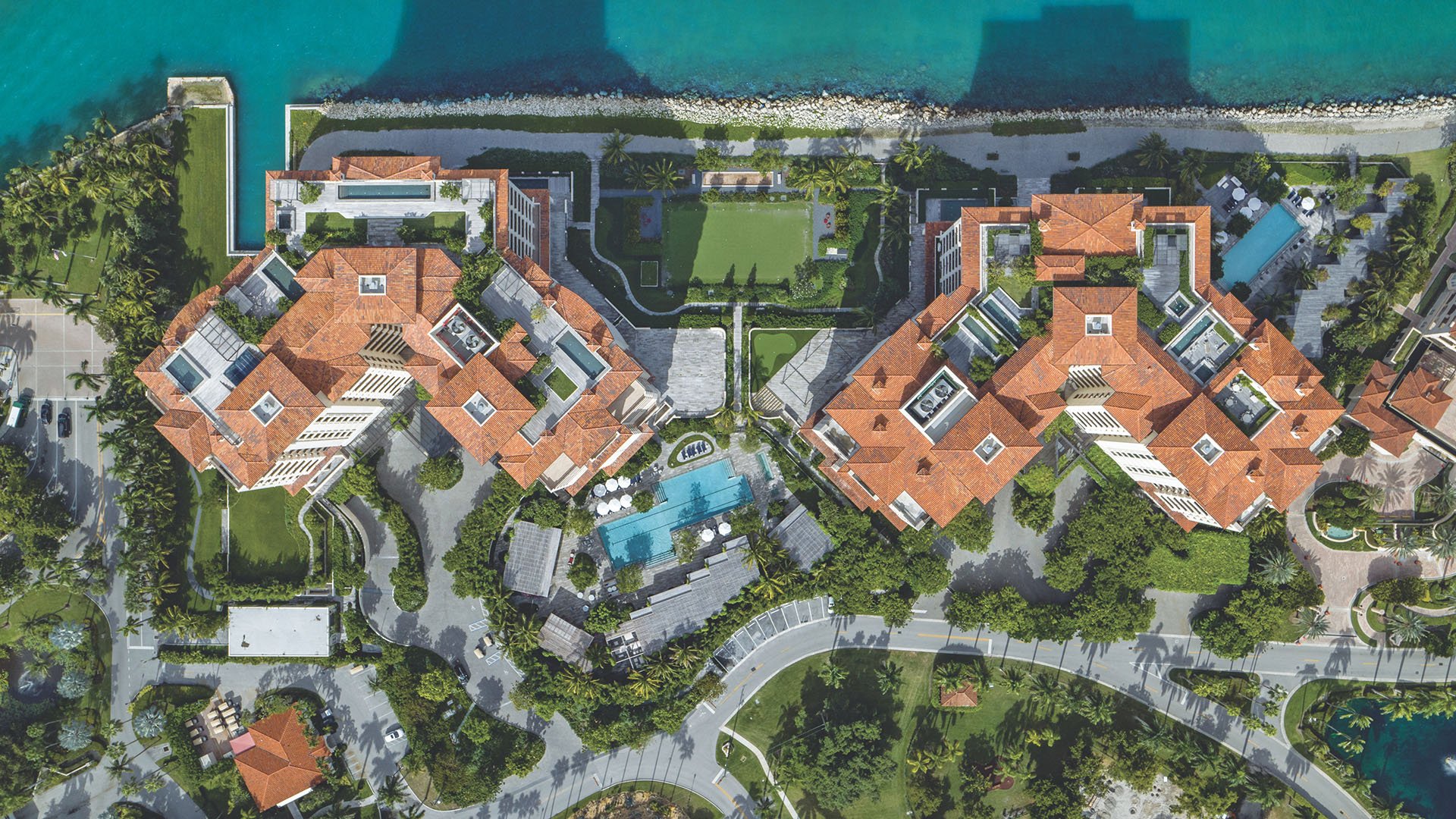
Completed in 2019, the boutique condominium has approximately 50 residences. Its address range is 6800-6899 Fisher Island Drive, Fisher Island, Florida 33109. The advertised parking offering includes valet service with optional self-parking, covered automobile and golf-cart parking, and capacity for electric-car charging stations.
The essential distinction is between an advertised amenity and a right attached to a particular purchase. An advertised offering does not establish the legal character of a parking space, the allocation of valet liability, or guaranteed charging access during high demand. Nor does the absence of an advertised policy mean the association lacks one.
A scale of approximately 50 residences provides useful context, but it does not establish how many spaces convey with an individual home or who controls them. Before relying on a parking description, request the declaration, amendments, parking plan, and unit-specific assignment. Have counsel determine whether each space is deeded, assigned, a limited common element, or available through an association-controlled arrangement.
The review should identify the exact automobile and golf-cart spaces, their permitted uses, and whether the associated rights transfer with the residence. Ask whether assignments can change, whether additional vehicles require separate permission, and whether a guest may use a resident’s space. These questions belong in the governing-document review; covered parking alone does not answer them.
For buyers also considering Palazzo del Sol, the same document-first standard provides a useful comparison framework. Compare what each specific residence conveys rather than treating a project’s parking description as a complete account of ownership rights.
“Optional self-parking” is a meaningful advertised option, but it does not establish unrestricted access to a specific space. A primary-residence buyer should clarify the operating conditions: access hours, credentials, vehicle-placement rules, and circumstances in which valet handling may be required.
Confirm whether independent parking remains available during busy periods and whether residents can reach their vehicles without staff assistance. Inspect the route to the actual space with the intended vehicle, rather than evaluating only the arrival area. Covered parking is advertised; vehicle compatibility and practical access still require inspection.
The financial arrangement also needs clarity. The advertised offering does not specify whether valet service is included in assessments, separately charged, or subject to usage limits. Request the current fee schedule and a written explanation of any resident, guest, or additional-vehicle charges before budgeting for everyday use.
Valet convenience should come with a clear chain of responsibility. Obtain the valet agreement and current insurance certificate, then have counsel and an insurance adviser review the operator’s contracting structure, coverage limits, exclusions, and allocation of liability. The advertised service does not establish those terms.
Focus on when custody begins and ends, who retains keys, whether vehicles may be moved between spaces, and how vehicle condition is recorded. Ask how damage is documented, where claims are submitted, what deadlines apply, and whether any indemnity or waiver affects the owner’s position.
An insurance certificate is not a complete answer. The relevant question is how the applicable agreement and coverage would respond to a particular loss. For a household with valuable vehicles, that review belongs before closing, not after the first disputed scratch.
“Capacity for electric-car charging stations” does not specify an installed charger count, operating specifications, or a charging entitlement for every residence. Dedicated charging stations for the property’s signature Garia golf carts are advertised separately and should not be treated as evidence of automobile-charging availability.
Verify which equipment is installed and accessible to the residence. Establish whether it is private or shared, who owns it, how electricity is metered, and who pays for use, maintenance, and repairs. If installation is proposed rather than existing, request written approval requirements and clarity on responsibility for the necessary work.
A primary-residence buyer should also confirm reservation rules, session limits, resident-versus-guest priority, and procedures for vehicles left in charging spaces after charging ends. Neither infrastructure capacity nor an installed charger alone guarantees availability when the household needs it.
The advertised offering specifies no retrieval-time guarantee, staffing minimum, or holiday and peak-occupancy parking protocol. That is a reason to request the operating rules, not evidence that service is inadequate.
Ask management to explain how simultaneous resident departures, guest arrivals, and charging demand are handled. Seek written rules for valet queues, guest vehicles, overflow parking, charger queues, and noncharging vehicles occupying charging spaces. Clarify whether self-parking remains an option when valet demand is elevated.
Review board minutes and resident notices for relevant outages, staffing shortages, damage claims, charger failures, infrastructure projects, and special assessments. A quiet-hour visit can establish the layout, but it cannot demonstrate peak-demand performance. Where possible, observe operations during a busy period and distinguish that observation from any contractual commitment.
Unit-specific descriptions illustrate the risk of generalization. The advertised features of 6893 Fisher Island Drive, Unit 6893 LPHCENTER, include a two-car garage and an electric-vehicle home charger. Those of 6800 Fisher Island Drive, Unit 6842, include “2 or more spaces,” valet parking, and guest parking.
These are claims about particular residences, not building-wide entitlements. Treat them as research snapshots rather than confirmation of current availability. For the home under consideration, reconcile the advertised description with the governing documents, physical inspection, and written confirmation of transferability.
The final review should produce three clear answers: which parking rights convey, what responsibility applies while a vehicle is in valet custody, and what charging access the residence can actually use. Unresolved details should become specific document requests, not broad assurances about service.
If the search also includes The Residences at Six Fisher Island, apply the same questions without assuming equivalent arrangements. The strongest purchase decision aligns the residence’s documented rights with the household’s daily routine, including the busiest days.
For a discreet perspective on selecting a South Florida primary residence, explore MILLION.
If branded residences are on your mind — as a home or as an allocation — we would be glad to share what we are seeing, privately.
Begin a quiet conversationIts published address range is 6800–6899 Fisher Island Drive, Fisher Island, Florida 33109.
The building was completed in 2019 and is described as a boutique condominium with approximately 50 residences.
Optional self-parking is advertised alongside valet service. That offering does not establish unrestricted access to a particular space.
The brochure does not establish the legal status of an individual residence’s parking. Review the declaration, amendments, parking plan, and unit-specific assignment.
The brochure does not specify whether valet is included, separately charged, or subject to usage limits. Request the current fee schedule and written terms.
The marketed service does not establish liability allocation. Review the valet agreement, insurance coverage, exclusions, and claims procedures with appropriate advisers.
The advertised charging capacity does not establish an installed charger for every residence. Verify equipment and access rights for the specific home.
No. Dedicated Garia golf-cart charging stations are marketed separately from electric-car charging capacity.
The brochure provides no retrieval-time guarantee or peak-occupancy protocol. Request written staffing, queue, guest-parking, and overflow rules.
Confirm the exact parking rights and charging access that transfer with the residence. Review valet custody and liability terms rather than relying on another unit’s advertised features.