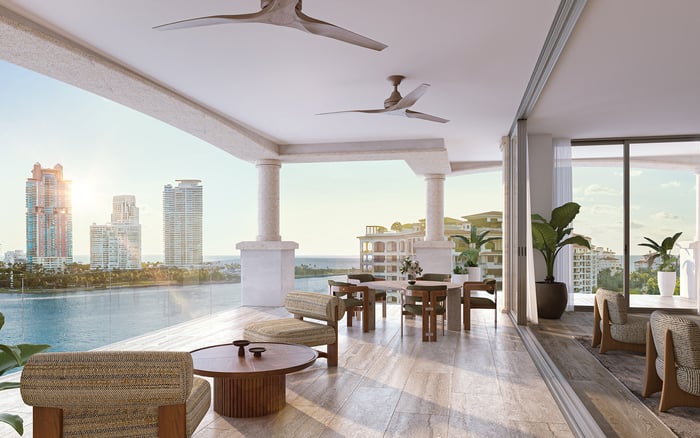
For art-focused buyers at Palazzo della Luna, a considered purchase includes more than selecting the right wall. Clarify approval authority, attachment criteria and installer insurance before closing, then translate those answers into a precise installation plan.
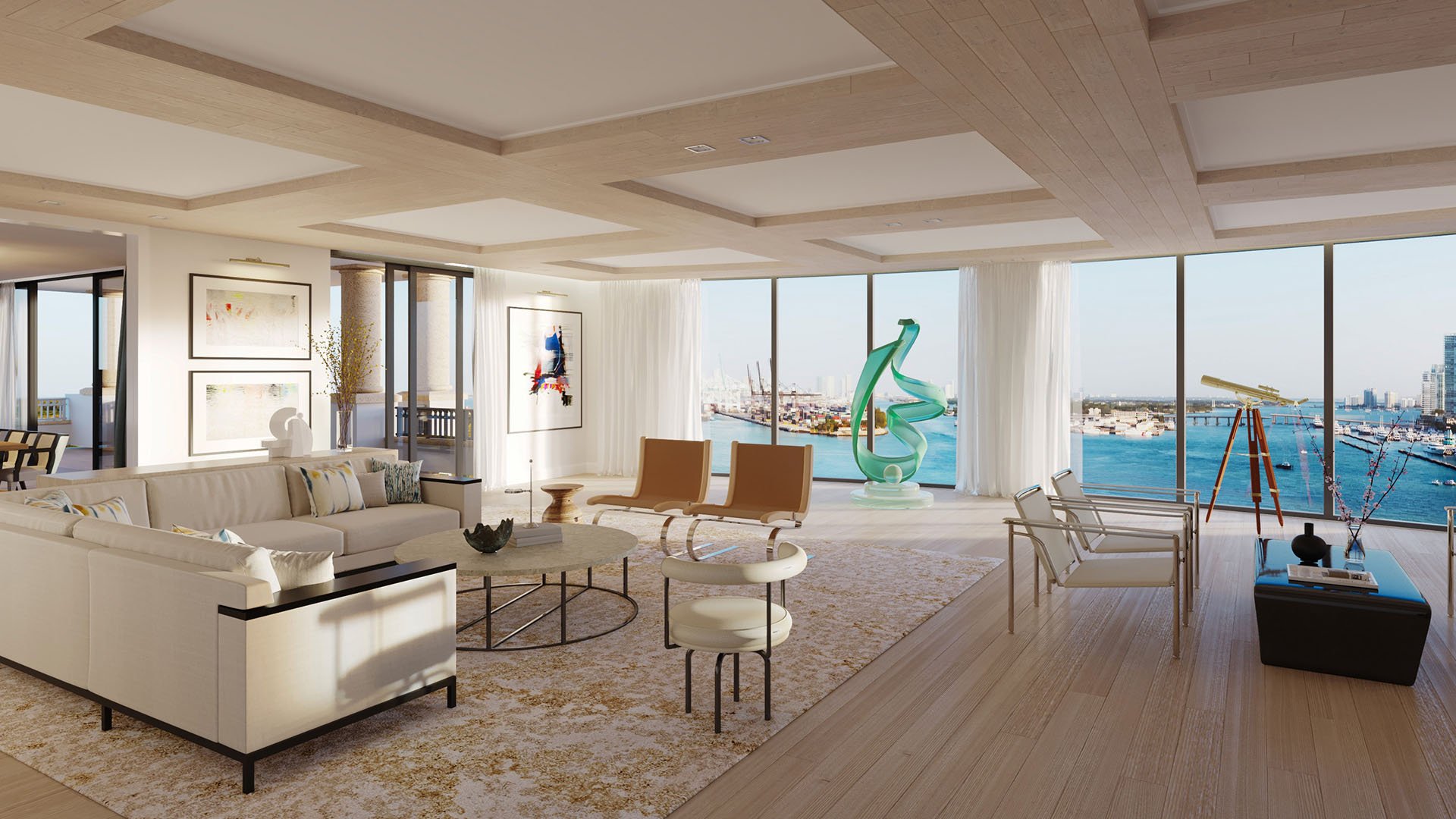
A residence intended to hold a serious art collection should be evaluated with that collection in mind. At Palazzo della Luna Fisher Island, a Fisher Island condominium designed by Kobi Karp with approximately 50 residences, the buyer’s task is to align aesthetic ambition with the practical conditions of ownership.
The questions are precise: who approves the proposed work, what can the intended wall support, and what must the installer submit before arriving? A purchase agreement does not answer them, and an attractive wall is not confirmation that a particular installation is permissible.
Before closing, ask the association property manager for current alteration guidance, structural attachment criteria, vendor rules and the insurance checklist. Frame the request around the actual collection, not a general intention to hang art. A modest framed work, a substantial relief and a ceiling-suspended piece each warrant a distinct description. Do not assume that any one automatically triggers a particular approval requirement.
Fisher Island’s approval framework distinguishes condominium-association requirements from Architectural Control Committee, or ACC, review. One approval should not be assumed to satisfy every applicable requirement. Start with the association property manager, who can identify the forms and approving parties relevant to the proposed project.
ACC approval is required for modifications of any kind to a building’s exterior. Explicit examples include window and door replacement, painting, antennas and satellite dishes. That exterior-review framework does not, by itself, establish Palazzo-specific approval thresholds for ordinary interior artwork hanging, drilling or heavy installations.
Describe whether the proposal remains entirely inside the residence or involves an exterior modification. Ask management to confirm the applicable review route in writing, including whether the scope requires association approval, ACC review or another determination.
For buyers also considering Palazzo del Sol Fisher Island, the same due-diligence questions are useful. Answers must still be obtained for the particular property; a familiar location is no substitute for building-specific instructions.
A well-prepared proposal lets management and any reviewing professionals understand the installation without piecing it together from separate emails. Begin with an inventory recording each work’s weight, dimensions, intended location, hardware and attachment points. Explicitly identify electrical requirements and any ceiling suspension.
Distinguish the artwork from the assembly supporting it. Ask the installer to describe the frame, brackets, backing or other components so the proposal addresses the complete installation, not the object’s weight alone. This is a planning recommendation, not a stated Palazzo submission rule.
Depending on the applicable review process, an approval package may require an application, a detailed project narrative and architectural or engineering drawings. Renderings or elevation sketches may also be required to show the intended result. Where FICA review applies, submissions must be complete, organized, legible and accompanied by the required copies; incomplete or piecemeal packages may not be accepted.
Confirm the required package before commissioning drawings. The objective is a coordinated submission that answers the actual review questions, not an elaborate presentation built on assumptions.
Do not assign a presumed maximum artwork weight to a Palazzo della Luna wall. A building-wide weight allowance, approved-anchor specification or engineering sign-off threshold should not be assumed without current, property-specific confirmation.
Ask instead for guidance tied to the proposed location and attachment method. Has the wall’s construction been identified? Which attachment methods are permitted? Are any areas restricted? Does the complete installation require professional evaluation? Seek written clarification of who is authorized to make that determination.
Keep three questions separate: whether an installation is permitted, whether its attachment design is acceptable, and whether the installer is cleared to perform the work. An affirmative answer to one does not answer the others.
If a substantial or suspended work is central to the purchase, consider having the proposed installation assessed during the due-diligence period. Discuss any contractual implications with your adviser and counsel rather than treating a preferred display location as an assured feature of the residence.
Installer insurance warrants the same precision as the attachment plan. Obtain Palazzo della Luna’s current requirements directly from management before instructing a vendor to prepare a certificate of insurance. Do not substitute assumed coverage limits, additional-insured wording, waiver-of-subrogation provisions or submission deadlines.
Ask which entities must be identified, which documents are required in addition to the certificate, who reviews the submission and when the vendor may be scheduled. Confirm whether requirements differ for the art handler, installation contractor and any specialist performing electrical or structural work.
Keep building compliance separate from protection for the collection. Liability coverage, workers’ compensation, automobile liability and artwork coverage are distinct subjects to discuss with the vendor and your insurance adviser. Their relevance to a proposed installation does not establish that Palazzo requires each category or any particular limit.
An art-event insurance checklist is not a residential installation checklist. Follow the building’s written instructions for access and approval, and separately confirm protection appropriate to the artwork and the work being undertaken.
The transition from offer to ownership is easier to manage when the collection has its own decision schedule. Before closing, aim to understand the approval route, technical questions and vendor-document requirements. After ownership, proceed only once the required permissions and arrangements for the actual scope have been confirmed.
Ask about access arrangements, delivery coordination, permitted work periods and protection of shared areas rather than assuming familiar procedures apply. These are scheduling questions to resolve with management, not established Palazzo rules. Avoid irreversible installation commitments while essential answers remain open.
A buyer comparing Palazzo with The Residences at Six Fisher Island can use the same planning framework without transferring one property’s requirements to another. For a collection-led purchase, the comparison includes the clarity of the ownership process as well as the appeal of the rooms.
Keep the written guidance, approved scope, drawings where required, hardware description and accepted vendor documentation together. If the artwork, location, installer or attachment approach changes, ask whether the existing approval still applies before proceeding.
The governing principle is straightforward: ownership, installation permission, structural suitability and insurance acceptance are separate matters. Resolving each on its own terms allows the finished room to feel effortless without making the preparation casual.
For a considered approach to collection-led South Florida ownership, explore MILLION.
If branded residences are on your mind — as a home or as an allocation — we would be glad to share what we are seeing, privately.
Begin a quiet conversationRequest current alteration guidance, structural attachment criteria, vendor rules and the insurance checklist. Seek written answers tied to the proposed artwork and installation location.
No. Condominium-association requirements and ACC review are distinct, so confirm which approvals apply to the proposed scope.
The exterior-review framework does not establish Palazzo-specific approval thresholds for ordinary interior hanging, drilling or heavy installations. Ask the association property manager to identify the applicable process.
Modifications of any kind to a building’s exterior require ACC approval. Express examples include window and door replacement, painting, antennas and satellite dishes.
No Palazzo-specific maximum artwork weight or wall-load limit is established here. Obtain written, location-specific guidance rather than assuming a numerical allowance.
Record artwork weight, dimensions, location, hardware and attachment points. Identify any electrical requirements or ceiling suspension, then confirm which formal submission materials are required.
Depending on the applicable process, a package may require architectural or engineering drawings, renderings or elevation sketches. Confirm the requirements before commissioning the materials.
Do not assume coverage limits, additional-insured wording, waiver requirements or deadlines. Obtain the building’s current checklist and confirm the required documents with management.
No. Event insurance conditions do not establish Palazzo della Luna’s residential installation requirements, and collection protection should be reviewed separately.
Ask whether the existing approval remains applicable if the artwork, location, installer or attachment method changes. Retain the written guidance and final installation documentation together.