A primary-residence review of Mr. C Residences West Palm Beach, focused on proposed assessments, shared hotel expenses, service-contract terms and the staffing needed to support everyday living.

For a primary-residence buyer, the appeal of Mr. C Residences West Palm Beach is not simply arriving somewhere beautifully serviced. It is knowing that experience will remain dependable on an ordinary weekday, with ownership costs that can be understood before committing.
The hotel-and-condominium development brings the Cipriani family’s hospitality-led concept to a 27-story tower with 146 private residences and 110 hotel accommodations. Arquitectonica is the architect; Terra Group and Sympatico Real Estate are developing the project alongside the Mr. C brand. Completion is targeted for 2027, not guaranteed for that year.
The advertised offering is substantial: concierge reception, butler service, 24-hour valet and security, poolside food-and-beverage service and complimentary pool-deck towels. For someone living here year-round, the essential question is how those promises translate into funded operations. Service scope, staffing coverage and contractual responsibility deserve as much attention as the residence itself.
An amenity can be available to residents without every associated service being included in their assessment. That distinction matters particularly where hotel and residential uses coexist.
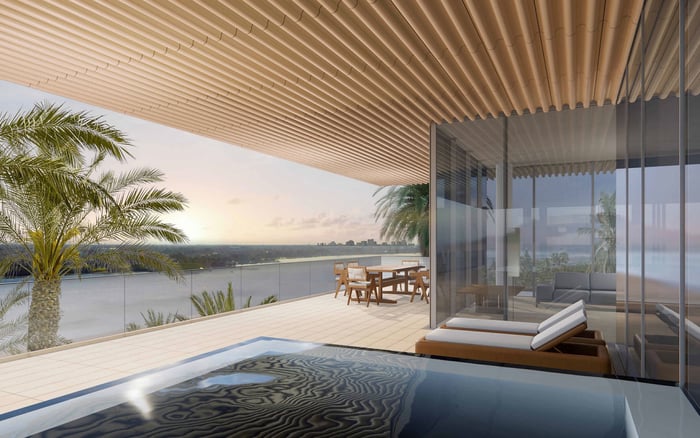
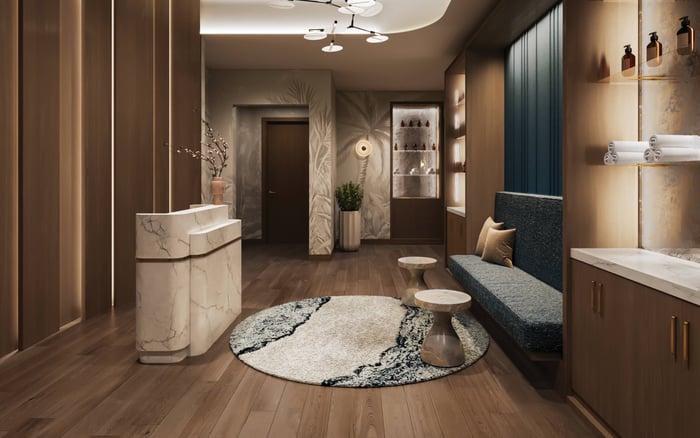
The advertised outdoor program includes a garden-level lap pool, cabanas, a pool bar and lounge, outdoor cinema, bocce court and children’s playground. Wellness offerings include yoga facilities, Pilates and Peloton studios, and a signature spa with sauna and steam rooms. A fitness center, library, business lounge with meeting rooms, and billiards room round out the everyday amenities.
Request a service matrix identifying each offering, its operating hours, access rules, who pays and any separate charge. Housekeeping, in-residence dining and event catering are described as available services, but their treatment within assessments is not established. Complimentary towel service likewise does not mean the service has no operating cost; ask where that cost is budgeted.
The distinction is between access, included service and optional consumption. A primary-residence budget should account for all three without treating them as interchangeable.
The approximately $2.19-per-square-foot HOA estimate is not a verified final association assessment. Its billing period and measurement basis are not established, so it should not be converted into a monthly ownership figure.
A meaningful budget-variance review starts with dated, comparable budgets. There is no established basis here to describe an overrun or quantify a funding shortfall. Request the current proposed association budget, any earlier versions available for comparison, and an explanation of changed assumptions.
Ask the preparer to separate changes in service scope from changes in price. A larger payroll allowance could reflect broader coverage, higher compensation assumptions or a different allocation between hotel and residential operations. Those possibilities call for explanation, not inference.
Review reserve contributions separately from recurring operating expenses. Ask whether any introductory subsidy, deferred expense or occupancy assumption affects the proposed assessment. These are diligence questions, not established project arrangements.
If Alba West Palm Beach is also on the shortlist, apply the same comparison template. A fee comparison is useful only after reconciling included services, reserve treatment and separately billed consumption.
The combination of hotel accommodations and private residences makes shared-expense allocation central to the review. It does not establish that residents receive hotel revenue or pay every hotel operating expense.
Request the governing shared-expense exhibits and identify which entity contracts for, pays for and reconciles each shared service. Ask specifically about security, valet, concierge functions, amenity upkeep, utilities and management wherever sharing is contemplated. Do not assume every category is shared.
For any shared charge, seek the allocation basis, supporting records, adjustment mechanism and dispute procedure. Can allocations change? Who authorizes a change? How can the association review the calculation? Counsel should tie those answers to the governing documents rather than rely on a verbal description.
The objective is not to eliminate shared operations. It is to understand what the residential association is purchasing and how its share is determined.
No project-specific annual increase, CPI clause, renewal schedule, minimum charge or escalation cap is established for this review. A buyer should neither assume fixed costs nor insert an arbitrary annual increase into an ostensibly precise ownership forecast.
Request the service contracts and, where agreements remain proposed, their current terms and status. For each agreement, identify the initial term, renewal process, price-reset dates, escalation formula, pass-through charges, minimum commitments and termination rights.
If an index-linked increase is proposed, ask which index applies, when it is measured and whether a floor or cap changes the result. If labor costs can be passed through separately, ask whether those charges overlap with the general escalation formula. These are provisions to investigate, not assertions about Mr. C’s contracts.
A useful sensitivity exercise separates contractual increases from discretionary changes in service. The buyer can then distinguish the cost of maintaining the promised experience from the cost of expanding it.
Butler service and concierge reception describe intended functions, not employee counts. Similarly, 24-hour valet and security establish advertised service availability, not the number of people assigned to each shift or which entity employs them.
Request a staffing plan showing roles, hours, coverage, supervision, relief arrangements and whether personnel are dedicated to residences or shared. The corresponding budget should identify compensation assumptions, benefits, overtime, outsourced charges and the allocation of each cost where applicable.
For daily living, test the plan against ordinary moments: morning vehicle retrieval, simultaneous deliveries, an evening guest arrival and poolside service during busy periods. Ask how service continuity is maintained during absences and demand peaks.
Residential infrastructure includes private high-speed elevators, mail and package rooms, and electric-car charging ports. Ask who oversees these functions and what assistance residents can expect. Review infrastructure and hospitality together, without assuming every function has dedicated staff.
Before signing, reconcile two addresses associated with the development: 320 Lakeview Avenue and 327 Okeechobee Boulevard. Confirm the development, sales-office and legal condominium addresses rather than assigning either address a role without clarification.
Purchasers are directed to the developer for sales, marketing and development representations. Have counsel connect material service promises to the purchase and condominium documents, and distinguish targeted completion from contractual delivery provisions.
For buyers also considering Forté on Flagler West Palm Beach, the same discipline keeps the decision focused on daily utility rather than an amenity count. Mr. C’s hospitality proposition deserves consideration on its own terms, with transparent funding and operational commitments as the standard for a primary home.
For a discreet conversation about your West Palm Beach primary-residence shortlist, connect with MILLION.
If branded residences are on your mind — as a home or as an allocation — we would be glad to share what we are seeing, privately.
Begin a quiet conversationIt is a hospitality-led hotel-and-condominium development associated with the Cipriani family’s Mr. C brand. The project comprises 146 private residences and 110 hotel accommodations in a 27-story tower.
Completion is targeted for 2027, but that is not a guaranteed delivery date. Buyers should distinguish the target from the delivery provisions in their purchase documents.
No. It is an estimate with no established billing period or measurement basis, so it should not be converted into a monthly ownership cost.
No budget overrun or funding shortfall is established in this review. Buyers should request dated budget versions and explanations of changed assumptions before drawing conclusions about variances.
Advertised services include concierge reception, butler service, 24-hour valet and security, poolside food-and-beverage service and complimentary pool-deck towels. Availability does not establish how each service is funded.
Their assessment treatment is not established. Buyers should confirm whether housekeeping, in-residence dining and event catering are separately billed or funded through another arrangement.
The mixed-use arrangement does not establish that owners pay every hotel expense or receive hotel revenue. Shared-expense exhibits should identify the residential association’s obligations and allocation basis.
Buyers should examine price-reset dates, escalation formulas, pass-through charges, minimum commitments, renewal terms and termination rights. No project-specific escalation rate or cap is established here.
No. Buyers should request role-by-role coverage, relief arrangements, employment or outsourcing details, and clarification of whether staff are dedicated to residences or shared.
Two addresses are associated with the development: 320 Lakeview Avenue and 327 Okeechobee Boulevard. Buyers should confirm the development, sales-office and legal condominium addresses before contractual analysis.