A buyer-focused guide to separating Alba’s projected operating costs from reserve cash, potential borrowing and future assessments, with practical questions for reviewing the transition to owner control.

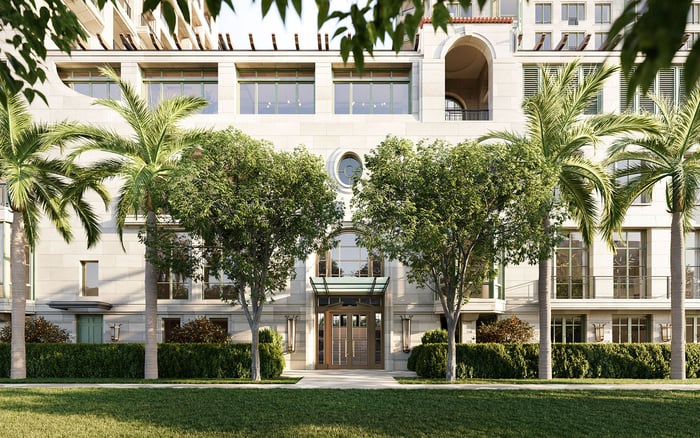
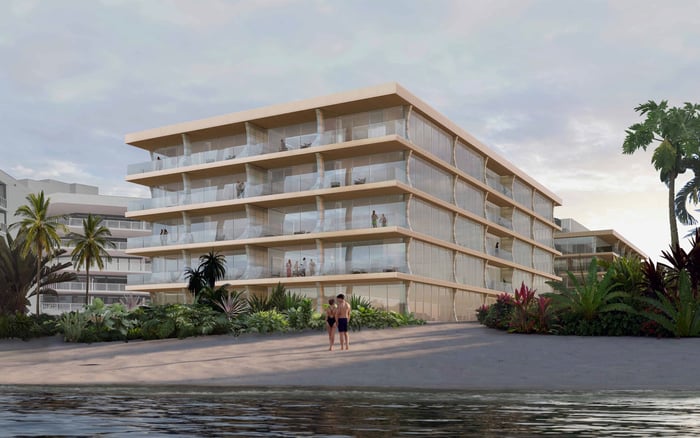
At Alba West Palm Beach, officially marketed as Alba Palm Beach, financial diligence deserves the same attention as the residence itself. Plans call for 55 residences and more than 25,000 square feet of dedicated amenity space. For buyers, the distinction between maintaining today’s experience and funding tomorrow’s replacements is particularly important.
The central question is not simply what the association initially expects to charge. It is how operating expenses, reserve contributions and any future financing would work together after owners assume board control. Neither a reserve shortfall, approved association borrowing nor a future special assessment should be presumed at Alba. Each requires documentary verification, not inference from the building’s scale or amenities.
Borrowing changes the timing of reserve funding, not the underlying cost to owners. That principle should guide the review-not become a prediction that borrowing will occur.
Alba is scheduled for delivery in 2026. That is a scheduled delivery year, not confirmation of completion or association turnover. Delivery, association formation and the transfer of board control are distinct events.
Ask for the anticipated sequence in writing, and identify which documents describe projected conditions and which reflect actual association finances. A sales-stage budget is a projection, not necessarily the budget an owner-controlled board will adopt.
The questions should be precise: Which budget period does this document cover? What reserve contributions does it assume? What materials will be available at turnover? Have assumptions changed between the original projection and the latest version?
For buyers also considering Forté on Flagler West Palm Beach, comparisons should use equivalent documents and dates. A difference in quoted monthly charges is not, by itself, evidence of stronger or weaker long-term funding.
A community-association budget typically separates income, operating expenses and reserve funding. Reserves address future, nonannual expenditures, including long-term maintenance and replacement of major association-maintained components. Routine operating costs answer a different question: what it takes to run the property during the budget period.
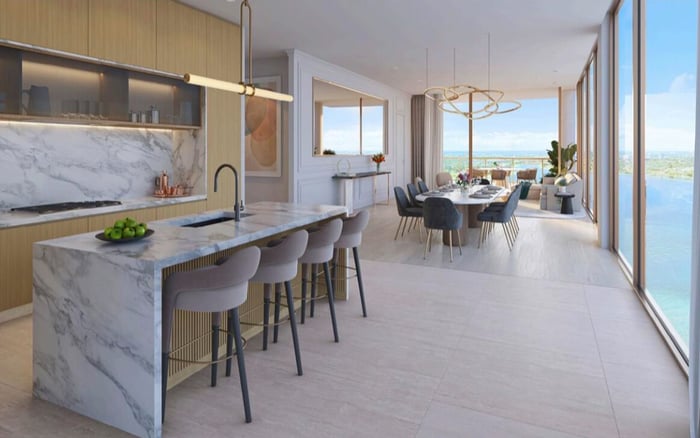
At Alba, the planned amenity footprint warrants close examination of both categories. Ask which spaces and components the association must maintain, how their ongoing service costs are reflected in the operating budget, and how future major expenditures appear in the reserve plan. The amenity area alone does not establish an appropriate reserve contribution.
Request a clear breakdown of four items: cash already held in reserves, scheduled future contributions, proposed borrowing and proposed special assessments. All may feature in a funding strategy, but they are not interchangeable. A planned contribution is not cash already collected; an undrawn credit line is not a reserve bank balance.
Request the available reserve study, including any applicable structural integrity reserve study, or SIRS. Read its funding recommendations alongside the projected association budget, rather than reviewing either document in isolation.
Ask the preparer or association representatives to explain how anticipated expenditures and contribution timing align with the money expected to be available when work becomes necessary. If the budget and study use different assumptions, request a reconciliation. The objective is a clear funding path, not simply possession of a technical document.
Florida’s 2025 condominium budget reform addresses qualifying associations with three or more habitable stories that must obtain a SIRS. Have Florida condominium counsel confirm Alba’s applicable requirements, deadlines and governing-document provisions. Building height alone is no substitute for a property-specific legal review of obligations and timing.
Under the 2025 reform, qualifying associations may use loans, lines of credit and special assessments as reserve-funding sources, subject to applicable authorization requirements. Have counsel verify whether a proposal requires approval by a majority of all unit owners-not merely a majority attending a meeting-and confirm the applicable voting procedures.
If reserve borrowing is proposed, request the actual terms rather than relying on a general assurance that credit will be available. Review the borrowing limit, conditions for drawing funds, interest provisions, fees, maturity and repayment schedule. Ask whether the budget reflects the resulting owner charges and how those charges would change under different borrowing assumptions.
Keep construction financing separate. Alba’s $82 million construction loan concerns project construction, not an association reserve credit facility, and does not establish cash available for future association obligations.
The decisive question is whether a proposed facility addresses a clearly explained timing need or makes a contribution schedule appear lighter by moving payments into later years. Either way, the repayment obligation belongs in the affordability review.
A future special assessment is a possibility to evaluate, not an Alba-specific event to forecast. Ask whether any available budget, board materials or turnover documents contemplate an assessment and, if so, whether it is merely discussed, formally proposed or approved.
Then establish the allocation applicable to the residence under consideration. Fifty-five residences does not necessarily mean 55 distinct owners or equal expense shares. Dividing a hypothetical association expense by 55 may therefore misstate an individual buyer’s exposure.
Request a residence-specific illustration using the applicable condominium-document percentages and any relevant allocation provisions. Keep regular reserve contributions, repayment of any proposed association debt, and assessment installments distinct in the scenarios. Ask whether those charges could overlap and what the combined payment schedule would look like.
A buyer comparing Alba with Mr. C Residences West Palm Beach should apply the same discipline to each residence’s documents, without assuming identical expense allocations or funding structures.
The most useful review brings together the projected association budget, available reserve study, relevant board or turnover materials, and condominium provisions governing expense allocation. If financing or assessments enter the discussion, add the proposed terms and authorization records.
Ask your advisers to distinguish what exists today from what depends on future action. Cash held, contributions budgeted, borrowing authorized and borrowing actually drawn describe different financial positions. Likewise, discussion of an assessment is not an adopted payment obligation.
For a luxury buyer, predictability is part of the ownership experience. The objective is not to demand certainty about every future expense. It is to understand how the association intends to fund foreseeable obligations, which decisions remain open, and how those decisions could affect the residence’s carrying costs after turnover.
For a discreet perspective on West Palm Beach ownership considerations and Palm Beach Residences, explore MILLION.
If branded residences are on your mind — as a home or as an allocation — we would be glad to share what we are seeing, privately.
Begin a quiet conversationThe project is officially marketed as Alba Palm Beach. Plans call for 55 residences in West Palm Beach.
No. Scheduled delivery does not confirm completion or the transfer of board control, which should be verified separately.
Neither should be presumed. Verify any reserve position or proposed assessment through current association financial documents and relevant board materials.
Reserves fund future, nonannual expenditures such as major maintenance and replacement. Operating expenses address the costs of running the association during the budget period.
Request the projected association budget, available reserve study, relevant board or turnover materials, and condominium expense-allocation provisions. If borrowing is proposed, request its terms and authorization records.
Florida’s 2025 condominium budget reform permits qualifying associations to use loans, lines of credit and special assessments as reserve-funding sources. Counsel should confirm the requirements applicable to Alba and any specific proposal.
Do not assume it is sufficient. Florida condominium counsel should verify whether approval requires a majority of all unit owners and confirm the applicable voting procedures.
That loan concerns project construction financing. It does not establish an association reserve credit facility or available reserve cash.
No. Verify the expense allocations in the condominium documents; 55 residences does not establish equal shares or 55 distinct owners.
Review draw conditions, interest provisions, fees, maturity and repayment terms alongside their effect on owner charges. Borrowing changes when funding is paid for rather than eliminating its cost.