A primary-residence review of Fendi Château in Surfside, focused on verifying interior measurements, establishing terrace rights, and reconciling asking prices with closed-sale evidence.
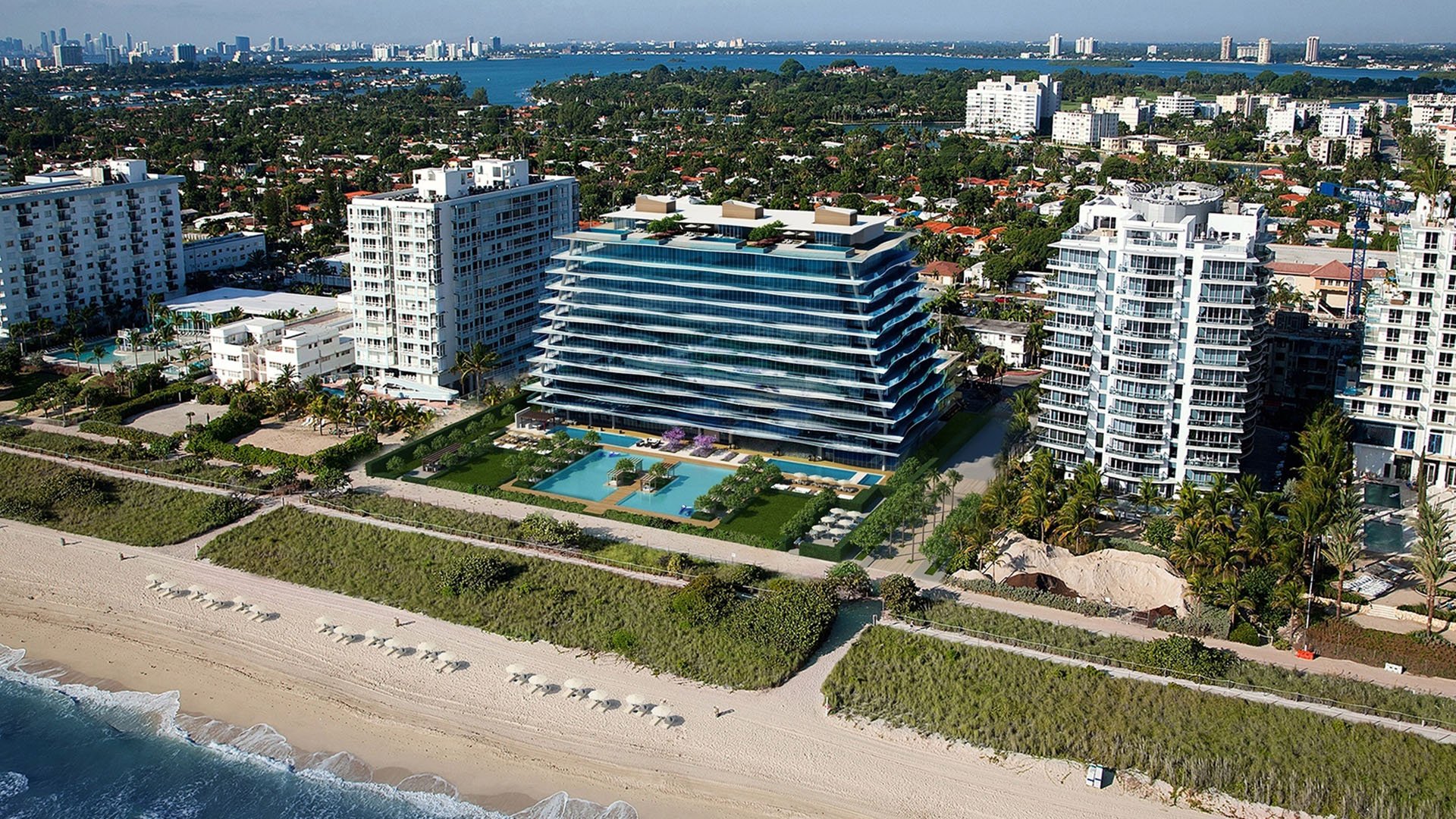
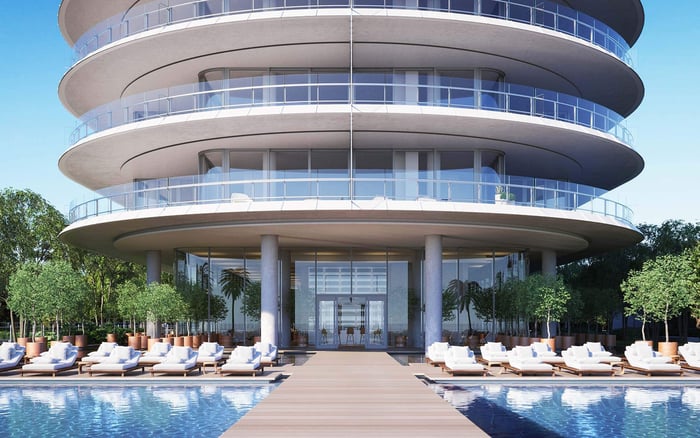
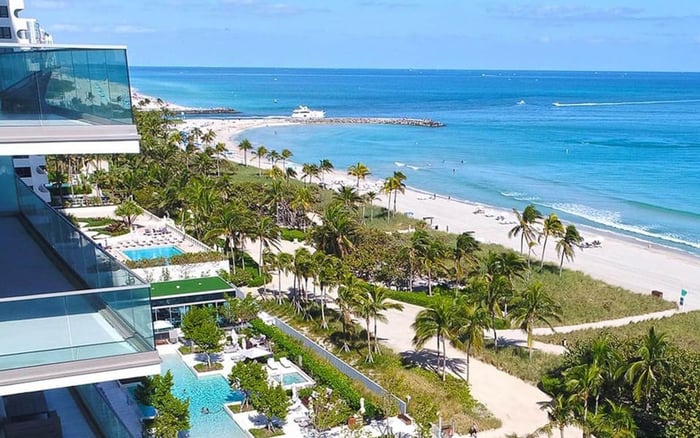
For a primary-residence buyer, the appeal of Fendi Château Residences Surfside is not simply the scale of an oceanfront address. It is the prospect of a flow-through home whose interior and terraces support everyday living. At 9349 Collins Avenue in Surfside, the condominium occupies approximately 300 linear feet of private oceanfront. Completed in 2016, it rises 12 stories.
A purchase at this level, however, requires more than an impressive total area. The essential distinction is between space described in marketing, space established by condominium documents, and space measured for valuation. Those figures should not be assumed to coincide. A terrace can be central to the pleasure of ownership without being interchangeable with conditioned interior space in a price calculation.
Residence sizes are described as approximately 3,325 to more than 7,000 square feet of livable space, with an alternative range of 3,168 to 7,101 square feet. Neither range resolves the measurement basis for a particular apartment. Residence counts also vary between 57 and 58, reinforcing the importance of checking recorded documents rather than relying on a building overview.
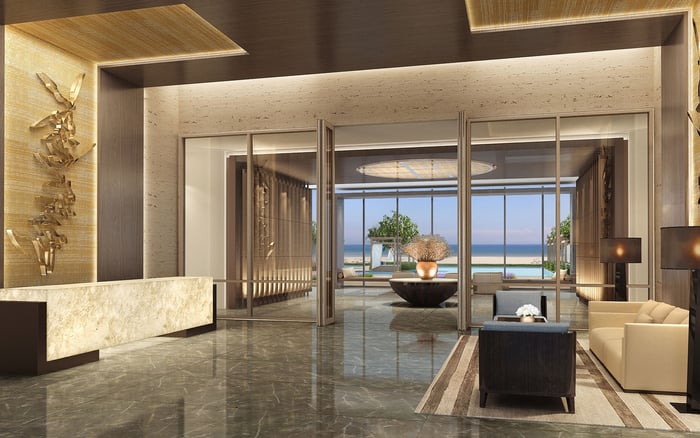
Layouts include three-, four-, and five-bedroom residences. The homes are described as flow-through, with terraces overlooking the ocean and bay. These descriptions help establish the layout, but they do not establish where a measurement begins or ends.
Before comparing prices, request the unit-specific legal description, condominium plat, recorded declaration, architect-certified plan, and property-record sketch. Ask the relevant professionals to explain discrepancies rather than selecting whichever figure produces the most attractive price per square foot. Legal boundaries and measured interior area should remain separately identified unless their relationship has been established.
For a buyer also considering Arte Surfside, the same discipline applies: establish each residence's measurement basis before treating two advertised totals as equivalent.
Terraces are marketed with depths reaching up to 12 feet. That is a stated maximum, not a verified dimension for every terrace or every portion of one. A primary-residence buyer should assess the actual plan for dining, seating, circulation, and access from the rooms used most often.
The legal question is separate. A project-wide allocation establishing whether every terrace forms part of the legal unit or is a limited common element has not been confirmed. Marketing language about a private terrace does not settle that distinction.
Have counsel identify the applicable boundaries, use rights, maintenance responsibilities, and alteration restrictions in the governing documents. Then reconcile those findings with the physical plan. The objective is not merely to confirm an outdoor square-foot total, but to understand precisely what the purchase conveys and which responsibilities accompany it.
Residence 1101 offers a clear illustration. It is advertised as a five-bedroom, 6.5-bathroom home measuring 6,726 square feet. Its north-corner wraparound terrace is described separately at 1,885 square feet, with ocean and Intracoastal views.
Adding those figures produces 8,611 square feet of combined home-and-terrace area. That sum is arithmetic based on advertised dimensions, not a verified legal measurement or an established appraisal area. It should never quietly replace the 6,726-square-foot figure in a comparison presented as interior pricing.
The advertised asking price of $24.995 million equates to approximately $3,716 per advertised square foot using 6,726 square feet, without adding the terrace. A combined-area calculation answers a different question. If used at all, it should be labeled as an analytical metric and kept separate from an interior-area comparison.
For everyday living, the terrace may be exceptionally important. For valuation, its contribution requires separate consideration-not an assumption that each outdoor square foot carries the same value as an interior one.
The asking-price examples show why denominator discipline matters. Residence 304 was offered at $12.25 million for 3,232 square feet, approximately $3,790 per advertised square foot. Residence 205 was offered at $13.425 million for 3,752 square feet, approximately $3,578 per advertised square foot. Residence 406 was offered at $22.5 million for 5,720 square feet, approximately $3,934 per advertised square foot.
These examples represent asking positions, not confirmed current availability or achieved values. They do not establish a uniform measurement convention.
Closed-sale examples provide a different category of evidence: Residence 503 at $10.3 million for 3,168 square feet, approximately $3,251 per stated square foot; Residence 303 at $10 million for 3,325 square feet, approximately $3,008; and Residence 1103 at $9.3 million for 3,273 square feet, approximately $2,841.
Transaction dates, concessions, furnishings, and a consistent area basis are not established for these examples. The figures therefore should not be read as a time-adjusted valuation range or proof of a particular discount from asking prices. They are starting points for a unit-specific reconciliation.
Residence 1101 is described as designed and decorated by Brazilian architect Sig Bergamin. That distinction merits attention when assessing the home, but it does not establish a transferable premium across the building.
Ask the appraiser to distinguish permanent improvements, condition, and any furnishings included in a transaction. For a primary residence, consider whether the design suits your routines or would require changes. Personal utility and market-supported value are related questions, not identical ones.
If the search extends to The Surf Club Four Seasons Surfside, evaluate it independently as another purchase candidate, not an automatic appraisal comparable. A shared search geography does not by itself establish equivalent area, condition, terrace rights, or transaction circumstances.
The final appraisal discussion should identify the applicable measurement convention and separate interior space from terraces, rooftop areas, and other exterior components wherever relevant. Request a clear explanation of any difference between the area used in the valuation and the area advertised for sale.
Keep two questions in view throughout: what area is being measured, and what evidence supports its value? A convincing reconciliation explains why the selected closed sales are relevant and how differences in size, outlook, condition, design, and outdoor space are treated.
The strongest primary-residence decision combines the pleasure of the home with a documented understanding of its boundaries and valuation. For a discreet discussion of your Surfside search, connect with MILLION.
If branded residences are on your mind — as a home or as an allocation — we would be glad to share what we are seeing, privately.
Begin a quiet conversationThe condominium is at 9349 Collins Avenue, Surfside, Florida 33154, with approximately 300 linear feet of private oceanfront.
Fendi Château Residences was completed in 2016 and rises 12 stories.
Published descriptions differ between 57 and 58 residences. Confirm the count through the recorded condominium documents.
Published ranges include approximately 3,325 to more than 7,000 square feet and 3,168 to 7,101 square feet. Neither establishes the measurement basis for an individual unit.
No. Terrace depths are marketed as reaching up to 12 feet, not as a uniform dimension for every residence.
A project-wide terrace allocation is not established by the available information. Counsel should review the declaration, plat, and unit-specific legal description.
The home is advertised at 6,726 square feet, with a separately described 1,885-square-foot wraparound terrace. Their combined 8,611 square feet is an arithmetic total, not a verified legal or appraisal measurement.
That should not be assumed. Keep terrace area separate and ask the appraiser to explain its contribution to value.
No. The examples are asking positions without dated confirmation of current availability and should not be treated as completed transactions.
It should identify the measurement convention, distinguish interior and exterior components, and explain comparable-sale selection and adjustments. Any difference from advertised area should be addressed clearly.