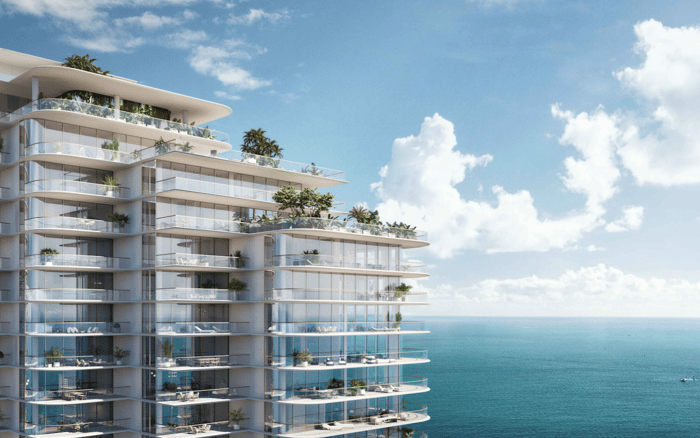
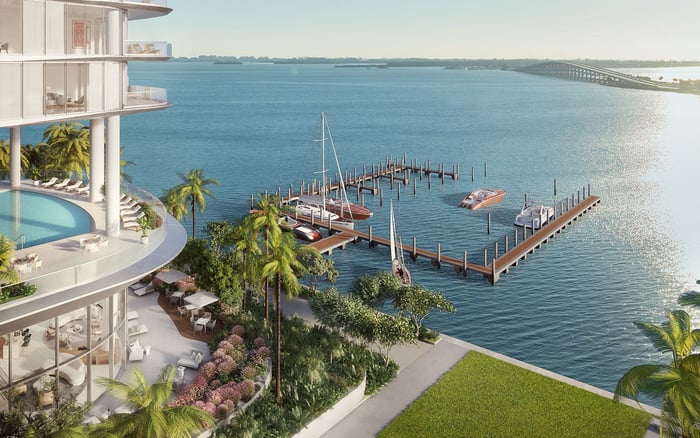
A discreet due-diligence guide for luxury buyers comparing Miami Beach and Brickell residences through boating logistics, bridge clearance, marina access, and hurricane readiness.

For high-net-worth buyers comparing The Perigon Miami Beach and Cipriani Residences Brickell, the question is not simply which address feels more glamorous. It is how each residence performs when life meets the water: a spontaneous tender ride, a dinner arrival by boat, a captain coordinating marina access, or a storm plan moving from theory to execution.
In South Florida luxury real estate, waterfront value is often framed in visual terms. Views, light, terraces, and arrival sequences matter. Yet the more sophisticated buyer looks beneath the horizon line. Boating convenience, bridge clearance, hurricane protocols, insurance assumptions, and building governance can affect both daily enjoyment and future liquidity. That distinction is especially relevant when comparing Miami Beach and Brickell, two markets that express waterfront living in markedly different ways.
The Perigon Miami Beach and Cipriani Residences Brickell each invite a refined lifestyle conversation, but due diligence should remain disciplined. Before a buyer falls in love with a floor plan or a skyline, the operational questions deserve the same attention as design, service, and finishes.
A residence does not need private dockage to be attractive to a boating family. Conversely, a waterfront setting does not automatically create frictionless access to the water. The better question is practical: how will the owner, guests, crew, and equipment move between home, marina, launch point, and open water?
For buyers focused on The Perigon Miami Beach, the Miami Beach lifestyle may suggest proximity to sand, coastal clubs, and bay-to-ocean movement. That impression still requires verification. A boating-oriented buyer should examine the nearest practical marina options, tender pick-up possibilities, valet and loading procedures, traffic timing, and the building’s rules around marine vendors, carts, storage, and deliveries.
For buyers focused on Cipriani Residences Brickell, Brickell may offer a more urban waterfront rhythm. The appeal can include dining, business proximity, and a vertical city lifestyle close to the bay. Yet an owner who expects to be on the water often should still test the full route from elevator to marina, including parking, rideshare logistics, captain access, security protocols, and weekend congestion.
This is where language matters. Words such as boat-slip and marina can imply convenience, but buyers should separate marketing vocabulary from binding rights, documented access, assigned privileges, waitlists, and third-party arrangements. In a prime acquisition, the boating plan should be written down before contract deadlines pass.
Bridge clearance is one of the least romantic and most important subjects in waterfront due diligence. It is not enough to ask whether a boat can “get out.” Clearance changes with tide, vessel profile, antenna configuration, hardtops, towers, and operational judgment. Even a modest difference can determine whether a buyer enjoys spontaneous departures or must plan around narrow windows.
For Miami Beach and Brickell buyers, the right approach is to build a vessel-specific profile. The buyer’s captain or marine advisor should identify the boat’s air draft, draft, beam, preferred marina, likely route, and any fixed or drawbridge constraints. If the buyer is considering a future vessel rather than an existing one, diligence should account for the next boat, not only the current boat.
The key is to avoid generic reassurance. A residence may be visually close to the bay while still requiring a route that is less convenient than expected. Another may feel less overtly nautical yet operate better for the owner’s actual vessel and habits. In this sense, The Perigon Miami Beach and Cipriani Residences Brickell should not be compared only by map distance. They should be compared by the lived path: lobby, vehicle, marina, dock, channel, bridge, bay, ocean.
Hurricane planning is not a negative topic. It is a sign of serious ownership in a coastal market. The most refined buyers do not avoid the question; they ask it early, calmly, and in detail.
At the building level, diligence should review storm procedures, generator strategy, access policies after a storm, elevator and life-safety protocols, flood planning, window and façade standards, insurance structure, reserve philosophy, and communication systems. For owners who travel frequently, the property manager’s storm playbook is especially important. The question is not only whether the residence is beautiful when skies are clear, but how the building behaves when staff, vendors, residents, and municipal conditions are under pressure.
At the personal level, buyers should consider where vehicles are stored, how art and outdoor furniture are secured, whether a caretaker or manager can access the home, and how the family will make decisions if a storm coincides with travel. Waterfront living rewards preparation. It also exposes vague assumptions.
Miami Beach buyers often think in terms of ocean proximity, beach lifestyle, and exposure to coastal weather. Brickell buyers may think more in terms of urban resilience, vertical living, and access after an event. Neither frame is complete on its own. Each purchase deserves building-specific review.
Luxury buyers often compare amenities, but service execution can be just as consequential. A boating day involves more than the boat. It may require coolers, provisions, towels, guests, children, pets, staff coordination, transport to a marina, and a return with wet gear and luggage. A residence that handles these transitions gracefully can feel materially more valuable.
For The Perigon Miami Beach, the due-diligence conversation may center on how the beach and coastal lifestyle integrate with marine habits. For Cipriani Residences Brickell, the conversation may center on how an urban, hospitality-driven routine supports spontaneous waterfront use. In both cases, the buyer should ask whether the building’s culture aligns with their lifestyle. Some owners prize privacy and quiet. Others want a residence that can support frequent entertaining, late arrivals, and seamless movement.
The better question is not, “Which is more luxurious?” It is, “Which is more effortless for the way this family actually lives?” That answer may differ for a sportfishing owner, a dayboat owner, a charter user, or a buyer who simply wants occasional water access without vessel ownership.
Future resale depends not only on design and prestige, but also on how easily the next buyer understands the lifestyle proposition. A residence with a clear boating story, a documented storm plan, and well-run building governance can be easier to explain in a discerning market.
Buyers should preserve documents that clarify the marine lifestyle: marina agreements, access rules, parking and loading policies, vendor procedures, storage guidelines, insurance summaries, and association communications. These materials may not be glamorous, but they help convert ambience into confidence.
In South Florida’s premium segment, the most compelling homes often combine emotion with operational intelligence. The view creates desire. The diligence protects it.
Before choosing between The Perigon Miami Beach and Cipriani Residences Brickell, buyers should create a personal waterfront use case. How often will the household boat? Will the owner keep a vessel nearby, use a club, charter, or rely on friends and captains? Are departures mostly daytime, evening, weekday, or weekend? Will guests arrive by car first, or by water?
Next, the buyer should test the route. Time the drive to the marina. Walk the path from residence to vehicle. Ask how marine vendors are approved. Review guest arrival procedures. Confirm whether large gear, provisions, and staff movements are simple or complicated.
Finally, align the financial review with the environmental review. Insurance, reserves, assessments, maintenance standards, and building governance are not administrative afterthoughts. They are part of luxury ownership. The most elegant purchase is the one that still feels elegant after the practical questions have been answered.
Is The Perigon Miami Beach automatically better for boating because it is in Miami Beach? Not automatically. Buyers should verify marina access, route timing, bridge constraints, and building rules before assuming boating convenience.
Is Cipriani Residences Brickell better for an urban waterfront lifestyle? It may appeal to buyers who prioritize Brickell access and a city rhythm, but the boating experience still depends on specific logistics.
What is the first boating question a buyer should ask? Ask where the boat will actually be kept or accessed, then test the route from the residence to that point.
Why is bridge clearance so important? Clearance affects whether a vessel can move comfortably through a route, and it can vary by tide, boat profile, and equipment.
Should a buyer involve a captain before signing a contract? Yes, if boating is central to the purchase. A captain can evaluate route practicality in a way a floor plan cannot.
What hurricane documents should buyers review? Review storm procedures, insurance structure, reserve philosophy, generator planning, access protocols, and communication procedures.
Does a waterfront view guarantee boating convenience? No. A view is visual value, while boating convenience depends on access, routes, rules, and timing.
How should seasonal owners plan differently? Seasonal owners should confirm who can secure the residence, manage vendors, receive communications, and act during storm conditions.
Can building service affect the boating lifestyle? Yes. Valet, loading, vendor access, security, and staff coordination can make boating feel seamless or cumbersome.
Which is the safer choice, Miami Beach or Brickell? Safety depends on the specific building, residence, insurance structure, and owner plan rather than the neighborhood name alone.
For a discreet conversation and a curated building-by-building shortlist, connect with MILLION.
If branded residences are on your mind — as a home or as an allocation — we would be glad to share what we are seeing, privately.
Begin a quiet conversation