Shorecrest’s ownership economics require a clear distinction between construction financing and association reserves. For buyers, the essential file includes the estimated budget, reserve funding schedule, investment policy, Equinox program obligations, and written disclosure of potential capital contributions.
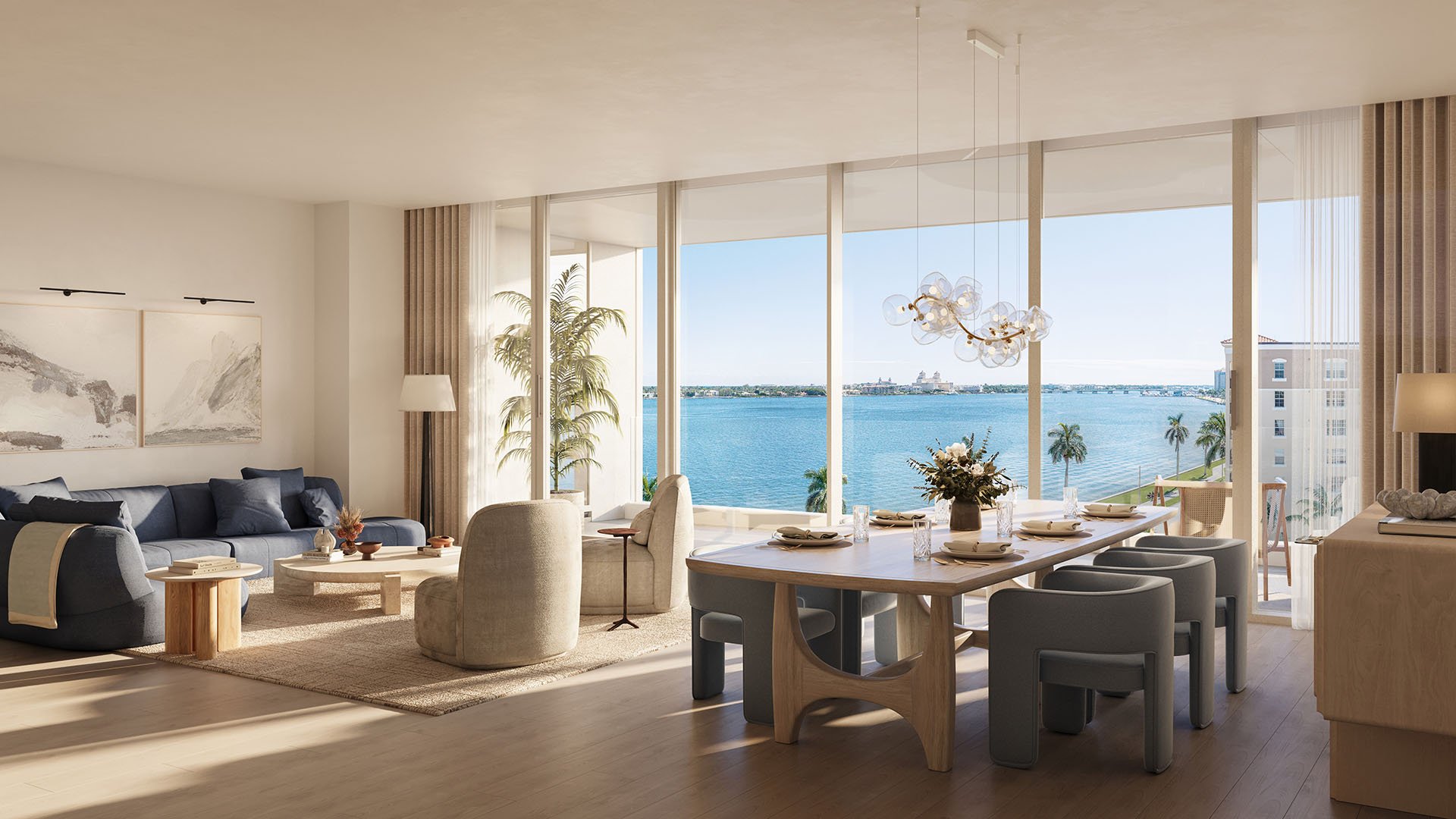
At Shorecrest Flagler Drive West Palm Beach, the financial questions extend beyond the residence itself. Planned for 28 stories and 98 residences at 1865 North Flagler Drive, the Related Ross development has starting residence pricing of $3.5 million. Its wellness-focused program, created in partnership with Equinox, adds another dimension to ownership.
For a buyer, the central issue is not whether the offering feels complete. It is whether the documents distinguish the cost of operating the building from the capital required to maintain it. Opening reserves, investment rules, and future contribution schedules are separate considerations. Each deserves its own written explanation.
Shorecrest’s opening reserve balance, final reserve funding schedule, reserve investment policy, and major-capital-call timetable remain unresolved. That uncertainty is not evidence of underfunding or an impending assessment. The appropriate response is disciplined document review, not reassurance or alarm.
Shorecrest’s groundbreaking took place in April 2026, and Related Ross secured $157 million in construction financing from GoldenTree Asset Management. That financing belongs to the development story. It is not a disclosed opening reserve balance for the future condominium association.
The distinction matters because funding construction and funding long-term ownership answer different questions. Buyers should request a financial schedule that separates operating cash, replacement reserves, construction financing, and any developer subsidies. A subsidy, if provided, should be defined by its amount, duration, and expiration conditions-not treated as a permanent reduction in ownership costs.
The same separation is useful when considering Alba West Palm Beach alongside Shorecrest. Compare each property’s documents on their own terms; one development’s construction financing cannot establish another association’s financial position.
For Shorecrest, the starting documents are the latest estimated budget, declaration, reserve schedules, replacement-cost assumptions, and any working-capital or closing-contribution provisions. Together, they should explain what owners are expected to fund and when.
Shorecrest’s HOA fees have not been finalized; the final amount depends on the operating budget and reserve structure. The quoted charge of $4,032 per month for residence 302 is unit-specific, not confirmation of the final association budget.
Similarly, the notation “Special Assessment: No” for residence 1602 does not establish the absence or timing of future capital calls. Neither the charge nor the notation should substitute for governing documents and current written disclosures.
The ownership file should reconcile every quoted monthly charge with its underlying budget version. Ask which expenses are included, how the residence’s allocation is calculated, whether reserve contributions are embedded, and what remains separately payable. Any difference between a sales estimate and the latest budget should be explained before it becomes a household cash-flow assumption.
The useful comparison is not simply the lower monthly figure. It is the more clearly documented relationship between current charges, future funding needs, and owner obligations.
Reserve liquidity concerns access as well as balance. A buyer should ask whether the proposed reserve assets would be available when planned expenditures arise, without relying on an unsupported forecast of investment returns.
Shorecrest’s reserve investment policy remains unresolved. Request the policy itself rather than assuming that the development’s size or positioning implies a particular investment approach. Review permitted holdings, maturity limits, account custody, liquidity requirements, and the authority to approve transactions.
Ask who controls reserve accounts before owner turnover, who authorizes withdrawals, and what reporting owners will receive. These are diligence questions, not statements about Shorecrest’s current practices.
The most useful financial presentation pairs scheduled reserve contributions with anticipated expenditure dates. It should distinguish cash available for near-term commitments from funds intended for later replacement work. Buyers can then evaluate the policy against the association’s obligations rather than a headline yield.
The Equinox partnership is part of Shorecrest’s offering, but the assessment funding that program has not been published. Buyers should treat its financial structure as an open contractual question, not presume that every related expense is included in an advertised monthly charge.
Request the operating agreement, annual costs, escalation provisions, termination rights, and expense-allocation formula. Clarify which services are association-funded, which may be separately charged, and whether participation changes an owner’s obligation. Resolve those questions through the applicable documents.
For buyers also considering Mr. C Residences West Palm Beach, the broader principle is the same: assess the lifestyle proposition and its financial obligations separately. Do not assume equivalence between the projects’ programs, fees, or reserve arrangements.
At Shorecrest, understanding the wellness agreement is part of understanding the residence’s ongoing cost-not an ancillary detail to defer until closing.
Shorecrest’s major-capital-call timetable remains unresolved. Buyers should not infer one from the construction loan, starting prices, or an assessment notation.
Instead, organize the questions around distinct ownership stages: closing, initial operations, owner turnover, and later replacement work. For each stage, request any planned contribution amount, calculation method, payment trigger, and responsible party. Where no amount has been set, seek a clear description of the governing mechanism rather than a speculative estimate.
Distinguish closing contributions from recurring reserve funding. Clarify warranty responsibilities as well, so that potential repair obligations are not casually assigned to future owners without reference to the documents.
Finally, confirm any planned assessments in writing. The absence of a published timetable is neither proof that a capital call is planned nor a guarantee that none will occur.
A buyer weighing Shorecrest against Forté on Flagler West Palm Beach should apply the same questions to each ownership file without assuming comparable budgets or funding structures. The comparison becomes meaningful when operating charges, reserve contributions, program costs, and closing obligations are separately identified.
For correct representations, review the brochure and developer-furnished disclosure documents. Confirm the contractual address there as well, since address descriptions also use 1901 North Flagler Drive rather than 1865.
The decision is not a reserve-liquidity rating unsupported by financial detail. It is a judgment about whether the documented obligations suit the buyer’s expectations, liquidity preferences, and holding horizon.
For a discreet perspective on South Florida ownership and residential comparisons, explore MILLION.
If branded residences are on your mind — as a home or as an allocation — we would be glad to share what we are seeing, privately.
Begin a quiet conversationShorecrest is planned at 1865 North Flagler Drive, West Palm Beach. Buyers should confirm the contractual address in the developer-furnished documents because some descriptions use 1901 North Flagler Drive.
Shorecrest is planned with 28 stories and 98 residences.
Related Ross is the developer, and Shorecrest’s groundbreaking took place in April 2026.
No. The $157 million from GoldenTree Asset Management is construction financing, not a disclosed opening reserve balance for the condominium association.
No. Final fees depend on the operating budget and reserve structure; the $4,032 monthly figure for residence 302 is unit-specific, not a final association budget.
The disclosed information does not establish an opening reserve balance or finalized reserve funding schedule. That uncertainty does not establish inadequate reserves.
Request the reserve investment policy, including permitted holdings, maturity limits, liquidity requirements, account custody, and transaction authority. Confirm account control and withdrawal approvals before owner turnover.
The assessment funding the Equinox program has not been published. Buyers should request the operating agreement, annual costs, escalation terms, termination rights, and expense-allocation formula.
No. The notation for residence 1602 does not establish the timing or absence of future capital calls.
Start with the developer-furnished documents, latest estimated budget, declaration, reserve schedules, replacement-cost assumptions, and investment policy. Also request written details of closing contributions, warranty responsibilities, and any planned assessments.