A practical comparison of Banyan Tree and Forté on Flagler, separating advertised parking and service amenities from the written rights that matter for vehicle storage, valet protection, privacy, and EV charging.
For a luxury residence, privacy means more than a quiet lobby. It is the ability to arrive discreetly, leave a vehicle securely, and return without navigating an uncertain service arrangement. For buyers comparing Banyan Tree and Forté on Flagler in West Palm Beach, the most useful questions concern what happens after the keys change hands.
The distinction is between an advertised amenity and a documented right. Covered parking does not necessarily establish long-term vehicle storage. Valet service does not identify who bears the risk of damage. An EV-charging station does not guarantee that a particular resident can charge overnight. A sound purchase decision connects the arrival experience to written parking, service, and charging terms.
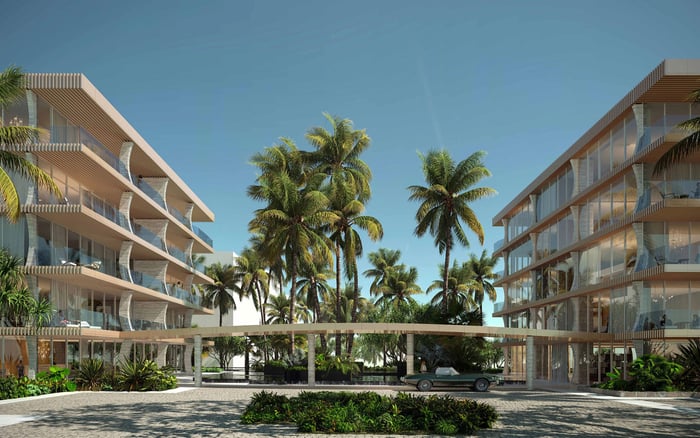
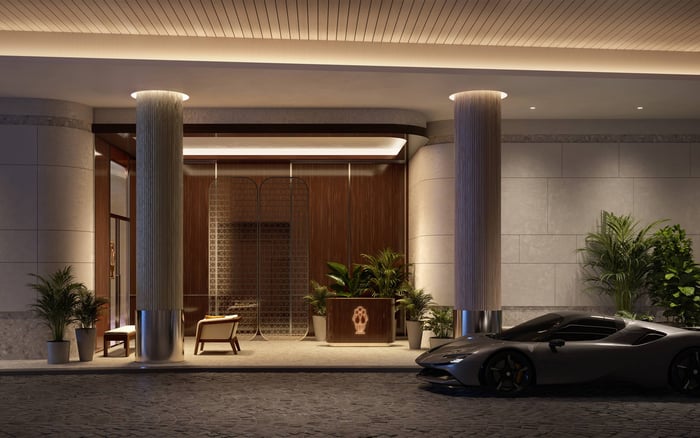
Banyan Tree Residences West Palm Beach is planned at 400 Hibiscus Street, West Palm Beach, FL 33401, as an 88-residence development. Its positioning emphasizes privacy, spaciousness, calm, and exclusivity, with a private porte cochère among the announced amenities. Advertised amenities also include valet parking, covered parking, controlled building access, 24-hour security, package receiving, and EV-charging stations.
Those features suggest a service-led arrival experience. The number of spaces per residence, deeded versus assigned parking, any mandatory valet requirement, and valet-liability terms remain to be confirmed. Buyers should treat these as open questions, not evidence that suitable arrangements cannot be obtained.
Forté on Flagler West Palm Beach is located at 1309 South Flagler Drive and is marketed as a collection of 41 residences. Its advertised amenities include 24-hour security and surveillance, a 24-hour lobby attendant, and valet service. The advertised parking provision is two underground spaces per residence, with private enclosed underground garages also described as potentially available for purchase.
Forté therefore offers a more specific advertised parking quantity. That is not the same as confirmed ownership rights, and its smaller residence count does not establish better privacy, faster retrieval, or stronger security. Advertised amenities should not be assumed delivered or operational without separate confirmation.
The first parking question is not simply how many spaces accompany the residence, but how those spaces are identified and held. Ask whether they are deeded, assigned, or subject to another arrangement, and have counsel reconcile the answer with the condominium declaration, purchase contract, and parking plan.
At Forté, distinguish the advertised two-space provision from an enclosed garage that may require a separate purchase. Confirm availability, price, dimensions, and the rights conveyed. At Banyan Tree, obtain the space count and allocation structure before treating covered parking as a defined entitlement.
For a collector car or a vehicle left between seasonal visits, request written permission for long-term storage, covers, battery tenders, detailing, and tire storage. Confirm maximum vehicle dimensions and weight, retrieval hours, and whether an unattended car may be moved. Underground parking also warrants specific questions about flood and windstorm procedures-not assumptions about protection.
Storage language requires the same discipline. Forté advertises private storage and offers moving coordination and storage solutions. Neither phrase establishes a deeded locker, an assigned unit, or permission to keep automotive accessories beside a vehicle. Clarify each entitlement separately.
A polished handoff is reassuring, but it does not define responsibility if a vehicle is damaged. At Forté, the valet operator, insurance carrier, liability limits, exclusions, and vehicle-damage claims procedure remain to be confirmed. Banyan Tree's valet-liability terms likewise remain unconfirmed. These are disclosure gaps, not proof that coverage or procedures are absent.
Request the valet agreement and insurance certificate, then review liability exclusions and indemnification provisions with counsel and an insurance adviser. Ask who accepts custody, who may drive the vehicle, how keys are controlled, and how pre-existing damage is recorded. Establish the reporting process before an incident, including whom to notify and what documentation is required.
Owners should also determine whether self-parking is permitted and whether valet can move a stored vehicle without fresh authorization. For a low-clearance sports car or another vehicle requiring special handling, confirm acceptance and any restrictions in writing. Service should simplify ownership without leaving responsibility ambiguous.
Both Forté and Banyan Tree advertise EV-charging stations. Charger quantity and guaranteed resident access remain unconfirmed at both properties; at Forté, individual assignment, reservations, and charging fees also remain unspecified.
An EV buyer should establish whether charging is attached to an assigned space or shared across residents. Ask about reservations, time limits, electricity billing, and authorization for staff to connect, disconnect, or move the vehicle. Confirm how access works when a vehicle is parked during an extended absence.
For a buyer whose daily routine depends on charging, the decision should rest on a written allocation and operating policy-not the presence of chargers in an amenity description. An attractive garage is only part of the proposition. Usable charging access is the practical benefit.
Banyan Tree's emphasis on calm and exclusivity and Forté's smaller advertised collection offer different starting points for evaluating privacy. Neither replaces a clear understanding of access control, key custody, vehicle movement, and the path between parking and the residence.
Forté also advertises housekeeping coordination, interior-design services, travel services, moving coordination, and storage solutions. These offerings may suit an owner seeking support, but coordination should not be confused with an included service or an allocated physical space.
Buyers also considering Mr. C Residences West Palm Beach can apply the same questions without assuming equivalent parking or service arrangements. The comparison should rest on documented rights, not a shared luxury vocabulary.
Before committing, review the declaration, purchase contract, applicable offering disclosures, rules, parking plan, valet agreement, EV policy, and insurance provisions together. Request written clarification wherever the documents and sales descriptions leave the intended use uncertain.
The same review is worthwhile when considering Alba West Palm Beach alongside these properties. A seasonal owner may prioritize permitted vehicle storage and remote instructions; a daily driver may place greater weight on retrieval and charging access.
The practical conclusion is measured: Forté provides more specific advertised parking detail, while Banyan Tree presents a privacy-led proposition with important allocation questions still to confirm. At either property, discretion and convenience become meaningful when the documents support the way the owner intends to live.
Explore your West Palm Beach residential options with MILLION.
If branded residences are on your mind — as a home or as an allocation — we would be glad to share what we are seeing, privately.
Begin a quiet conversationThe planned development is at 400 Hibiscus Street, West Palm Beach, FL 33401, and is described as an 88-residence project.
Forté markets 41 residences at 1309 South Flagler Drive, West Palm Beach. A smaller residence count alone does not establish superior privacy or service.
Forté advertises two underground parking spaces per residence. Buyers should confirm their inclusion and legal status in the purchase and condominium documents.
Private enclosed underground garages are advertised as potentially available for purchase. Buyers should not assume an enclosed garage is included with every residence.
Deeded versus assigned parking and the number of spaces per residence remain unconfirmed. Obtain written confirmation of both.
Long-term vehicle-storage permission remains unconfirmed at either property. Confirm rules for unattended cars, covers, battery tenders, and vehicle movement.
Request the valet agreement, insurance certificate, liability exclusions, indemnification provisions, key-control procedures, and damage-reporting process. These protections remain to be confirmed.
Advertised chargers do not establish guaranteed resident access. Buyers should confirm allocation, reservations, time limits, billing, and vehicle-movement authorization in writing.
Private-storage amenities and storage solutions do not by themselves establish a deeded locker or a specifically allocated storage unit.
Review the condominium declaration, purchase contract, applicable offering disclosures, rules, parking plan, valet agreement, EV policy, and insurance provisions. Confirm separately whether advertised amenities are delivered and operational.