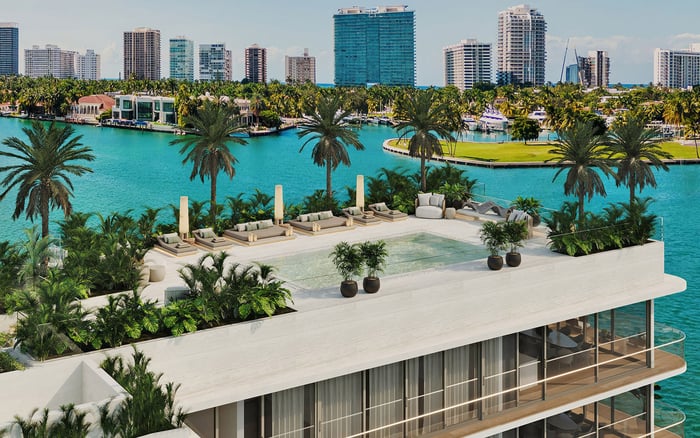
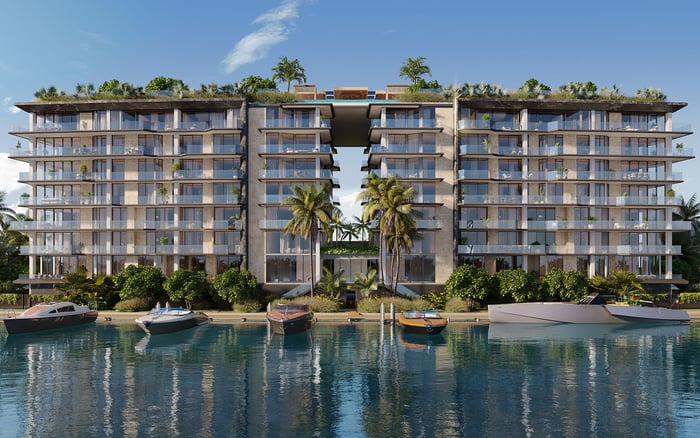
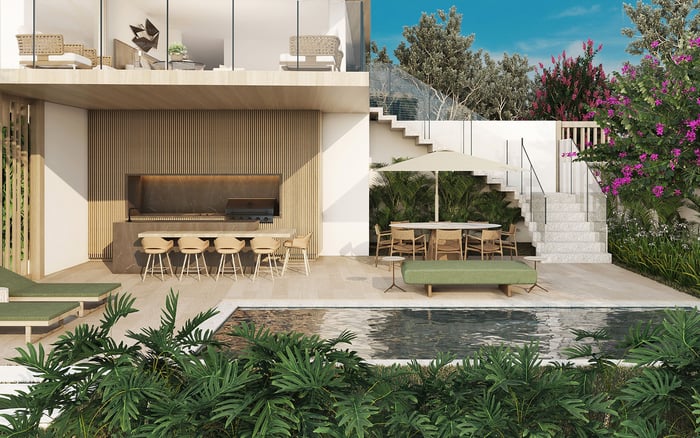
A buyer-focused ownership review of La Maré Bay Harbor Islands, separating marketed environmental features from the written commitments needed for after-hours HVAC service, humidity alerts, and backup cooling.
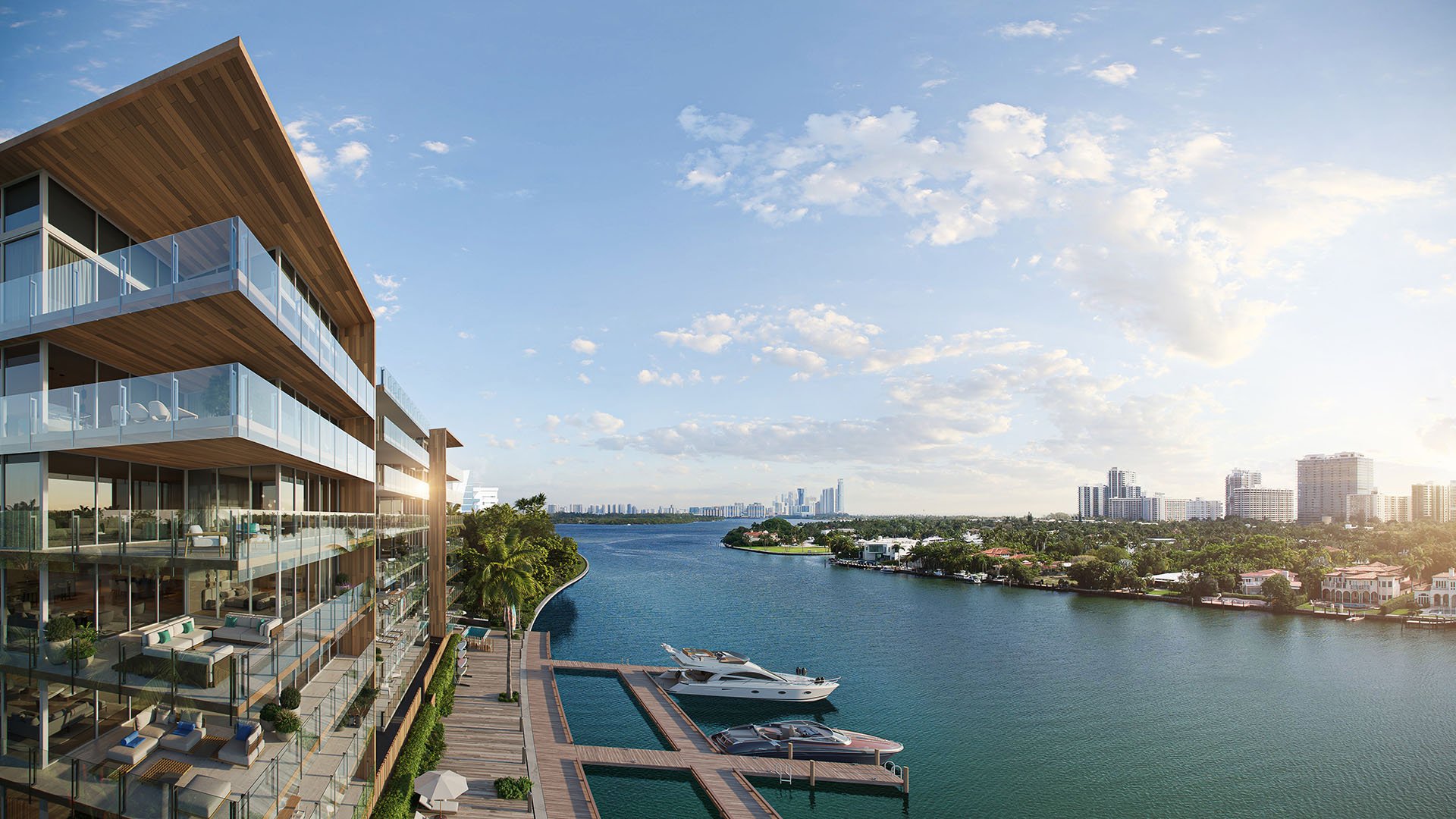
The most reassuring luxury is often invisible: knowing who responds when cooling stops, who receives an alarm while a residence is unoccupied, and what remains operational during an equipment failure. At La Maré Bay Harbor Islands, those questions deserve an ownership file of their own, separate from finishes, views, and private boat slips.
La Maré is a waterfront condominium development by Chicago-based Regency Development Group. Its environmental positioning includes filtration and passive design features, but neither should be mistaken for an operating commitment. Publicly disclosed details do not establish guaranteed after-hours HVAC response times, dedicated humidity-alert routing, or mechanical cooling redundancy. That distinction identifies what a buyer should confirm-not what the property necessarily lacks.
For a Bay Harbor purchase, the objective is straightforward: translate expectations of effortless ownership into written responsibilities, service arrangements, and equipment specifications.
La Maré should not be evaluated as though every specification applies to every residence. The Regency Collection at 9927 East Bay Harbor Drive is marketed as an eight-story building with 33 residences of approximately 1,567-4,200 square feet. The nine-residence Signature Collection at 9781 East Bay Harbor Drive had begun construction by October 2024. The Bay Collection has its own specification materials.
The ownership file should therefore identify the collection, residence, applicable condominium documents, and mechanical design before addressing service. Ask which equipment serves the residence, which components are shared, and where responsibility passes from the association to the owner.
Buyers also considering Bay Harbor Towers should use the same document requests rather than assume neighboring projects share service standards. This is a comparison framework, not a conclusion about either property's systems.
A telephone number is not a service commitment. La Maré's publicly disclosed material does not establish guaranteed 24/7 mechanical staffing, a contractual HVAC service-level agreement, or a specific after-hours attendance time.
Request the management agreement and emergency contact chain. Establish who answers outside business hours, whether that person can dispatch a qualified contractor, and whether contractor coverage extends to individual residences or only association equipment. Ask how the issue is escalated if the first contact cannot resolve it.
Separate acknowledgment, attendance, diagnosis, and restoration. A promise to return a call is not a promise to restore cooling within the same period. Any response commitment should identify its scope, exclusions, and responsible party.
The practical questions belong in writing:
Who may authorize entry when the owner is away?
What permissions must be registered before an emergency?
Who approves work and any spending beyond a preset authorization?
Which repairs, callout charges, and replacement parts fall to the owner?
These requests do not presume a particular service model. They clarify whichever model applies before an urgent call becomes necessary.
Humidity protection should be considered separately from a thermostat's temperature setting. Publicly disclosed details do not establish dedicated humidity sensors, alarm thresholds, a water-leak detection network, or remote humidity-alert routing.
Ask for a sensor schedule identifying the spaces monitored and the equipment responsible for each reading. Request the proposed humidity thresholds, any delay before an alarm is issued, and the process for testing sensors and notifications. Avoid adopting a numerical threshold without collection-specific technical guidance.
Then establish who receives an alert: the owner, a designated representative, management, or more than one party. Who acknowledges it, who investigates, and what happens if the first recipient is unavailable? A monitoring proposal should explain what follows detection, not merely confirm that a notification is available.
Keep humidity alarms and water-leak alarms as separate line items. Ask what condition each detects and what response it triggers. For an unattended residence, request a written protocol covering inspections, access permissions, escalation, and confirmation that the issue has been addressed.
Publicly disclosed specifications do not establish N+1 chillers, redundant cooling towers, or independent backup cooling for individual residences. Nor should a buyer infer generator-backed residential cooling from the property's luxury positioning.
Begin with collection-specific mechanical drawings and equipment schedules. Have the relevant design professional explain what serves the residence and what happens when a critical component is unavailable. Do not assume a central plant, individual system, or particular backup arrangement without those documents.
Request a written explanation for three scenarios: a residence-level equipment failure, a shared-system failure, and a utility outage. For each, identify whether cooling continues, whether capacity is reduced, and what intervention is required. Request the backup-power scope separately, including whether it supports any part of the residential cooling system.
When comparing La Maré with Onda Bay Harbor, focus on documented cooling availability during a failure. An amenity comparison cannot establish mechanical resilience, and no equivalence between the projects should be assumed.
La Maré's marketed sustainability features include HEPA filtration and in-line tankless water heaters, also described as “Insta-hots.” The water heaters are presented as part of a mold-avoidance narrative. Neither feature, by itself, establishes a humidity-monitoring specification, a dehumidification strategy, or backup cooling.
The marketed roof approach uses raised, wood-like decking made from recycled plastic above the concrete roof, described as a “natural cooling system.” The associated 70% claim concerns a reduction in added roof-insulation material-not a 70% reduction in cooling-energy consumption. It should not be translated into a utility-cost projection or an emergency-cooling promise.
The east-facing waterfront orientation is described as facilitating airflow and moving sunlight through residences along the southern axis. These are design intentions, distinct from measurable service commitments. Sustainability positioning should not be taken to mean that LEED certification has been awarded.
Regency Collection maintenance has been quoted at approximately $1.20 per square foot, but that estimate does not establish which HVAC services or emergency charges are included. Obtain the applicable budget and fee basis, then reconcile them with the maintenance and contractor agreements.
Before relying on an assurance, ask whether it appears in the governing documents, a service contract, or a proposed operating plan. Record the responsible party and applicable collection beside each answer. Keep proposed arrangements clearly distinct from enforceable commitments.
The strongest ownership file is not the thickest. It lets an owner identify who responds, who receives an alert, what cooling remains available, and who pays-without reconstructing the answer during an interruption.
For a discreet discussion of ownership priorities and South Florida residences, connect with MILLION.
If branded residences are on your mind — as a home or as an allocation — we would be glad to share what we are seeing, privately.
Begin a quiet conversationThe publicly disclosed details do not establish guaranteed 24/7 mechanical staffing or after-hours HVAC response times. Request the applicable management and contractor agreements.
The disclosed brochure details do not establish dedicated humidity sensors, alarm thresholds, or remote alert routing. Ask for collection-specific sensor and notification specifications.
No. The marketed HEPA filtration feature does not establish a humidity-monitoring or dehumidification specification.
The publicly disclosed specifications do not establish independent backup cooling for residences. Request mechanical drawings and a written explanation of cooling availability during failures.
No. Request the backup-power scope and confirmation of whether it supports any part of the residential cooling system.
Regency, Signature, and Bay should be evaluated against their applicable specifications and documents. Features or service arrangements should not automatically be carried across collections.
It should clarify contact and dispatch procedures, response commitments, unit-entry permissions, and owner-versus-association responsibilities. Ask separately about callout charges and restoration commitments.
No. The marketed 70% claim concerns reduced added roof-insulation material, not cooling-energy consumption.
The approximately $1.20-per-square-foot Regency Collection estimate does not establish included HVAC services or emergency charges. Confirm the applicable budget, fee basis, and service scope.
No. Missing public specifications do not prove that equipment or services are absent; they identify matters to confirm in collection-specific documents.