A discreet arrival depends on more than a private-elevator promise. For Wynwood condo buyers, the ownership file should establish who can enter, which floors they can reach, and how visitors and service providers move through the building.
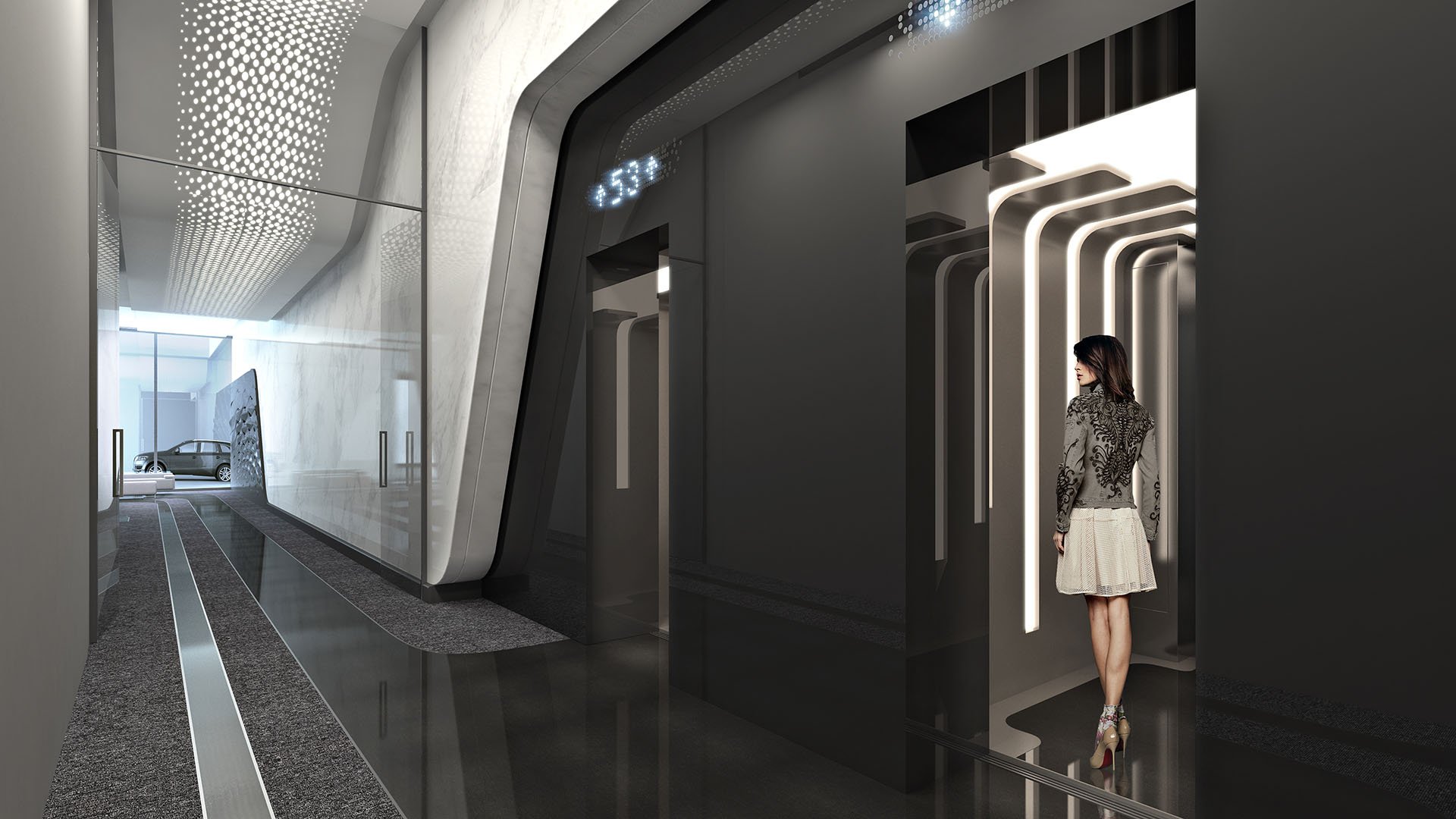
For a Wynwood condominium buyer, privacy begins before the residence door. It depends on the sequence from sidewalk or valet to lobby, elevator and residential landing. A beautifully composed arrival can still leave essential questions unanswered: who shares the route, who authorizes a visitor, and where service traffic intersects with residents.
The ownership file should distinguish three things: physical layout, access permissions and operating procedures. Marketing descriptions are not verified as-built configurations, contractual guarantees or demonstrated security practices. Treat them as starting points for precise requests, not conclusions about privacy.
For buyers considering Frida Kahlo Wynwood Residences alongside other neighborhood options, the same discipline applies: evaluate each property's documented arrangements rather than carrying assumptions from one building to another.
“Private,” “exclusive” and “controlled” describe different possibilities. None, standing alone, establishes direct-to-residence access, resident-only operation or verified visitor authentication. The useful question is not simply whether an elevator is private, but who can call it, enter it and select each destination.
If a property describes separate entrances or elevator banks, request a plan showing which users may enter each bank. Ask for the credential requirements and floor-permission settings rather than inferring them from the layout. Access to all floors should not be read as evidence of direct-to-residence private elevators.
Request a permission matrix identifying residents, authorized occupants, visitors, hospitality patrons where applicable, staff and service providers. For each category, ask for permitted entrances, elevator banks, floors and times. Establish who can issue, amend or revoke credentials and who holds override authority.
A wireless check-in feature does not, by itself, explain how a guest's identity is established before access is granted. Evaluate convenience and authentication separately.
Ask management to describe the full visitor sequence: invitation, identity check, resident approval, credential issuance, elevator authorization and expiration. Determine whether permission is limited to the intended floor and whether a resident can withdraw it promptly. A digital invitation is not proof that the person presenting it has been authenticated.
Clarify lobby staffing separately from monitoring and digital access control. Ask who handles arrivals when the desk is unattended and what happens when the resident cannot be reached. Do not assume a reference to round-the-clock monitoring means a continuously staffed lobby.
For a buyer also considering ORA by Casa Tua Brickell, these are comparative questions, not statements about that property's procedures. Require property-specific answers wherever the search leads.
A dedicated service elevator or separate service entrance does not, by itself, establish that every service journey bypasses the residential lobby. Verify the route beyond the entrance rather than treating the label as proof of separation.
Have the entrance and elevator routes marked on a plan. Trace the routes for couriers, contractors, movers, housekeeping and domestic employees separately. Ask where each party checks in, waits, receives authorization and transfers goods. Confirm whether any shared corridor or landing reconnects the service route with resident circulation.
If delivery storage is provided, clarify who accepts a parcel, whether a courier enters controlled space and how an owner retrieves a delivery. Likewise, confirm whether valet personnel have any authority to summon residential elevators or reach residential floors; valet availability alone does not answer that question.
The distinction is simple: dedicated infrastructure describes a route; written procedures should establish who uses it and under what conditions.
Where residences and hospitality destinations coexist, examine the boundary between their circulation systems. A separate elevator serving a restaurant or bar should not be mistaken for evidence of direct-to-unit residential access.
Ask whether hospitality patrons can reach shared landings or residential circulation, which stops are enabled, and whether access arrangements change outside ordinary operating hours. A separate entrance is meaningful, but its effect depends on the route beyond the door.
A cross-neighborhood review that includes Waldorf Astoria Residences Downtown Miami should apply the same questions independently. Neither a brand name nor the word “residences” substitutes for documented permissions.
For a pre-construction purchase, proposed procedures cannot be assessed as those of an operating building. Request the proposed access-control design and have counsel identify which commitments appear in the governing and purchase documents.
In an operating building, arrange an authorized walkthrough with management. Trace resident, visitor and service journeys under normal and after-hours conditions. Ask management to demonstrate an approved visitor arrival, credential expiration and revocation without attempting to bypass controls. Review exceptional operating modes against relevant occupancy and life-safety documents rather than assuming ordinary restrictions apply unchanged.
Confirm property identity before filing anything. Verify the legal address and ensure the plans, agreements and residence under consideration refer to the same property.
Organize the file around decisions rather than promotional language. Request these records for review with management and the appropriate advisers:
The access-control plan and credential matrix, identifying entrances, user categories, floor permissions and revocation authority.
Elevator programming specifications, including permitted stops and documented override conditions.
The security-services agreement and building rules, clarifying attendance, monitoring and visitor authorization.
Delivery and service protocols, supported by route plans for packages, contractors, movers and household staff.
Relevant occupancy and life-safety documents, reconciled with the proposed or operating access arrangements.
Second-home ownership adds a practical question: who may authorize access while you are away? Include household employees, visiting family and scheduled maintenance in the review rather than relying on informal understandings. Keep dated responses in the file and identify unresolved points before making a purchase decision.
The objective is not the most elaborate system. It is a clearly defined arrival experience whose permissions and service arrangements support the privacy you expect to own.
For a considered approach to your South Florida property search, connect with MILLION.
If branded residences are on your mind — as a home or as an allocation — we would be glad to share what we are seeing, privately.
Begin a quiet conversationNo. Private, exclusive and controlled elevator descriptions do not establish direct-to-unit access or resident-only operation without supporting plans and permissions.
Request permitted entrances, elevator banks, floors and times for each user category. It should also identify who can issue, revoke or override access.
Ask which users may enter each bank and which floors their credentials permit them to reach. A separate bank alone does not establish resident-only access.
Not necessarily. Ask how identity is checked before a credential is issued and how that credential is limited or revoked.
No. Clarify staffing hours separately and ask who handles visitor arrivals when the desk is unattended.
Review the proposed access-control design and ask counsel which commitments appear in the governing and purchase documents. Do not treat proposed procedures as demonstrated operations.
No. Trace the full route for service providers and check whether shared corridors or landings reconnect it with resident circulation.
No. Confirm whether valet personnel have authority to summon residential elevators or reach residential floors.
Confirming the legal address helps ensure the plans, agreements and residence under consideration refer to the same property.
Arrange an authorized walkthrough with management during normal and after-hours conditions. Trace resident, visitor and service routes and request demonstrations of visitor authorization and credential revocation.