A private arrival is only as convincing as the documents and permissions behind it. For North Bay Village condo buyers, a disciplined ownership file separates elevator marketing from legal rights, visitor authorization, and genuinely distinct service routes.
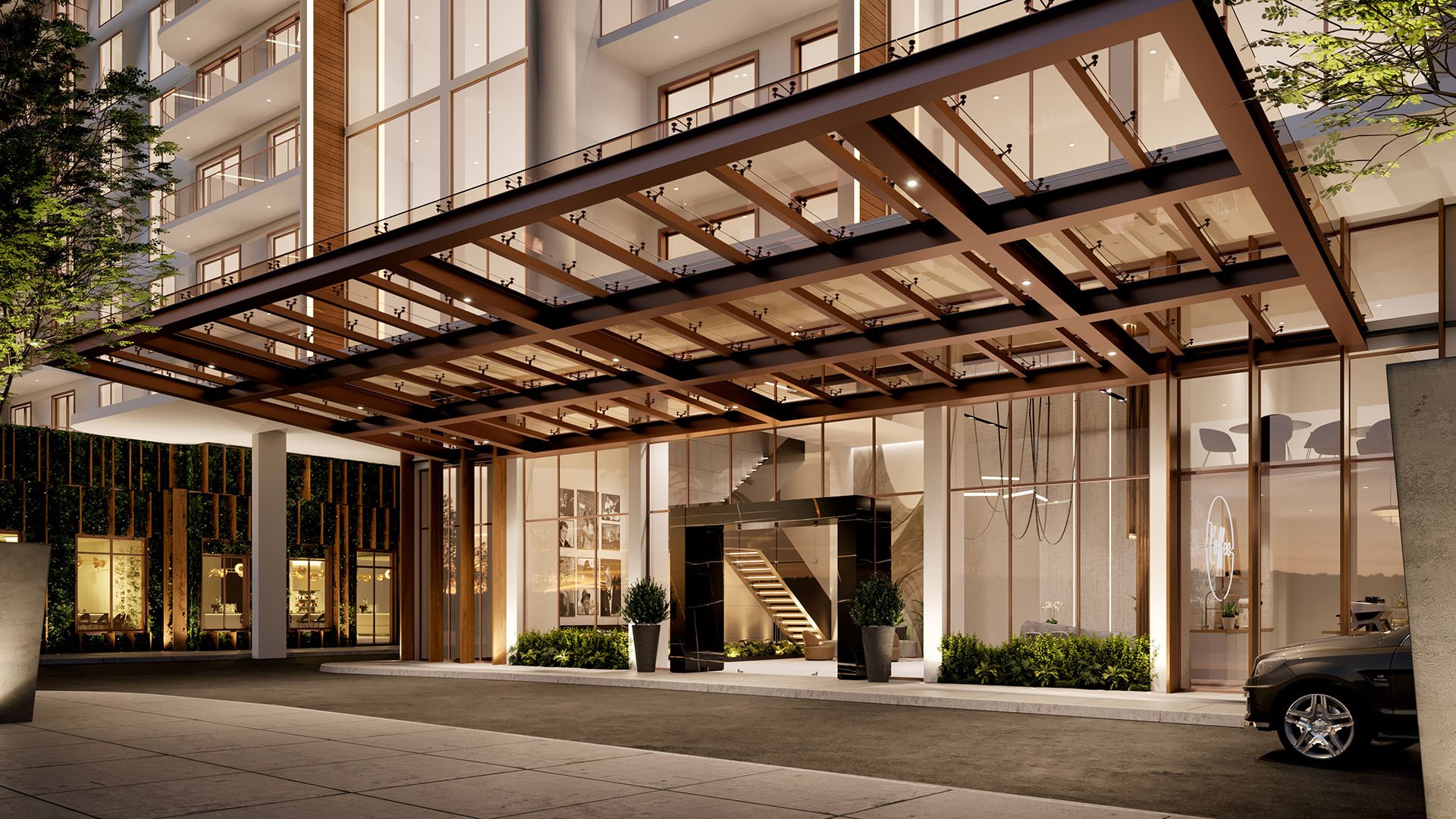
An elevator opening at your residence can make arrival feel effortless. The ownership question, however, is not simply where its doors open. It is who may send the car there, who may enter the vestibule, and which documents establish your rights over that threshold.
For a North Bay Village buyer, three inquiries belong together: the legal status of the arrival space, the authorization sequence for visitors, and the routes used by service personnel. A polished lobby or discreet drop-off may enrich the experience without answering any of them. Treat advertised amenities as the beginning of the inquiry, not its conclusion.
The strongest ownership file connects the exact residence to recorded documents, written access permissions, and an operational demonstration. Describe privacy precisely enough that buyer, counsel, and management understand the same arrangement.
These descriptions are not interchangeable. Advertised amenities at 8000 East Drive include private elevators, an access-control system, and valet service. Those features alone do not establish exclusive elevator ownership or the destinations available to an individual credential.
Grandview Palace, at 7601 Treasure Drive, is marketed with semi-private elevator foyers-a narrower promise than an elevator reserved exclusively for one residence. The Lexi, at 7901 Hispanola Avenue, is described as offering 24-hour front-desk service, concierge assistance, and secured elevator access, rather than explicitly private elevators.
Translate each adjective into a question. Does the car serve other residences? Is the foyer shared? Is access restricted by floor, residence, or another destination? Can a staff credential reach the vestibule without separate resident approval? Request answers for the specific home, not merely the building's general amenity package.
Request the recorded declaration, condominium plat, amendments, exact unit plan, approved architectural plans, and current rules. Ask counsel to identify the legal status of the elevator, foyer, and vestibule, including whether each falls within the unit or is treated as a common or limited common element. Do not infer that status from finishes, furniture, or direct access into the home.
Next, reconcile the documents with the residence being purchased. Review the unit plan alongside the relevant architectural plans and the actual arrival arrangement. Where a space is described as exclusive, ask counsel to identify the supporting provision and explain any qualifications.
Keep legal rights separate from operating preferences. A management practice may describe today's experience, but counsel should determine which expectations are grounded in the governing documents. Record unresolved differences; do not let a verbal assurance become the file's final answer.
Obtain a written explanation of who issues credentials, which destinations each credential permits, and who can change those permissions. Include residents, guests, staff, contractors, and other vendors in the request. Ask specifically whether anyone in those categories can access the residence's vestibule.
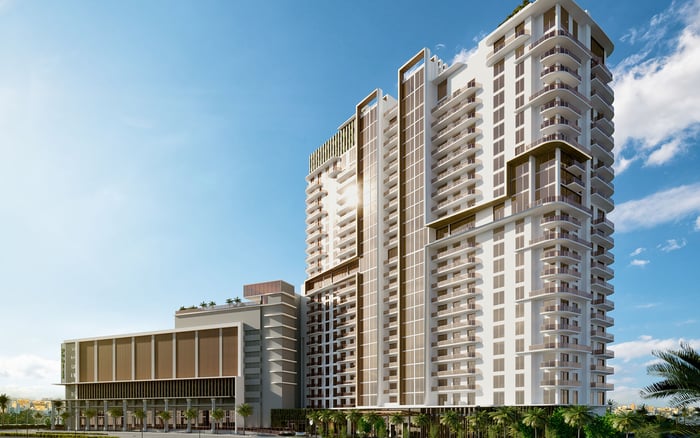
At Shoma Bay North Bay Village, advertised biometric access control and high-speed elevator access warrant separate questions. Biometrics do not establish visitor identification, resident approval, or guest-specific elevator permissions. Speed does not establish whether the elevators are private, semi-private, or shared.
Ask management to distinguish garage admission, lobby admission, elevator authorization, and arrival at the residence. The advertised gated garage entry at Shoma Bay illustrates why that distinction matters: permission to enter a parking area is not proof of permission to reach a particular home.
A useful written schedule identifies each credential category, its authorized destinations, the person empowered to alter access, and any exceptions. Request clarification wherever terms such as “full access” remain undefined.
A staffed entrance is valuable, but it is not a complete description of visitor authentication. Continuum Club & Residences North Bay Village is marketed with a private, valet-staffed porte-cochère leading into a 24/7-staffed double-height lobby. That describes the arrival setting, not every decision governing a guest's onward movement.
Request a demonstration, coordinated with management, that follows a visitor from arrival to the permitted destination. It should address identification, resident confirmation, elevator authorization, escort requirements, and after-hours access. Ask what happens when the resident cannot be reached and how any exception is approved.
Surveillance deserves the same precision. Advertised amenities at Tula Residences North Bay Village include 24-hour security video surveillance, but that feature does not establish private-elevator control or a visitor-authentication procedure. The advertised 24-hour security and video surveillance at Shoma Bay likewise should not substitute for an explanation of the authorization sequence.
Finally, ask which access events are logged, how long those records are retained, and who may review them. Seek written answers rather than assuming a camera system and an access log perform the same function.
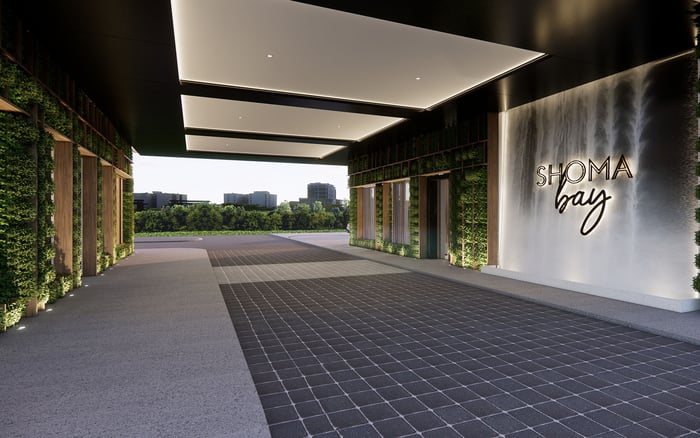
Service-entry separation requires its own review. The private residential porte-cochère drop-off advertised at Shoma Bay does not, by itself, demonstrate separate service entrances or elevator banks. A distinct sense of arrival is not necessarily a distinct circulation system.
Request a route review for residents, guests, contractors, movers, deliveries, and waste removal. Trace each journey through entrances, corridors, and elevators to its permitted endpoint. Identify every point where service and residential circulation meet.
The advertised refrigerated food-delivery room, indoor mailboxes, and mobile package-service alerts at Shoma Bay describe receiving amenities. They do not establish where delivery personnel may travel. Ask who receives an item, where custody changes, and whether onward movement involves building staff or the original delivery person.
Distinguish physical separation from separation imposed by policy. Different entrances, corridors, or elevator banks address the layout; scheduled access and escort requirements address operations. Where routes overlap, request the current rules governing that overlap rather than describing the arrangement as fully separate.
Organize the final ownership file around three conclusions: what the documents establish, what credentials authorize, and how people actually circulate. Have counsel review legal-status questions and ask management to confirm operational answers in writing.
Treat an unresolved claim as an open purchase question, not an established amenity. The objective is not the most elaborate security description. It is a clear understanding of the threshold between shared building life and the privacy of home.
For a considered approach to South Florida residential ownership, explore MILLION.
If branded residences are on your mind — as a home or as an allocation — we would be glad to share what we are seeing, privately.
Begin a quiet conversationNot necessarily. A marketing description does not establish exclusive ownership; ask counsel to review the governing documents for the elevator's legal status.
Request the recorded declaration, condominium plat, amendments, exact unit plan, approved architectural plans, and current rules. Counsel should review how they address the elevator, foyer, and vestibule.
Grandview Palace is marketed with semi-private elevator foyers. That is a narrower claim than an elevator reserved exclusively for one residence.
The described features are secured elevator access, 24-hour front-desk service, and concierge assistance. They do not explicitly establish private elevators.
No. Shoma Bay's advertised biometric access control does not by itself establish visitor identification, resident approval, or guest-specific elevator permissions.
It should identify who issues credentials, their permitted destinations, and who can change permissions. Ask whether staff or vendor credentials can reach the residence's vestibule.
Ask management to demonstrate identification, resident confirmation, elevator authorization, escort requirements, and after-hours access. Also clarify exceptions and access-log retention.
No. A private drop-off does not by itself establish separate service entrances, corridors, or elevator banks.
No. Receiving rooms and package alerts do not establish circulation routes; ask who accepts deliveries and who carries them onward.
Trace the actual entrances, corridors, and elevator banks used by each group. Then separately document any scheduling, escort, or access rules governing shared routes.