A North Bay Village condo ownership file should connect address-specific flood mapping with documented garage conditions, permit records, evacuation arrangements, and a temporary-housing budget that does not assume insurance reimbursement.
A considered condominium purchase deserves an equally considered ownership file. Beyond the residence itself, buyers should understand how mapped flood exposure relates to the building’s lower-level systems, routes out of the neighborhood, and arrangements for living elsewhere if necessary. These questions are connected, but each requires different evidence.
For buyers considering Continuum Club & Residences North Bay Village, the starting point is not neighborhood-wide reassurance. It is a property-specific record that separates verified conditions from matters still requiring confirmation. Apply the same discipline to every condominium under consideration: no project name establishes its flood zone, equipment elevations, or insurance protection.
Organize the file into four parts: mapping and elevations, building systems and permits, evacuation and vehicle arrangements, and insurance and temporary housing. Date each document and identify who can resolve outstanding questions. The objective is a usable ownership plan, not simply more paperwork.
North Bay Village has moderate-to-high flood risk. Search the current flood map by the condominium’s address rather than treating the entire municipality as a single designation. Retain the applicable map information, its effective date, and any property-specific elevation documentation supplied for review.
Historical mapping from May 2016 placed all of North Bay Village in Zone AE. That provides context, not a current determination for the building you are buying. The familiar “100-year” terminology describes a 1% annual chance of flooding in the referenced Zone A framework-not an interval that makes the other 99 years safe.
Base Flood Elevation, or BFE, is a modeled floodwater elevation. In the historical mapping, it is expressed relative to NAVD88, an elevation reference. Ask a qualified professional to compare relevant building and equipment elevations using compatible references. A map designation alone cannot establish whether a particular garage component sits above or below the modeled water level.
For Village planning purposes, building height is measured from BFE plus freeboard unless otherwise specified. That convention does not establish the elevation or protection of every building system.
An upper-floor residence tells you nothing about the condition of equipment in its garage or utility rooms. The ownership file should connect flood information to the systems that support the building’s daily operation.
Ask management for an equipment inventory and available drawings showing locations and elevations. Where present, request information about electrical equipment, mechanical systems, pumps, elevator-related equipment, garage access controls, and backup-power components. These are inspection questions, not assertions that any particular condominium contains these systems or has a deficiency.
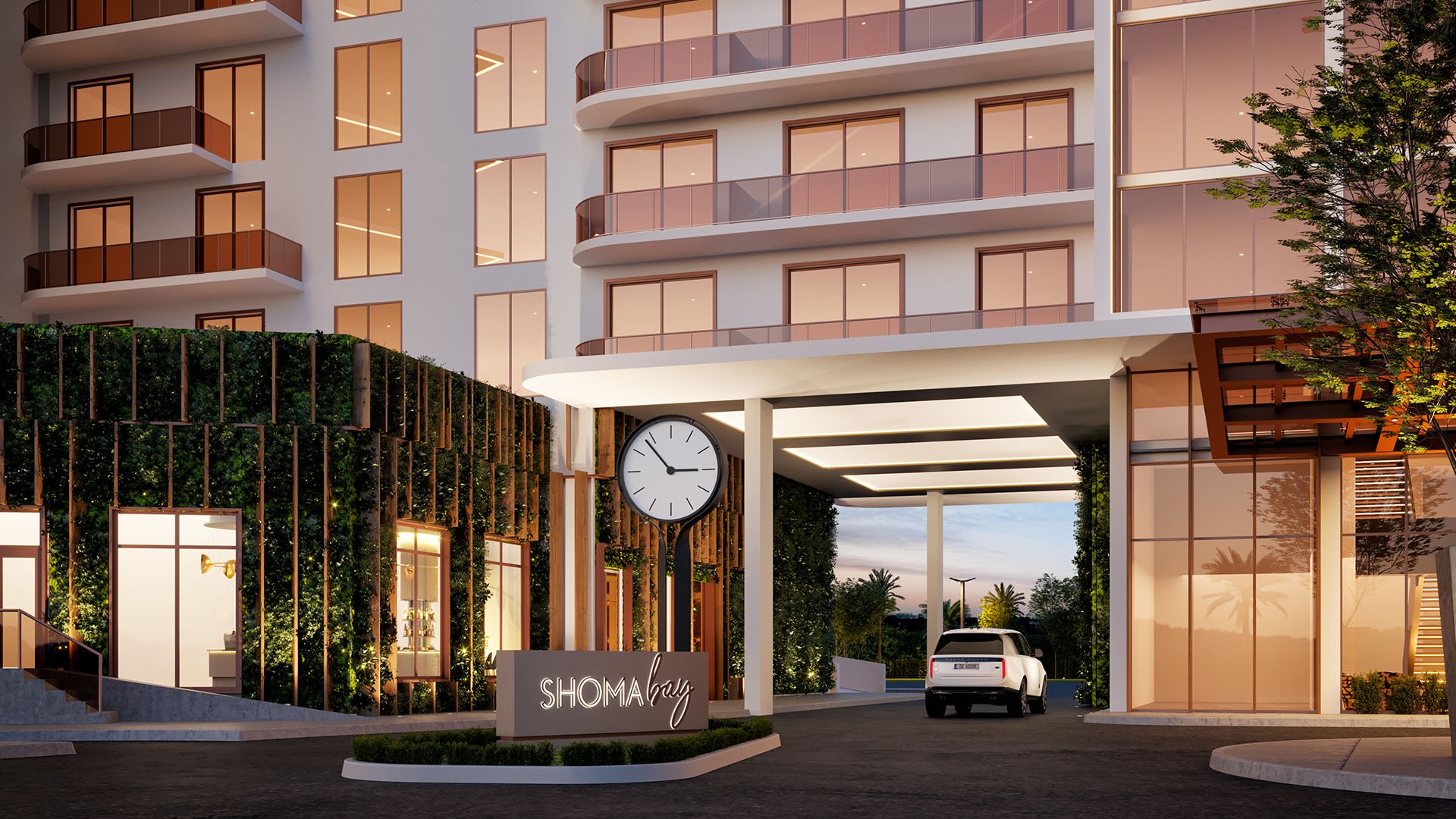
For a buyer evaluating Shoma Bay North Bay Village, the request is the same: identify which documents establish actual conditions, which describe proposed arrangements, and which questions require professional review. A rendering or general design statement is no substitute for equipment-specific evidence.
Ask how management would assess garage access and essential services after a flooding event. Record the response as an operational plan, not a guarantee. The distinction between a residence’s elevation and the building’s ability to function is central to informed ownership.
Equipment location is only part of the inquiry. Ask whether relevant alterations have supporting permits and inspection documentation. Moving or replacing a garage or utility-room component may sound modest, but the nature of the work matters more than its apparent scale.
Under the December 2025 permit requirements, construction involving structural, electrical, plumbing, or mechanical work requires a permit regardless of project value. Separate permits are also required for listed categories, including electrical, mechanical, plumbing, roofing, shutters, windows, tanks, and air conditioners.
Request records for relevant work rather than assuming a recent upgrade is fully documented. The local building department oversees compliance with Village requirements and the Florida Building Code and provides online permit-processing information.
When reviewing Tula Residences North Bay Village, distinguish proposed specifications from completed work and available approvals. This is a document-review principle, not a conclusion about the project’s construction or permit status. A qualified reviewer should explain what the records establish and what remains unresolved.
Flood mapping and storm-surge evacuation planning answer different questions. Check the property’s storm-surge planning zone separately from its flood-zone designation. A storm-surge planning zone identifies an area that could be affected by surge; evacuation orders may apply to an entire zone or only part of it.
The 79th Street Causeway was historically identified as North Bay Village’s evacuation corridor, with relatively limited inundation projected under the scenarios examined. That does not guarantee future access. A modeled scenario is not permission to delay departure or disregard current orders.
Keep a departure plan that addresses occupants, vehicles, destination, and any assistance needs. Include safe places to park vehicles in that planning.
Once an emergency is declared, emergency-location tools can identify evacuation centers, bus-pickup locations, assistance centers, food and water distribution points, and operating hospitals. Residents needing specialized transportation or unable to evacuate independently because of medical needs should review the Emergency Evacuation Assistance Program before an urgent departure becomes necessary.
Most homeowners insurance does not cover flood damage, even outside high-risk flood zones. Review storm, flood, and wind protection as distinct coverage questions. Maintain flood insurance, and confirm the applicable start date with the insurer: a 30-day waiting period generally applies before coverage takes effect.
Keep the association’s master-policy documents separate from the unit-owner policy. Ask the insurance adviser to explain the actual coverage, exclusions, deductibles, and any applicable conditions. Neither a flood-zone designation nor an association policy establishes that an owner has temporary-housing benefits.
Create a temporary-housing plan with a preferred destination, an alternative, transport arrangements, and a budget that can be funded without assuming reimbursement. If loss-of-use coverage is represented as available, request written clarification of its triggers, limits, duration, and exclusions. Include a benefit in the plan only after its terms are understood.
Before committing, summarize the verified map information, documented equipment conditions, relevant permit records, evacuation arrangements, and insurance responses on one page. Keep unresolved items visibly separate. Refresh the file when building work, policy terms, or household needs change, and follow current evacuation orders when a storm approaches.
The most reassuring ownership position is not a broad promise of resilience. It is knowing what has been documented, what requires professional judgment, and how the household will respond if normal access or occupancy is interrupted.
For a considered approach to South Florida condominium ownership, explore MILLION.
If branded residences are on your mind — as a home or as an allocation — we would be glad to share what we are seeing, privately.
Begin a quiet conversationUse the specific condominium address in a current address-based flood-map search. Retain the applicable map information and effective date rather than relying on a municipality-wide designation.
No. Mapping from May 2016 placed all of North Bay Village in Zone AE, but that historical context does not replace a current property-specific determination.
The referenced Zone A framework describes a 1% annual chance of flooding. It does not mean flooding happens only once every 100 years.
BFE is the modeled floodwater elevation, expressed relative to NAVD88 in the historical mapping context. A qualified professional should compare it with relevant building and equipment elevations using compatible references.
No. The residence’s floor does not establish the location, elevation, or condition of garage and utility-room equipment.
Yes. Under the December 2025 permit requirements, construction involving structural, electrical, plumbing, or mechanical work requires a permit regardless of project value.
No. Check them separately, and follow current evacuation orders, which may apply to a whole zone or only part of one.
No. Historical analysis identified it as an evacuation corridor, but the modeled inundation scenarios do not guarantee access during a future storm.
No. A 30-day waiting period generally applies; confirm the timing that applies to the specific coverage with the insurer.
Do not assume it does. Review the actual policies and any loss-of-use terms, and prepare a housing budget without assuming reimbursement.