An estoppel certificate addresses specified unit-level obligations, not the full outlook for ownership costs. At Tula Residences, buyers should pair it with stage-appropriate financial, construction, and funding diligence.

A waterfront residence offers a particular kind of luxury: an outlook, a setting, and a home that feels removed from the everyday. The purchase deserves equally careful attention to the obligations behind the monthly ownership budget. For buyers considering Tula Residences North Bay Village, the essential distinction is between confirming a unit’s disclosed financial obligations and understanding the building’s potential capital needs.
An estoppel certificate serves the first purpose. It does not replace the second. A certificate showing no outstanding balance is not an assurance that future work will require no additional owner funding.
That distinction is not a claim about Tula’s condition. No Tula-specific pending capital-project schedule, special assessment, reserve shortfall, or construction defect is established here. The point is to ask the right questions before committing, not to presume an undisclosed problem.
Florida condominium estoppel requirements fall under Section 718.116(8), not the separate homeowners’ association provisions in Chapter 720. The condominium association must issue the certificate within 10 business days of receiving a written or electronic request from a unit owner, mortgagee, or their designee.
Its scope extends beyond a statement of what is owed today. Required financial disclosures include assessments, other amounts owed, and amounts scheduled to become due during the certificate’s effective period. The certificate also addresses specified rule violations and transfer matters, including whether association approval is required for a sale.
The effective period, however, is limited. The certificate is not an open-ended assurance about later association decisions or charges. Nor is it a comprehensive evaluation of reserves, physical condition, or future capital requirements.
Read it as a closing document with a defined scope. Ask counsel to review its coverage and timing, while separately examining the records that explain what the property may need after closing.
Proposed work can carry future costs before it appears as a billed assessment. A discussion in board minutes, an engineering recommendation, or a project awaiting approval may deserve attention even when the unit’s account is current.
The review should connect three questions: What work is contemplated? How far has the decision progressed? Who is expected to pay? A preliminary discussion is not an approved project, and an approved project is not necessarily an assessment already scheduled for collection.
Request the current association budget, available reserve studies, recent board minutes, and notices of proposed or approved special assessments. Review available engineering assessments and project approvals alongside those financial records. Together, these materials can help identify potential work and funding gaps that the estoppel alone cannot explain.
Façade, seawall, roof, elevator, garage, and water-intrusion work are possible diligence categories, not documented Tula projects. Use them as question prompts only where applicable to the property and transaction.
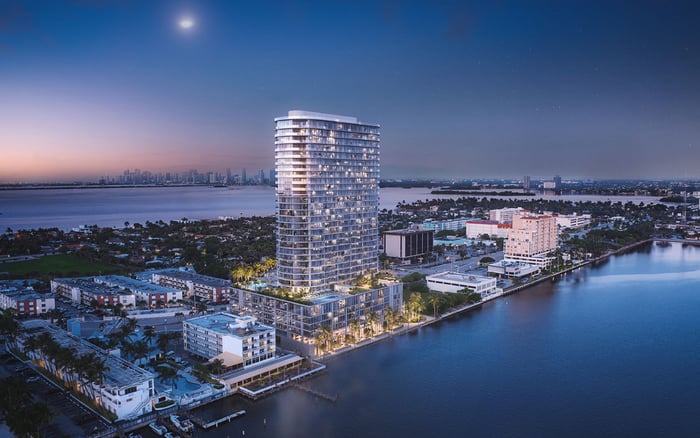
Tula is a waterfront condominium development at 7918 West Drive in North Bay Village, developed by Bayshore Grove Capital. In March 2025, Vivian Dimond’s revival of the stalled project was publicly disclosed. In January 2026, a $67 million construction loan from S3 Capital was disclosed for Tula, developed under Dimond’s leadership.
Those dated milestones provide context for a buyer’s inquiry. They do not independently establish present completion or occupancy status, nor do they prove that every future ownership cost has been funded.
Ask the developer for revised budgets and a clear explanation of developer-versus-association funding obligations. The relevant question is not simply whether construction financing exists, but which obligations the developer is undertaking and which expenses may belong to the association.
Seek written clarification tied to the applicable documents. Where a budget or explanation has changed, ask which version governs the proposed purchase and what assumptions support it.
Begin by confirming the nature and stage of the transaction. A developer sale during construction should not be reviewed as though it were a resale in a mature, operating condominium.
For a developer purchase, request the applicable developer disclosures, available budgets, and clarification of funding responsibilities. Ask what association records exist at that stage. The absence of an operating history should not be mistaken for evidence that there will be no future capital needs.
For a resale in an operating condominium, focus on the current association’s financial and decision-making records alongside the unit-specific estoppel. Recent minutes, reserve information, assessment notices, and available engineering materials deserve their own review.
In either setting, the discipline is the same: distinguish among an existing obligation, an anticipated expense, and an unresolved question. Do not treat silence in one document as an answer to a question that belongs in another.
A buyer also considering Continuum Club & Residences North Bay Village should apply the same document-first approach to each proposed transaction. Confirm its stage, identify the available disclosures, and compare what the budgets actually cover. Similarly located residences should not be assumed to have interchangeable ownership obligations.
If Shoma Bay North Bay Village is another option, keep the questions consistent without assuming identical answers. Ask each seller or developer to explain the boundary between developer-funded work and association-funded expenses. These are comparison prompts, not findings about either project’s finances or condition.
The more useful comparison goes beyond the stated monthly charge: what it covers, the assumptions behind it, and the separately identified obligations that could affect the buyer’s ownership budget.
Before proceeding, have the estoppel and broader diligence file reviewed together. If the records identify contemplated work, ask for its status, available cost information, proposed funding, and any relevant approvals. Keep preliminary answers labeled as such rather than treating them as assurances.
Ask counsel to explain how the purchase documents address any identified obligations and unresolved funding questions. The goal is clarity about what the buyer is accepting, not a promise that ownership costs will never change.
For Tula, the distinction remains straightforward: the estoppel is an important part of transaction diligence, while capital planning requires a separate, stage-appropriate review. A considered waterfront purchase makes room for both.
For a discreet perspective on South Florida residential ownership, explore MILLION.
If branded residences are on your mind — as a home or as an allocation — we would be glad to share what we are seeing, privately.
Begin a quiet conversationIt includes specified assessments, other amounts owed, and amounts scheduled to become due during its effective period. It also addresses specified rule violations and transfer-related matters.
Section 718.116(8) governs condominium estoppel requirements. The separate homeowners’ association statute in Chapter 720 is not the governing provision for this purpose.
The association must issue it within 10 business days after receiving a written or electronic request from a unit owner, mortgagee, or their designee.
No. Proposed work may create future costs before a billed assessment appears, and the certificate has a limited statutory effective period.
Request the current association budget, available reserve studies, recent board minutes, and notices of proposed or approved special assessments, as applicable to the transaction’s stage.
Available engineering assessments and project approvals can help identify contemplated work and potential funding gaps. They address questions that a unit-specific estoppel does not comprehensively answer.
No Tula-specific pending capital-project schedule, special assessment, reserve shortfall, or construction defect is established here. The article’s recommendations are diligence prompts, not findings of a problem.
A $67 million construction loan from S3 Capital was disclosed for the project. That financing does not establish that every future association or ownership expense is covered.
A developer purchase calls for applicable developer disclosures, available budgets, and funding clarification. An operating-condominium resale also calls for the association’s existing financial and decision-making records.
Ask for revised budgets and written clarification of developer-versus-association obligations. The dated revival and financing milestones do not independently establish current completion or occupancy status.