A daily-use-first framework for choosing a Miami residence, balancing intimate hospitality, shared entertaining amenities, and the practical limits of future renovations.
A Miami home can be an exceptional setting for hospitality without being organized around the largest party its owner might someday give. For the occasional entertainer, the more useful starting point is an ordinary day: where breakfast happens, where work ends, where two people sit comfortably in the evening. The annual celebration deserves a plan, but not necessarily the best room in the residence.
This is a framework for a buying decision, not a claim about what most luxury purchasers prefer. Its premise is simple: give daily rituals first claim on the floor plan, then decide how occasional gatherings will fit. A formal dining room may be entirely appropriate. It should earn its place through intended use, not an abstract expectation of what a substantial home ought to contain.
Before comparing residences, describe three occasions: a quiet evening at home, the dinner you host most often, and the exceptional event. Keep the descriptions practical. Consider who attends, whether guests stay overnight, how food arrives, and how much preparation you want to manage yourself.
Then separate requirements from preferences. Comfortable everyday dining may be essential; seating everyone at one table for a rare holiday may be negotiable. A private room for overnight visitors may matter more than a second reception area. The purpose is not to prescribe a smaller home, but to prevent one infrequent occasion from determining every other choice.
For a Brickell search that includes The Residences at 1428 Brickell, apply that brief to each floor plan under consideration. Ask which spaces you would use every day and which would wait for company. A project name is no substitute for understanding the particular residence.
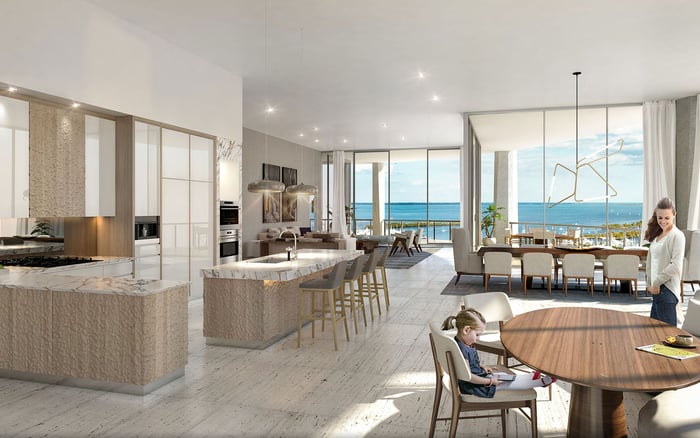
An empty room offers possibilities; a furnished plan reveals decisions. Ask for a layout showing the furniture you actually intend to use, rather than judging the dining area solely by its outline. Follow the route from the kitchen to the table and from the entrance to the seating area. Consider whether hosting requires moving the furniture that makes ordinary life comfortable.
A flexible dining space should also feel resolved when nobody is visiting. Think about the table at its usual size, the chairs that remain out, and where occasional pieces would be stored. If expanding the table means displacing the living room, decide whether that rearrangement is acceptable rather than treating flexibility as inherently desirable.
Give the quieter rooms equal scrutiny. Would the proposed formal dining room serve you better as a study or reading room? Could a secondary sitting area support conversation without becoming another room to furnish for hypothetical guests? These are questions of personal fit, not a universal formula for square footage or dining capacity.
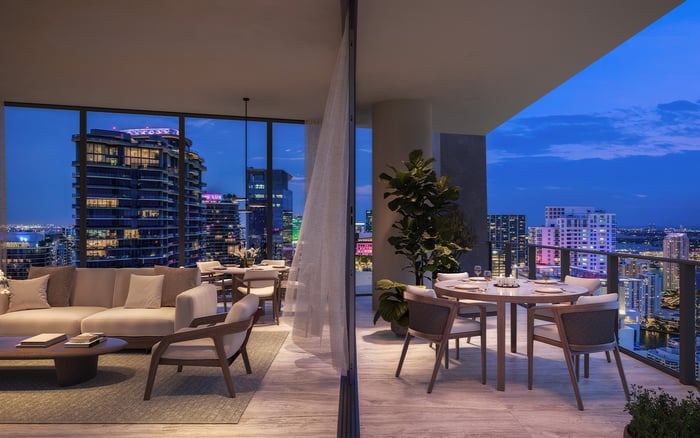
Shared hospitality can change the brief, provided its terms match the way you entertain. Advertised offerings at Cipriani Residences Brickell include round-the-clock Cipriani dining services, with service inside residents' homes, as well as reservable private dining rooms with Cipriani catering and a residents' lounge for intimate events.
For an occasional host, these offerings present an alternative worth evaluating alongside extensive private entertaining space. They do not establish that every event can be accommodated, that access is guaranteed, or that service is included in ownership costs. Treat the offering as a question to investigate, not a completed hospitality plan.
Confirm availability, reservation procedures, guest limits, vendor access, staffing charges, and cleaning fees. Ask how competing requests are handled and what happens when your preferred room is unavailable. If the purchase depends on a particular service, have the relevant terms reviewed before relying on it. The useful comparison is between a workable private layout and a clearly understood shared-service arrangement.
For a second residence, begin with how you want the home to function during a typical stay. If the first priority is a quiet retreat, test whether entertaining space compromises the privacy or usefulness of the rooms you would occupy most. If visitors are central to those stays, give guest accommodation a deliberate place in the brief.
In a Coconut Grove comparison that includes Park Grove Coconut Grove, use the same questions rather than assuming a change of neighborhood changes your needs. Trace an ordinary morning and evening through each candidate layout. Identify the room you would choose for yourself, not simply the one you would show guests first.
Distinguish hosting dinner from accommodating overnight company. They are different requirements and need not receive the same answer. A buyer might reasonably prioritize a guest bedroom while choosing another setting for an unusually large dinner. Equally, someone who values private celebrations may decide that a dedicated dining room is indispensable.
For a house, do not treat a garage, enclosure, or accessory building as assured future entertaining space. Miami-Dade floodplain regulations address lowest-floor elevation, attached garages or enclosures, and detached accessory buildings. Any proposed conversion deserves a property-specific compliance review before it becomes part of the purchase rationale.
An elevation certificate documents a structure's elevation relative to applicable flood requirements. These certificates are required for new construction and substantial improvements in Miami-Dade flood zones. Substantial improvements can bring flood-elevation compliance into a renovation review, making the documentation relevant before committing to an expansion.
In Miami-Dade, permits must be obtained before construction begins. Within the City of Miami, owners should check with the Building Department before building, altering, regrading, or placing fill. Confirm which authority governs the property, and have the proposed work evaluated accordingly. A possible future conversion should not be valued as though it were already approved living space.
At the final viewing, return to your original brief. Identify where you will eat, relax, work, and welcome your usual guests. Then account separately for the exceptional gathering, whether through a dedicated room, a verified shared amenity, or an event held elsewhere.
The right answer may still be a generous home with formal entertaining rooms. What matters is that those rooms reflect an intentional choice. Luxury need not mean maintaining a stage for an audience that rarely arrives; it can mean having the right space ready for the life you actually enjoy.
Explore residences with your daily life in mind at MILLION.
If branded residences are on your mind — as a home or as an allocation — we would be glad to share what we are seeing, privately.
Begin a quiet conversationNot necessarily. A formal dining room makes sense when it reflects how you want to live, rather than an obligation to accommodate a rare event.
Describe your ordinary day, your usual gathering, and your exceptional event separately. Give daily needs priority, then decide how to accommodate each type of gathering.
There is no universal size prescribed here. Evaluate a furnished layout using your intended table, seating, circulation, and storage needs.
They may offer an alternative if their availability and terms suit your events. Confirm the details before making them central to your purchase decision.
It advertises round-the-clock Cipriani dining, including in-home service, reservable private dining rooms with Cipriani catering, and a residents' lounge for intimate events.
Confirm availability, reservation rules, guest limits, vendor access, staffing charges, and cleaning fees. Ask what alternatives exist if your preferred room is unavailable.
Yes. Guest accommodation and dinner capacity are different requirements, and you may choose to prioritize one while handling the other outside the home.
It documents a structure's elevation relative to applicable flood requirements. It is relevant when evaluating flood-elevation compliance.
No. Miami-Dade floodplain regulations address garages, enclosures, and accessory buildings, so a proposed conversion needs a property-specific compliance review.
Confirm the governing jurisdiction, applicable permits, and relevant flood documentation. Substantial improvements can bring flood-elevation compliance into the renovation review.