A discreet look at why high-income finance buyers continue to view South Florida condos as a strategic lifestyle and capital-allocation choice in 2026.
The phrase “Mamdani Effect” has entered certain luxury property conversations as shorthand for a broader Wall Street instinct: when the political, tax, and regulatory climate feels less predictable, capital starts seeking optionality. In South Florida, that optionality often takes the form of a condominium with strong architecture, privacy, service, and a credible exit path.
For the finance buyer, the appeal is rarely one-dimensional. Sunshine may start the conversation, but it does not close it. What does is a more disciplined calculus: ease of travel, access to private banking and legal advisors, year-round entertaining, a business-friendly rhythm, and a residence that can function as a primary base, seasonal retreat, or strategic hold.
That is why the South Florida condo market remains relevant in 2026. The buyer is not simply relocating. In many cases, the buyer is building a personal balance sheet around mobility. A well-selected residence can support family life, social capital, estate planning conversations, and a more flexible relationship with the office.
The term is less about one election cycle than about sentiment. Affluent buyers are highly sensitive to policy tone, municipal direction, public-safety perceptions, and the cost of remaining in legacy wealth centers. When confidence becomes uneven, real estate in a favored jurisdiction can become a form of lifestyle insurance.
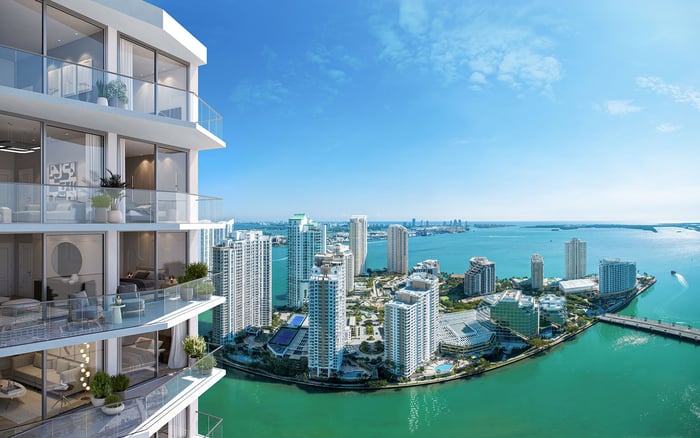
South Florida benefits because it offers more than refuge. It offers a mature luxury ecosystem: waterfront towers with private elevators, branded residences with hotel-level service, quiet boutique buildings, and downtown addresses that keep buyers close to legal, financial, and cultural infrastructure. That range matters to Wall Street capital because not every buyer wants the same expression of wealth.
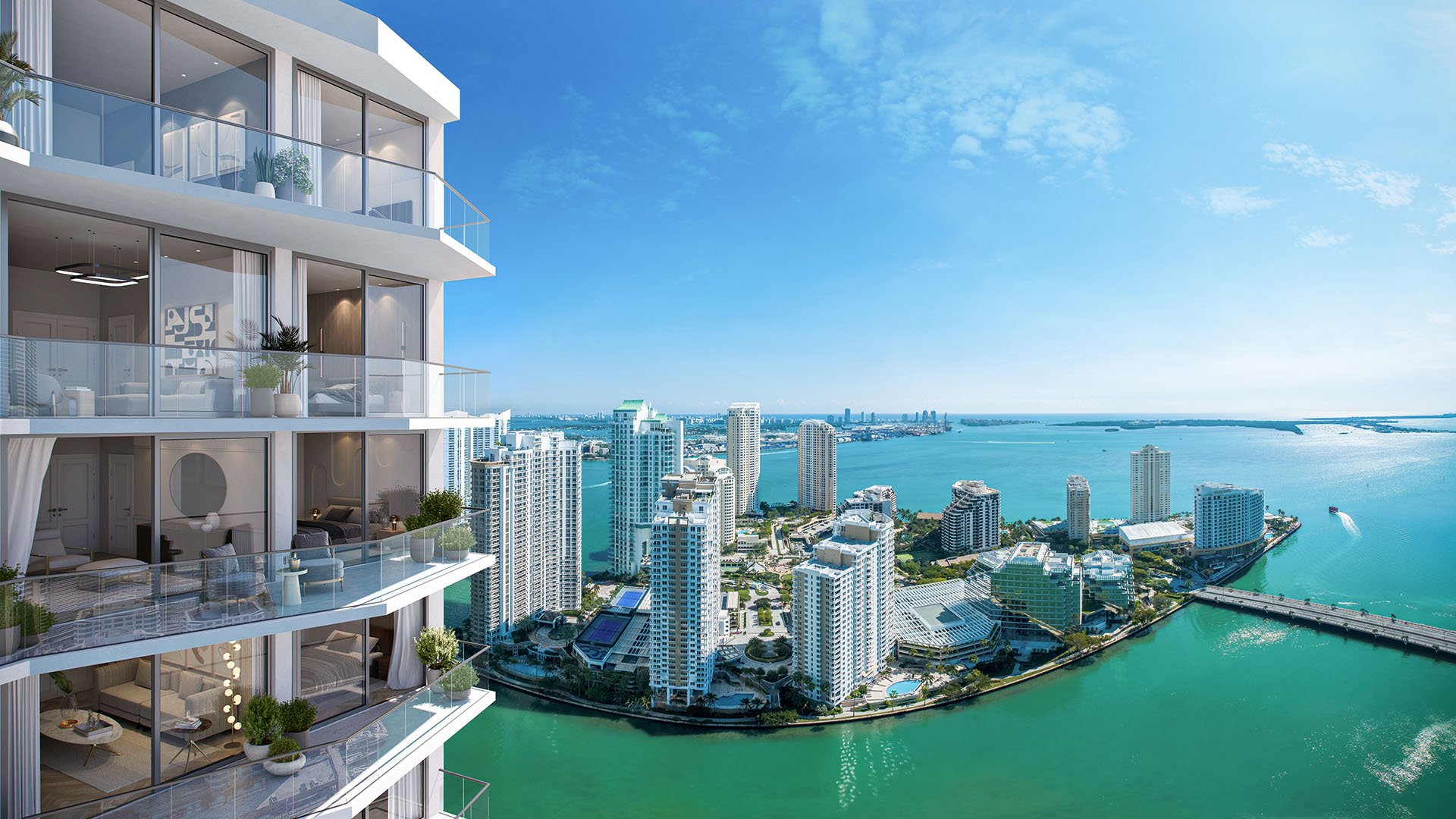
Some want a high-floor residence in Brickell with a short commute to meetings and private dining. Others prefer a calmer coastal setting where value is measured in views, wellness, and discretion. Still others want the emotional certainty of new construction, where building systems, amenities, and design language feel aligned with the next decade rather than the last.
A single-family estate can be extraordinary, but it is not always the preferred instrument for a finance professional. Condominiums simplify ownership. They compress maintenance, centralize security, and allow a buyer to arrive, host, work, leave, and return without the operational burden of a large private property.
That lock-and-leave quality is central to the 2026 thesis. A condo can support a hybrid life across New York, Miami, Palm Beach, London, or the Caribbean. It can accommodate a spouse who wants wellness and cultural access, children who need routine, and a principal who needs privacy, connectivity, and immediate service.
This is also where language matters. In the shorthand of a buyer brief, investment, new construction, oceanfront positioning, penthouse scale, and waterview orientation are not decorative words. They are filters. They separate emotional purchases from assets with stronger long-term desirability.
The most sophisticated buyers are not asking only whether a residence is beautiful. They are asking whether the building will age well, whether the floor plan supports real living, whether the views are protected, whether the service culture is stable, and whether future buyers will understand the address immediately.
Brickell remains the most intuitive landing point for many Wall Street buyers because it feels legible. The neighborhood combines towers, restaurants, offices, hotels, private clubs, and walkability in a way that resembles a global financial district, but with a waterfront climate and a more relaxed daily rhythm.
For a buyer who still expects to take meetings, entertain investors, or remain close to professional networks, Brickell can feel efficient. It reduces friction. A principal can move from residence to restaurant to office to airport without rethinking the day. That convenience has a luxury value of its own.
The strongest Brickell residences also offer what finance buyers prize most: separation. Private elevator entries, expansive terraces, controlled arrival sequences, and service-rich amenity floors create a feeling of distance from the energy below. In a dense urban setting, that separation is essential.
The key in 2026 is selectivity. Not every tall building carries the same long-term appeal. Buyers are looking more closely at ceiling heights, parking, service standards, view corridors, and whether the building’s resident profile supports quiet luxury rather than transient spectacle.
Not every Wall Street buyer wants to live above the financial district. Some want the opposite: a residence that lowers the pulse. This is where South Florida’s coastal condominium market becomes especially powerful. Waterfront and near-waterfront homes offer a different kind of utility, less about weekday efficiency and more about restoration.
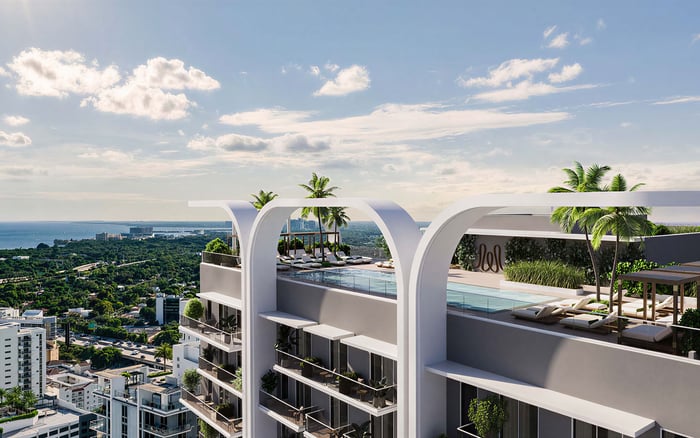
The coastal buyer often prioritizes sunrise, air, proportion, and privacy. The residence becomes a place to recover from markets, travel, and decision fatigue. Larger terraces, calmer lobbies, wellness programming, and fewer neighbors can matter as much as finishes.
This is also where scarcity enters the conversation. The most desirable waterfront settings cannot be manufactured easily. A buyer may compromise on timing, but rarely on orientation, view quality, or the dignity of arrival. In the upper tier, the land and the line often matter as much as the brand.
For finance families, the coast can also serve as a bridge between generations. It is formal enough for serious entertaining, relaxed enough for children and grandchildren, and flexible enough to function as a second home before becoming a primary residence.
The movement of capital is not confined to Miami. The broader South Florida corridor has become more interconnected in the minds of luxury buyers. Palm Beach exerts a distinct influence because it represents tradition, privacy, and social continuity. For some buyers, the island itself is the aspiration. For others, the surrounding condo and waterfront markets offer a more practical way to participate in that lifestyle orbit.
This northward pull is important because it shows that the thesis is not only about nightlife, restaurants, or skyline living. It is about building a regional life. A buyer may keep business interests in Miami, philanthropic relationships in Palm Beach, and family routines somewhere between the two.
That flexibility is a defining feature of 2026 demand. The right South Florida condo can be less a single address than a platform. It allows a buyer to test the region, deepen relationships, and decide over time whether a larger commitment is warranted.
The most disciplined purchasers are approaching condos with the same habits they bring to capital allocation. They are asking about supply, building culture, monthly carrying costs, insurance exposure, rental posture, governance, reserves, and the depth of the future buyer pool. Beauty matters, but it is only one part of the model.
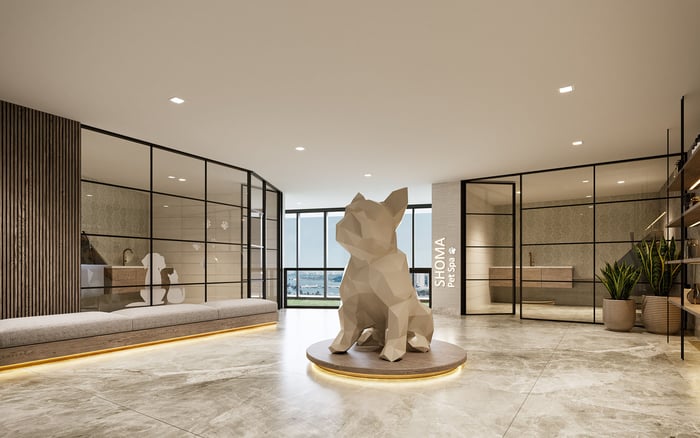
They are also distinguishing between amenities that photograph well and amenities that improve daily life. A private dining room with reliable service may matter more than an oversized lounge. A proper gym may matter more than a theatrical lobby. Valet efficiency, elevator privacy, package handling, security, and staff discretion all influence the lived experience.
A strong purchase in 2026 will likely feel calm rather than performative. It will have architectural integrity, durable views, intuitive circulation, and a building culture that respects privacy. For Wall Street buyers, that calm is not incidental. It is the luxury.
The “Mamdani Effect” is best understood as part of a wider migration of confidence. Capital seeks places where lifestyle, governance, connectivity, and social infrastructure feel aligned. South Florida continues to offer that alignment to buyers who want more control over how they live, where they spend time, and how their families experience wealth.
The market will still reward discipline. Overpaying for a weak floor plan, compromised view, or poorly managed building is not transformed into strategy simply because the address is in South Florida. The best buyers will remain patient, advisory-driven, and highly specific.
But the underlying motivation is clear. The affluent condo buyer of 2026 is not merely buying square footage. They are buying optionality, discretion, continuity, and the ability to move through a changing world with fewer constraints.
What is the “Mamdani Effect” in South Florida real estate? It is shorthand for affluent buyers seeking optionality when political or economic sentiment feels uncertain. In condos, that often means privacy, service, and geographic flexibility.
Why are Wall Street buyers interested in South Florida condos in 2026? They are drawn to lifestyle, mobility, tax posture, business access, and the simplicity of serviced ownership. Condos can support both seasonal and primary use.
Is Brickell still attractive to finance buyers? Yes, Brickell remains compelling because it combines urban convenience, business proximity, dining, and luxury towers. The best buildings offer privacy above a highly active district.
Are coastal condos different from urban condos? Coastal residences usually emphasize privacy, views, wellness, and calm. Urban residences tend to prioritize convenience, access, and daily efficiency.
Do buyers prefer new construction? Many do, especially when they value modern systems, current design, and amenity planning. Still, quality, location, and building culture matter more than age alone.
What should buyers evaluate beyond price? They should review floor plan quality, views, service standards, governance, carrying costs, reserves, and privacy. These factors shape both lifestyle and resale appeal.
Is a South Florida condo a good second home? For many affluent buyers, it can be a practical second home because it offers lock-and-leave ownership. The best fit depends on usage, building rules, and location.
What makes a luxury condo feel discreet? Discretion comes from controlled arrival, attentive staff, private elevators, thoughtful layouts, and a resident culture that values privacy. It is felt more than advertised.
Should buyers focus only on branded residences? Not necessarily. Branding can add service and recognition, but architecture, location, management, and long-term desirability remain essential.
How should a buyer begin the search in 2026? Start with lifestyle requirements, then narrow by neighborhood, view, building quality, and ownership goals. A clear brief prevents emotional overreach.
For a discreet conversation and a curated building-by-building shortlist, connect with MILLION.
If branded residences are on your mind — as a home or as an allocation — we would be glad to share what we are seeing, privately.
Begin a quiet conversation