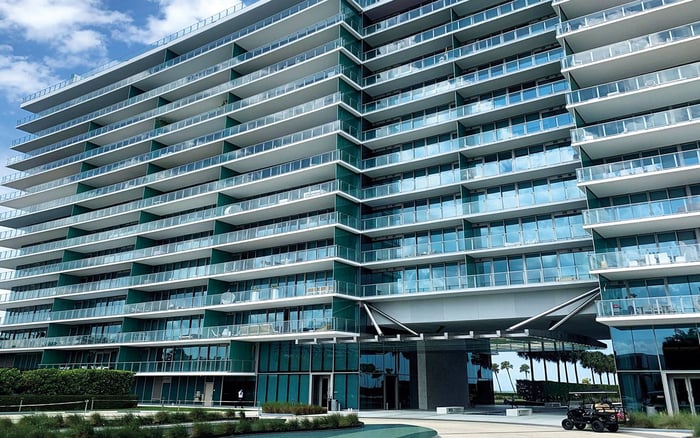
A discreet, buyer-oriented framework for evaluating security, privacy, digital access, governance and residential exposure before acquiring a Key Biscayne home.

A serious Key Biscayne acquisition demands a security review calibrated to the household, not a generic amenity checklist. Before touring, define who requires protection, what information must remain private and which routines create exposure. Consider family members, household employees, frequent guests, valuable collections, vehicles, deliveries and remote-work requirements.
The objective is not theatrical fortification, but graceful control: predictable arrivals, discreet screening, limited data circulation and clear accountability when something goes wrong. This distinction is fundamental. A buyer should assess both the visible experience and the operational system behind it.
Before comparing properties, establish three categories: essential protections, preferred privacy features and remediable weaknesses. That discipline prevents an impressive lobby, gate or camera array from standing in for a coherent plan.
Evaluate every transition from the public approach to the private interior. During a scheduled visit, trace resident entry, guest arrival, deliveries, ride-share pickup, service access, parking and emergency access. Ask who can authorize entry, what happens when staff changes and how exceptions are recorded.
For a condominium such as Oceana Key Biscayne, the relevant inquiry is not simply whether access is controlled. Request a demonstration of the actual resident journey and identify every point where identity, destination or schedule becomes visible.
A single-family buyer should apply the same logic to the property line, driveway, pedestrian entrance, garage and waterside approach. A gated-community label, on its own, does not explain how access decisions are made or how consistently protocols are followed.
Technology performs only as well as the people who administer it. Request written explanations of staffing responsibilities, visitor handling, key and credential issuance, package procedures, contractor supervision and incident escalation. Clarify whether residents may create standing permissions and how those permissions are reviewed or revoked.
Observe behavior as closely as hardware. Does staff verify before granting an exception? Are visitor names spoken within earshot? Can a contractor move beyond the assigned work area? Are resident schedules casually disclosed? The most consequential privacy gaps often emerge at handoffs among the front desk, valet, management, engineering and outside vendors.
Ask who has authority to change a protocol. A refined operation should distinguish convenience requests from security decisions while preserving a clear chain of responsibility.
Digital due diligence should extend beyond locks and cameras. Ask what resident information is collected, where credentials are administered, which vendors can access systems and what happens when a phone, fob or vehicle changes hands. Seek clarity on retention, deletion, remote access and the process for disabling former users.
Review every app or portal connected to the residence, including guest authorization, building communications and smart-home controls. Determine whether household members and employees can receive different permission levels. Also ask how management communicates during a system interruption and whether a non-digital access procedure exists.
Privacy depends on data minimization. Names, unit information, travel patterns and service schedules should circulate only when operationally necessary.
The private residence warrants a separate review from the wider property. Map sightlines from neighboring homes, common areas, roads, paths and the water. Examine entries, glazing, terraces, service doors, garages and utility spaces with both daily living and prolonged absences in mind.
For waterfront property, waterside visibility and access belong in the same conversation as the front entrance. Commission appropriate professionals to assess locks, lighting, communications, smart-home administration, backup procedures and safe areas. Recommendations should remain compatible with the household’s design priorities and normal routines.
A second home requires especially clear arrival and departure protocols. Define who may enter while the owner is away, how work is documented and who confirms that access has ended.
For a condominium purchase, request the governing documents, relevant rules, insurance materials, meeting records and written security policies available through the transaction. Have qualified advisers review authority, responsibility, owner obligations and any limits on alterations. The purpose is to understand what a buyer can change privately and what depends on collective approval.
A resale review should also cover the transfer of every credential, code, key, application account and vendor relationship. Make deactivation and reissuance part of the closing checklist, rather than an informal post-closing task.
Use counsel and appropriate security, technology and insurance professionals to frame document requests and interpret responses. Security representations material to the acquisition should be confirmed in writing and addressed through the purchase process.
Context sharpens judgment. A buyer can use The Residences at Six Fisher Island as a reference point for questions about layered arrival, while Park Grove Coconut Grove can prompt discussion about privacy within a broader residential environment. A review of The Ritz-Carlton Residences® Miami Beach may help buyers consider how service expectations intersect with controlled access.
These comparisons should not become assumed claims about any property. Their value is diagnostic: each setting prompts sharper questions about circulation, staffing, information handling and the boundary between hospitality and privacy.
After inspections and interviews, score each property across perimeter, arrival, staffing, digital systems, residence, vendor access and governance. For every weakness, identify the responsible party, proposed remedy, approval path, cost responsibility and desired completion point.
Separate solvable items from structural constraints. A credential can be replaced; a circulation conflict may be more difficult to alter. The final decision should reflect residual risk after realistic remedies, not a promise of future attention. For an ultra-premium buyer, the best result is a home where privacy feels effortless because every responsibility has been made explicit.
What should a Key Biscayne buyer review first? Begin with a household threat model covering people, routines, assets and information.
Is a gate sufficient evidence of security? No. Review authorization, exceptions, staffing, records and credential revocation.
Should buyers test the guest-arrival process? Yes. Walk through guest, delivery, contractor and after-hours scenarios.
What digital questions belong in due diligence? Ask about access rights, vendors, retention, deletion, outages and former users.
How should household employees be handled? Assign limited permissions and establish written onboarding and offboarding steps.
Does waterfront living require a separate review? Yes. Include waterside sightlines, access points and routine monitoring.
What should condominium buyers request in writing? Request available policies, rules, responsibilities and incident procedures.
When should security specialists become involved? Engage qualified advisers early enough to inform inspections and transaction terms.
Can every privacy weakness be corrected after closing? No. Distinguish replaceable components from fixed circulation or governance limits.
What belongs on the final closing checklist? Include keys, codes, credentials, accounts, vendors and documented deactivation.
To compare the best-fit options with clarity, connect with MILLION.
If branded residences are on your mind — as a home or as an allocation — we would be glad to share what we are seeing, privately.
Begin a quiet conversation