A discreet guide for collectors evaluating Hallandale Beach residences through the lens of climate stability, storage discipline, HVAC review, and coastal ownership standards.

Hallandale Beach attracts buyers who want a coastal residence without compromising the stewardship of fine art, wine, watches, rare books, couture, design objects, or archival material. For these owners, climate stability is not a decorative preference. It is part of the asset strategy.
The local setting brings the pleasures and responsibilities of coastal living: humidity, salt air, hurricane exposure, and bright ocean light. None of these conditions should disqualify a residence, but they do change the questions a serious collector should ask. In the right home, climate is managed quietly through systems, construction choices, storage planning, and ongoing maintenance. In the wrong home, even a beautiful room can become an unstable environment.
This is where Hallandale Beach requires a more exacting lens. Oceanfront and Waterfront are marketing words, but collectors should translate them into practical due diligence. What sits behind the walls? How is humidity controlled? Where will the collection live when the residence is occupied, vacant, or in seasonal transition? How will the home perform when outdoor conditions are at their most difficult?
For many luxury buyers, the first instinct is to evaluate sightlines, terraces, ceiling heights, and finishes. Collectors should begin one layer deeper. The building envelope, glazing, door systems, seals, insulation strategy, and mechanical distribution all influence interior stability.
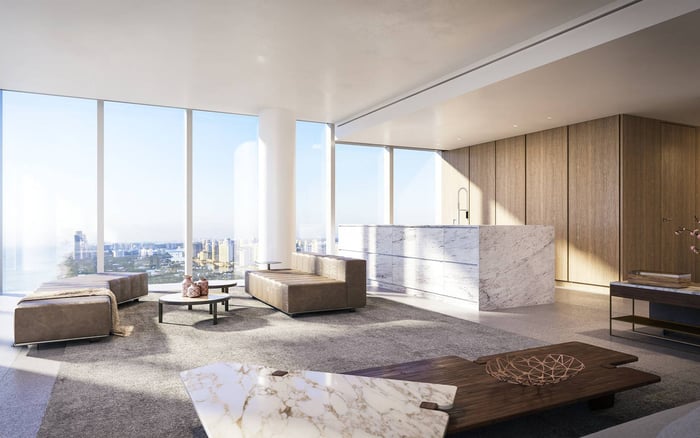
A dramatic wall of glass can be superb when properly specified and shaded, but a collector should still ask how heat gain, condensation, and light exposure are managed. The goal is not to avoid the coast. The goal is to understand how a residence mediates between the coastal environment and the collection.
In a Hallandale Beach search, compare residences by asking for a clear explanation of HVAC zoning, humidity management, fresh-air treatment, filtration, and service access. If the answer is vague, slow down. A collector-grade residence should allow the buyer’s consultants to inspect, question, and verify. The most elegant luxury is not noise or novelty. It is a home that performs consistently without announcing the machinery behind that performance.
A collection rarely lives only in public rooms. Even buyers who intend to display major works need protected back-of-house space: packing areas, closets with stable conditions, dark storage for light-sensitive pieces, and secure locations away from exterior doors and wet zones.
Before contract, map the collection against the floor plan. Identify walls suitable for art, rooms suited to climate-sensitive objects, areas to avoid, and spaces that may require supplemental systems. Wine, works on paper, leather, textiles, and instruments have different tolerances. A single general storage closet is rarely enough.
This is why new construction can be attractive when the buyer still has time to influence planning. Finished residences can also work beautifully if the infrastructure supports the intended use. The key is to avoid retrofitting under pressure after closing. For collectors, the question is not only whether the residence is beautiful today. It is whether it can be made disciplined before anything important arrives.
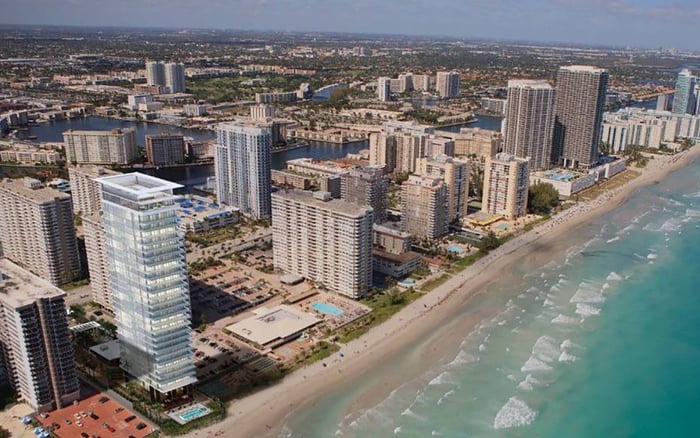
Within Hallandale Beach, buyers may naturally study 2000 Ocean Hallandale Beach and Shell Bay by Auberge Hallandale as part of a collector-focused search. The point is not to assume that any named building is automatically collection-ready. The point is to create a structured comparison: envelope, systems, storage, service protocols, privacy, and resilience.
Hallandale also sits within a broader luxury corridor, so it is useful to compare the feel of nearby markets without losing sight of the same technical checklist. Avenia Aventura may enter the conversation for buyers studying Aventura, while Bentley Residences Sunny Isles can serve as a Sunny Isles Beach comparison point. The locations differ, but the collector’s standard should remain constant: controlled interiors, intelligent storage, secure access, and serviceability.
A disciplined search compares lifestyle only after the technical baseline is clear. Views, restaurants, marinas, club access, and design pedigree matter, but they should not distract from the fundamentals that protect irreplaceable objects.
Ask who services the mechanical systems, how often filters and dehumidification components are maintained, and whether the residence has clear access for inspection. Ask where backup power, if present, applies and which systems remain supported. Ask whether any supplemental climate systems can be added without compromising design, acoustics, or association rules.
Also ask about practical daily life. Will doors be opened frequently for entertaining? Will staff need a protocol for deliveries and crates? Is there a place to acclimate works after transport? Can a room be darkened without harming the architecture? Is there a plan for seasonal vacancies?
The best answers are specific and calm. A serious residence does not need theatrical language to prove itself. It needs documentation, professional access, and a clear path to adaptation. A collector should leave a showing with fewer unknowns, not more adjectives.
Hallandale Beach can be compelling for collectors precisely because it asks buyers to be disciplined. The coast offers light, proximity to the water, and a refined residential rhythm, but ownership here rewards those who treat climate stability as an essential luxury.
The most successful search balances emotion with engineering. Walk the terrace, study the horizon, and notice the arrival sequence. Then return indoors and ask the harder questions. Where will the art breathe? Where will the wine rest? Where will sensitive materials remain protected when the weather changes? In a collector’s residence, serenity is not simply visual. It is environmental.
Why is climate stability so important for collectors in Hallandale Beach? Coastal humidity, salt air, and weather exposure make stable interiors central to protecting sensitive collections.
Should buyers prioritize views or mechanical systems first? Views matter, but collectors should verify the mechanical and envelope strategy before becoming attached to a floor plan.
What should be reviewed in the HVAC system? Ask about zoning, humidity control, filtration, service access, and whether supplemental systems can be added if needed.
Is a new residence always better for collections? Not automatically. Newer or customizable residences can help, but the real test is documented performance and adaptability.
Where should art storage be located inside a residence? Prefer interior areas away from exterior doors, wet zones, direct sun, and frequent temperature swings.
How should wine collectors think about coastal ownership? They should plan dedicated storage early, with stable temperature, humidity awareness, and backup considerations.
Do association rules matter for collectors? Yes. Rules can affect deliveries, installation, renovations, supplemental systems, and service access.
What is the biggest mistake collectors make when buying? They fall in love with design before confirming whether the residence can support the collection’s environmental needs.
Can Hallandale work for a seasonal owner with valuable objects? Yes, if the residence has reliable systems, monitoring protocols, maintenance discipline, and a clear vacancy plan.
What is the best way to shortlist comparable options for touring? Start with location fit, delivery status, and daily lifestyle priorities, then compare stacks and elevations to validate views and privacy.
To compare the best-fit options with clarity, connect with MILLION.
If branded residences are on your mind — as a home or as an allocation — we would be glad to share what we are seeing, privately.
Begin a quiet conversation