A discreet guide to how asset-backed portfolio lending works for luxury buyers in South Florida, where speed, underwriting flexibility, and liquidity preservation can matter more than the lowest available coupon.
For affluent buyers, the central appeal of asset-backed portfolio lending is not novelty. It is control. A portfolio mortgage remains on the lender’s own balance sheet rather than being sold onward, giving that lender greater latitude in how credit is evaluated, how collateral is viewed, and how quickly a transaction can move from term sheet to closing.
That flexibility has particular relevance in South Florida, where luxury acquisitions often involve complex borrower profiles, layered ownership structures, and properties that resist standard underwriting templates. In a market as deep and internationally connected as Miami-Dade, bespoke debt is less a niche product than a practical instrument.
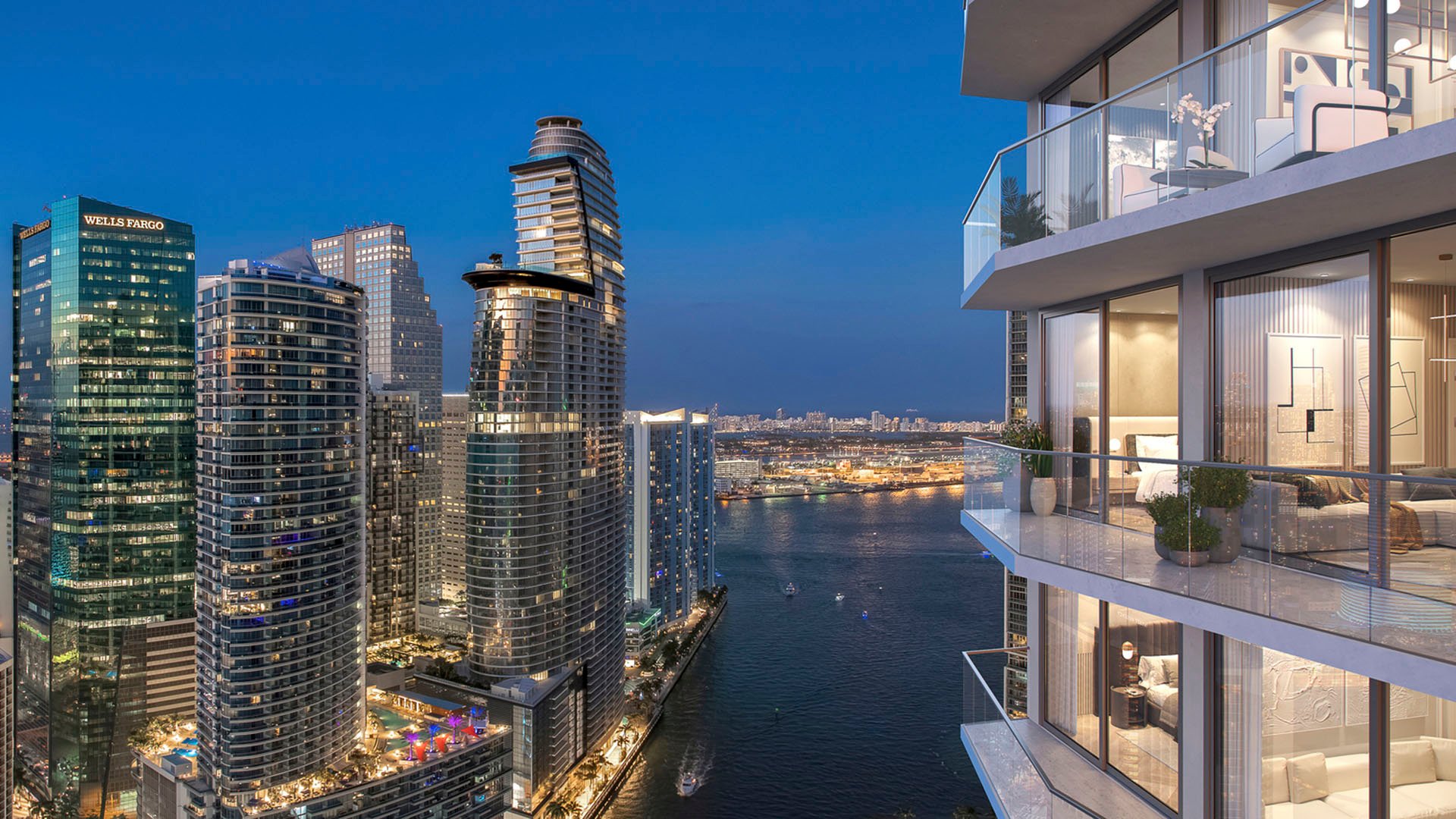
For buyers considering residences in neighborhoods such as Brickell, Miami Beach, Coconut Grove, or West Palm Beach, the financing conversation increasingly centers on liquidity management rather than pure rate shopping. A purchaser evaluating The Residences at 1428 Brickell, for example, may prefer to preserve marketable securities or business working capital instead of forcing a conventional income profile that agency-style lending typically favors.
Asset-backed portfolio lending works by shifting the emphasis from standardized income formulas to a broader credit picture. Instead of relying primarily on conventional debt-to-income calculations, many portfolio lenders evaluate liquid reserves, investment holdings, cash equivalents, business income patterns, and bank-statement cash flow. Asset depletion frameworks can also allow substantial holdings to function as a qualifying resource even when taxable income appears modest on paper.
This is especially relevant for self-employed principals, family office members, private investors, and international buyers whose reported income may understate actual capacity. A buyer can be balance-sheet strong and conventionally awkward at the same time. Portfolio execution exists to address exactly that disconnect.
The lender’s discretion is the key financial mechanism. Because the loan is retained, the lender is not trying to satisfy the narrow sale standards of the secondary market before funding. That means exceptions can be made when the overall credit case is persuasive: concentrated but seasoned assets, uneven K-1 income, trust-based ownership, or properties with unusual layouts and valuation narratives.
In practice, this can also mean a faster path to closing. On sought-after inventory, speed can be a financial advantage in its own right. A buyer pursuing Villa Miami or The Perigon Miami Beach may find that certainty of execution matters almost as much as pricing when competing for limited new-construction opportunities.
Portfolio debt is rarely the cheapest debt. Because the lender retains the credit risk, pricing often comes in above conventional mortgage rates, and fees can be less standardized. Heading into 2026, with mortgage benchmarks still elevated relative to earlier-cycle norms, that premium deserves clear-eyed analysis.
Yet luxury borrowers are often not buying the lowest coupon. They are buying optionality.
Optionality can mean avoiding a taxable event by not liquidating appreciated securities. It can mean using leverage against a new residence while waiting for another asset sale. It can mean securing a distinctive property before a trust restructure, liquidity event, or cross-border capital transfer is complete. In these cases, the spread between portfolio debt and conventional debt is only one line item in a much broader capital-allocation decision.
The economic tradeoff is straightforward: flexibility, speed, and custom underwriting in exchange for higher borrowing costs. For the right borrower, that tradeoff is rational. For the wrong borrower, it is simply expensive.
South Florida is unusually well suited to portfolio lending because the market combines high-value residences, international ownership, entrepreneurial wealth, and nonstandard collateral. Buyers here are often purchasing second homes, waterfront residences, branded towers, or mixed-use-adjacent properties that do not always fit cleanly into a conforming box.
In Brickell and Downtown, luxury pre-construction and branded inventory frequently attract buyers whose wealth is substantial but whose income documentation is complex. That helps explain the appeal of structures surrounding projects such as 888 Brickell by Dolce & Gabbana. In West Palm Beach, buyers evaluating projects like Mr. C Residences West Palm Beach may likewise prioritize liquidity retention as values rise and capital continues to target premium coastal product.
This is also a market where private capital remains a meaningful part of the financing ecosystem. When timing is critical or the collateral is unconventional, nonbank and private-credit channels can become competitive despite higher cost. For some acquisitions, especially those spanning residential and light mixed-use characteristics, portfolio execution can be one of the few realistic ways to finance the asset without delaying the purchase.
The first pressure point is valuation. Distinctive residences often require a lender comfortable with nuanced appraisal logic, especially when recent comparable sales are limited or the property includes design, amenities, or views that make standard comparisons less useful.
The second is documentation. Flexible does not mean casual. Portfolio lenders may accept bank statements, business cash flow, or asset-based qualification, but they still want a coherent story. Clean statements, traceable reserves, and well-prepared entity documents can materially improve execution.
The third is rate sensitivity. Any meaningful compression in 2026 lending costs will likely depend on broader monetary stabilization. Borrowers should model scenarios in which rates stay firm longer than hoped and ask whether an initial premium still makes sense if the hold period extends.
The fourth is tax and ownership structure. Cross-border buyers in particular need financing aligned with withholding, reporting, and title considerations. A loan that closes quickly but conflicts with the ownership architecture can create far more expense later.
Portfolio lending is often most intelligent when one of three conditions exists. First, the borrower’s balance sheet is stronger than the tax return suggests. Second, the property itself is exceptional enough that conventional channels may hesitate. Third, the transaction speed has genuine economic value.
If none of those conditions apply, conventional financing may remain the cleaner choice. But where one or more are true, portfolio debt can function as acquisition leverage in the fullest sense: not just borrowed money, but a tool that protects liquidity, shortens execution time, and expands the range of assets a buyer can credibly pursue.
In a market defined by scarcity, customization, and competition for singular residences, that distinction matters. The smartest luxury buyers do not treat financing as a clerical step after the contract. They treat it as part of the acquisition thesis.
What is an asset-backed portfolio loan? It is a mortgage a lender keeps on its own books while evaluating credit partly through assets, reserves, or nontraditional income measures.
Why do luxury buyers use portfolio lending? It can preserve liquidity, accommodate complex income, and move faster than more standardized mortgage channels.
Is portfolio lending more expensive than conventional financing? Usually yes. The lender keeps the risk, so rates and fees are often higher than conventional alternatives.
Can self-employed borrowers benefit from it? Yes. Portfolio lenders often work with business income, bank statements, and other documentation that better fits entrepreneurial borrowers.
Does asset-based qualification mean income does not matter? No. Income still matters, but substantial liquid assets and reserves can materially strengthen the approval case.
Are unusual luxury properties easier to finance this way? Often yes. Portfolio lenders can be more comfortable with nonconforming collateral than standardized mortgage programs.
Can portfolio loans close faster? In many cases, yes. Internal underwriting control can reduce delays tied to secondary-market sale requirements.
Why is South Florida a natural market for this structure? The region combines high-value residences, international buyers, entrepreneurial wealth, and distinctive properties that often require bespoke underwriting.
Should international buyers consider additional structuring issues? Absolutely. Ownership, tax, and withholding matters should be aligned with the financing plan before closing.
When is paying the premium worth it? When speed, flexibility, or liquidity preservation creates more value than the extra cost of the loan.
When you're ready to tour or underwrite the options, connect with MILLION Luxury.
If branded residences are on your mind — as a home or as an allocation — we would be glad to share what we are seeing, privately.
Begin a quiet conversation