A buyer-focused comparison of Aston Martin’s documented elevator and service infrastructure with 619 Nobu Brickell’s planned arrival and hospitality features, separating privacy design from operating assurances.
For a luxury residence, privacy is not simply a quiet lobby or an impressive entrance. It is the sequence from vehicle to reception, elevator and front door-and the routes used by guests, deliveries and staff. A useful comparison examines where those movements intersect, who authorizes access and which promises rest on specific infrastructure.
At Aston Martin Residences Downtown Miami, at 300 Biscayne Boulevard Way, the clearest disclosed distinctions concern elevator control and separate service circulation. At 619 Residences by Foster + Partners + Nobu Hospitality, planned for 619 Brickell Avenue, the emphasis is on a private arrival setting, access technology and hospitality. The latter project is also described as 619 Nobu Brickell, with design by Foster + Partners and branding by Nobu Hospitality.
These are different emphases, not verified security rankings. The disclosed features support a practical design comparison; they do not establish day-to-day privacy performance.
Aston Martin’s disclosed infrastructure includes 10 destination-controlled high-speed elevators and three separate, dedicated service elevators. The distinction matters: service traffic has identified infrastructure, not merely a promise of discreet handling.
A private basement-level service entrance is also specified for move-ins and personnel. Together, that entrance and the service elevators provide a documented basis for separating those movements from resident circulation. Buyers should still confirm how deliveries, contractors and household staff are assigned to those routes, and what exceptions apply.
The destination-dispatch system is described as permitting access only to an occupant’s own floor. Treat this as a stated design feature, not an independently verified account of current operation. Floor permissions, guest authorization and access to shared amenities still require explanation.
Private elevator entry is also advertised. The decisive question is residence-specific: does the selected home have the arrival configuration the buyer expects, and how is that threshold controlled? Neither destination dispatch nor private entry alone establishes a separate visitor route.
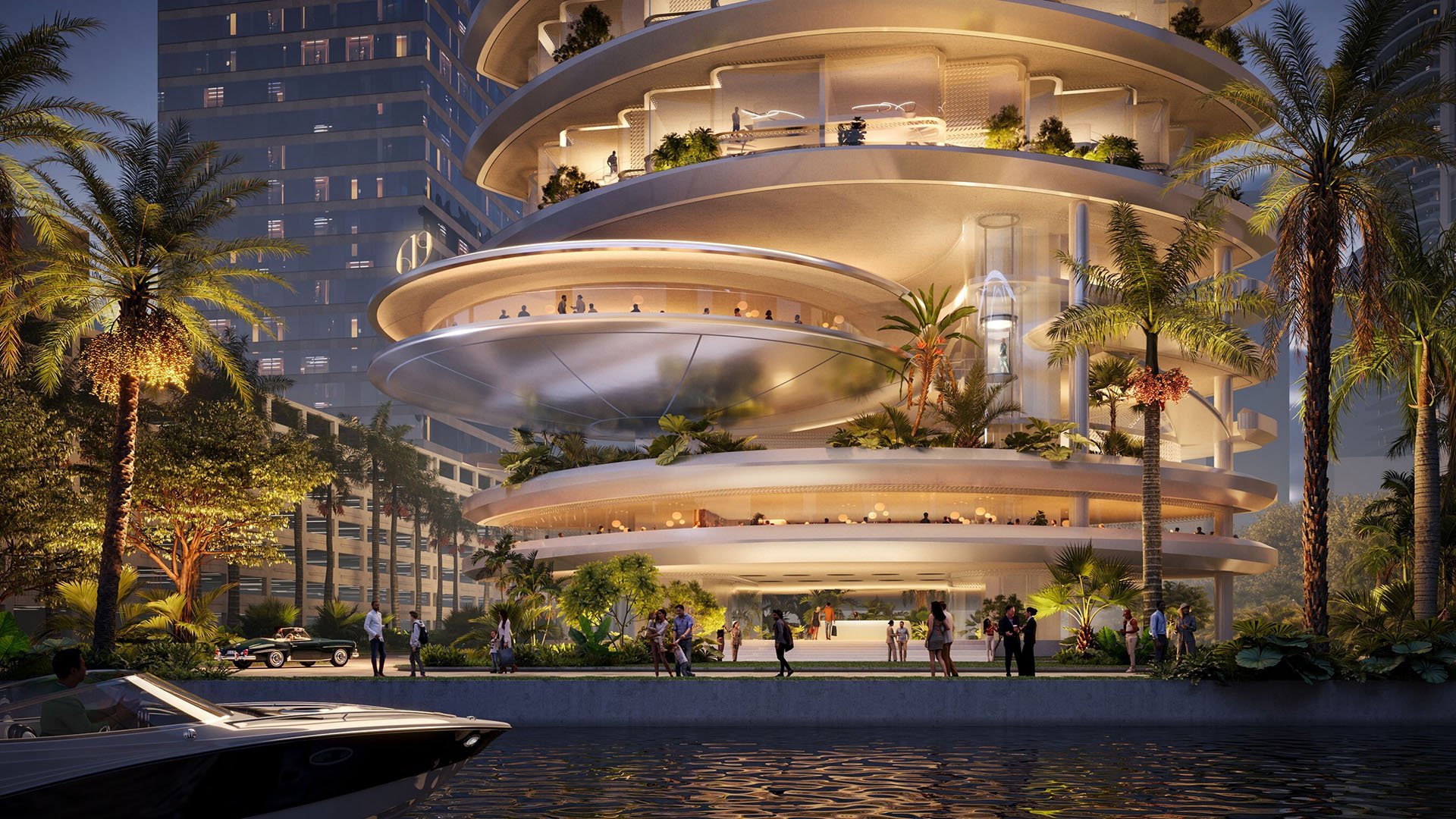
619 Nobu’s planned private porte-cochère establishes a designated vehicle-arrival area. Advertised options include valet parking, self-parking and private garages, though availability and eligibility need confirmation for the selected residence.
A private arrival area can be valuable without guaranteeing anonymity. Buyers should trace the proposed journey from vehicle to home and determine whether it passes through shared reception spaces. A private garage does not, by itself, establish a concealed garage-to-residence connection.
Keyless entry and 24/7 security throughout the tower are advertised. The disclosed details do not specify floor-restricted credentials, temporary guest passes or access procedures for delivery personnel. These are questions to resolve-not grounds for assuming either unrestricted access or comprehensive separation.
Dedicated service elevators, a separate staff entrance and separate resident and guest elevator banks are likewise not clearly identified. The distinction from Aston Martin is therefore one of documented specificity, not proof that such arrangements will be absent.
A resident-controlled elevator journey and a resident-only circulation system are not interchangeable. The first concerns permission to reach a destination; the second concerns who shares the route. Both projects require clarification of visitor registration, waiting areas and escorted access.
At Aston Martin, separate service elevators do not establish a complete resident-versus-guest protocol. Buyers should ask how invited visitors reach a residence, how authorization is recorded and whether guests can enter amenity areas without their host.
At 619 Nobu, the planned dining program creates another boundary to examine. A resident-exclusive poolside Nobu Café is distinguished from a full Nobu restaurant. The disclosed features do not establish whether restaurant patrons share the residential porte-cochère, lobby or elevator access. Request plans identifying those boundaries and the proposed access rules rather than inferring them from the hospitality branding.
Aston Martin advertises a digital connection to concierge services and building amenities from every residence. This provides a channel for arranging assistance, but does not establish how personnel or deliveries reach the home. Review the digital request process alongside the physical service route.
619 Nobu advertises in-residence dining and Nobu-linked hospitality services. Its planned amenities include private dining, a wine cellar, tea lounge, library salon, executive business suites and a boardroom. These spaces and services may appeal to buyers who prefer to entertain or work within the building.
The privacy questions remain practical: who may accompany a resident, how are reservations handled and where do service personnel routes intersect with residential space? Confirm advertised service commitments through condominium documents, service agreements, operating rules and budgets. Hospitality is most useful when its delivery is as clearly defined as its presentation.
Aston Martin advertises 24-hour valet, covered self-parking and 24-hour security. Those commitments do not establish staffing levels, surveillance coverage or visitor-screening procedures. At 619 Nobu, the private porte-cochère, parking options and advertised security leave similar operational questions open.
For either property, review a continuous arrival route rather than isolated renderings. Identify the vehicle handoff, pedestrian entrance, reception threshold, elevator authorization point and residential landing. Then review the equivalent routes for an invited guest, a delivery and a contractor.
Buyers also considering The Residences at 1428 Brickell can apply the same questions to their shortlist. This is a diligence framework, not a claim that another building provides equivalent features. Consistent questions make comparisons more meaningful than brand associations alone.
Request lobby and elevator plans, the selected residence’s arrival configuration, guest-registration procedures, delivery and move-in routing, and parking eligibility. At 619 Nobu, add explicit restaurant-access boundaries. At Aston Martin, confirm how destination permissions and dedicated service routes are administered.
Ask for written explanations of visitor credential duration, staff access, after-hours deliveries and exceptions to normal routing. Where services are advertised, identify the governing agreement and budget provisions. Follow a reassuring tour with documents that explain what residents can actually rely on.
The practical conclusion is measured. Aston Martin offers more specifically documented elevator and service-separation infrastructure. 619 Nobu emphasizes planned controlled arrivals, resident-exclusive dining and hospitality. Neither set of disclosed features supports an unqualified promise of anonymity or complete guest separation. The better fit depends on the buyer’s priorities and the residence-specific arrangements confirmed in writing.
For a discreet discussion of your South Florida residential shortlist, connect with MILLION.
If branded residences are on your mind — as a home or as an allocation — we would be glad to share what we are seeing, privately.
Begin a quiet conversationAston Martin Residences is at 300 Biscayne Boulevard Way in Downtown Miami. 619 Nobu Brickell is planned for 619 Brickell Avenue in Brickell.
Aston Martin’s disclosed infrastructure includes 10 destination-controlled high-speed elevators and three separate, dedicated service elevators.
No; destination control concerns access permissions and dispatch, while visitor registration and separate guest routes require additional confirmation.
Yes, but buyers should confirm the arrival configuration and access controls for their specific residence.
Aston Martin specifies a private basement-level service entrance for move-ins and personnel. Buyers should confirm how service routes are used in practice.
The project advertises a private porte-cochère, valet parking, self-parking and private garages. Garage availability and eligibility should be confirmed for the selected home.
Keyless entry and 24/7 security are advertised, but the disclosed features do not specify floor-restricted credentials or temporary guest-pass procedures.
Yes, it is described as resident-exclusive and distinct from the full Nobu restaurant. Restaurant patrons’ relationship to residential arrival and elevator spaces remains a diligence question.
Dedicated service elevators and a separate staff entrance are not clearly identified among the disclosed features. Buyers should request plans and written routing explanations.
Aston Martin has more specifically documented elevator and service-separation infrastructure, while 619 Nobu emphasizes planned arrivals and hospitality. That distinction does not establish superior day-to-day security performance.