A buyer-focused comparison of The Estates at Acqualina Sunny Isles and Oceana Bal Harbour, centered on amenity density, vertical circulation, residential calm, and owner control.
At the top of the South Florida condominium market, the difference between two exceptional oceanfront addresses is rarely defined by basic luxury. It is defined by how a building asks its owners to live. The choice between The Estates at Acqualina Sunny Isles and Oceana Bal Harbour is therefore less a contest than a personality test: do you want maximum amenity density and a residential-club environment, or a quieter, more art-forward setting where open space and restraint shape the experience?
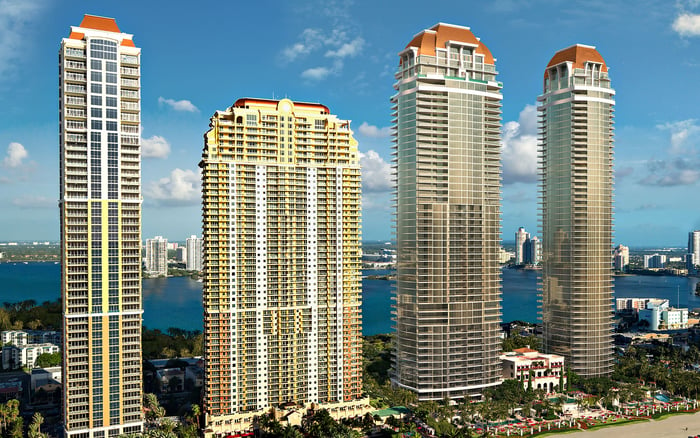
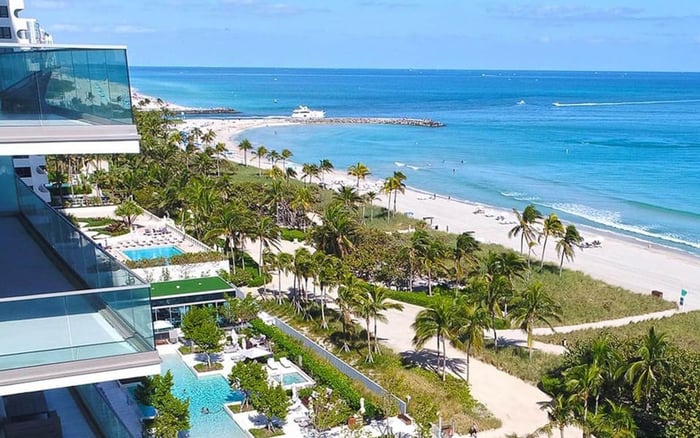
Both are oceanfront luxury condominiums, but they speak different languages. The Estates at Acqualina sits in Sunny Isles Beach, a market associated with tall condominium towers along Collins Avenue and a strong appetite for resort-level service. Oceana Bal Harbour sits in Bal Harbour, on the former Bal Harbour Beach Club site, with an identity built around lawns, sculpture gardens, pools, and a calmer residential cadence.
In search language, this oceanfront decision often sits between Sunny Isles energy and Bal Harbour restraint. In real life, the better fit comes down to three practical questions: how much amenity programming you actually want, how sensitive you are to elevator and arrival friction, and how much operational complexity you are comfortable accepting as an owner.
The Estates at Acqualina is the clearer fit for buyers who want the property itself to function as a destination. Its value proposition is tied to a highly amenitized residential-club lifestyle and a hotel-level service culture. The amenity concept includes unusual resort-style features such as an ice-skating rink and a Formula 1 simulator, which makes the positioning clear: this is not a minimalist private building with a gym, pool, and lobby staff. It is a deeply programmed environment designed for multi-generational use.
That matters for families, second-home owners, and buyers who prefer to keep entertainment, children’s activities, wellness, dining-style service, and social energy within the building. For that buyer, amenity density is not excess. It is convenience, privacy, and optionality.
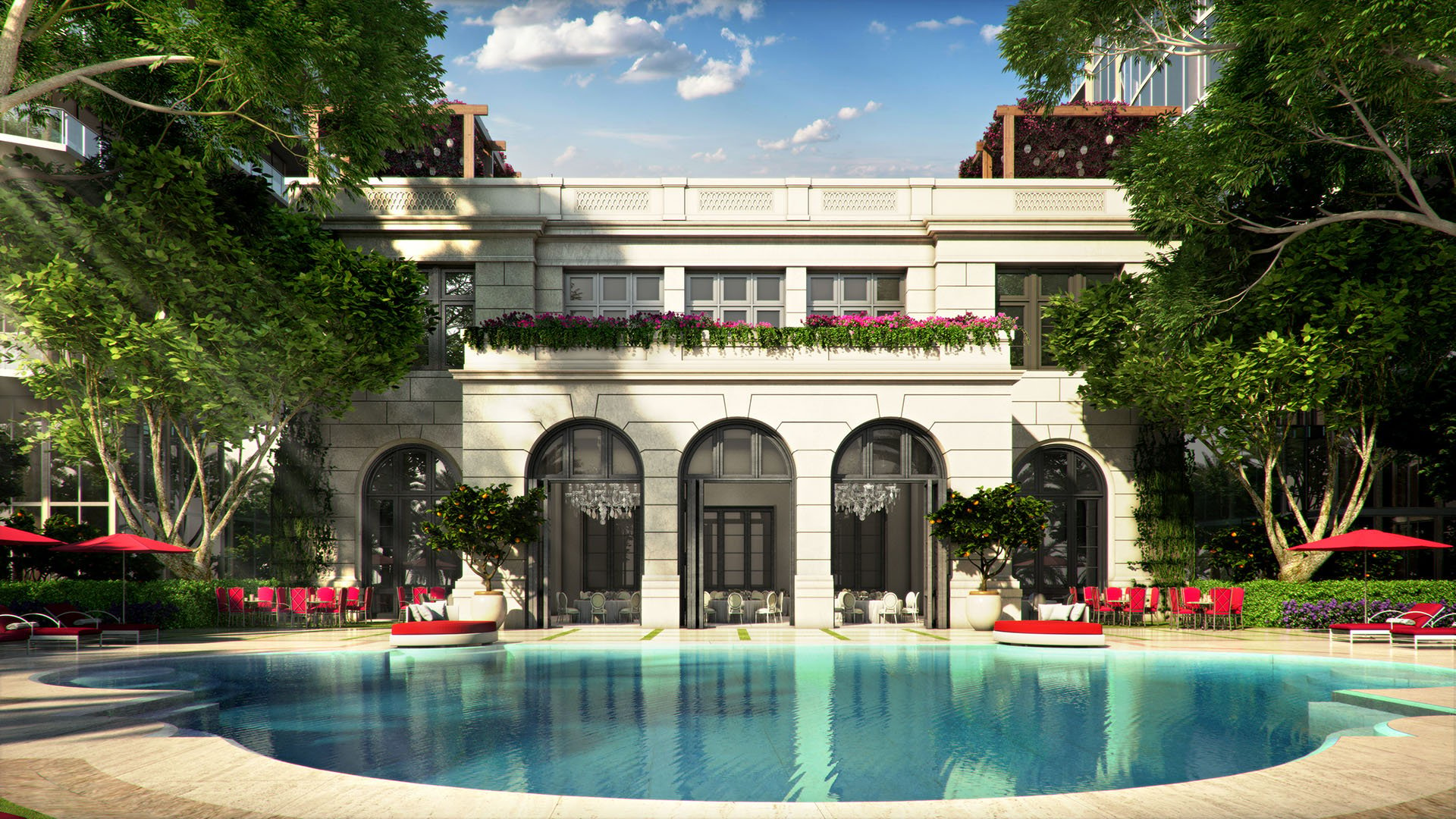
Oceana Bal Harbour takes a different path. Its appeal is tied to fewer but highly refined amenities, a broad oceanfront parcel, and an art-forward sensibility. The atmosphere is not about stacking the maximum number of activities under one roof. It is about space, proportion, outdoor living, and a more understated luxury rhythm. Pool terraces, lawns, sculpture gardens, and oceanfront views become the amenity language.
Buyers comparing nearby luxury product may recognize this divide elsewhere. In Sunny Isles, properties such as Jade Signature Sunny Isles Beach often attract buyers who want architecture, water, and vertical oceanfront living. In Bal Harbour and its orbit, projects such as Rivage Bal Harbour appeal to those studying the balance between privacy, refinement, and service without necessarily choosing a maximalist amenity model.
No serious buyer should reduce elevator performance to rumor or assumption. The relevant issue is not a generic claim that one building is faster than another. It is how a property’s design and programming create vertical demand during real moments of use.
In a highly programmed tower environment like The Estates at Acqualina, elevator and vertical-circulation questions become more consequential because more activity can mean more movement: residents traveling to and from amenities, family members using different areas of the property, staff supporting services, guests arriving for social use, and service operations moving behind the scenes. None of that is inherently negative. It is part of the lifestyle many buyers are purchasing. But it makes circulation diligence essential.
The right questions are practical. How do owners move from parking or arrival to residence? How are guests handled? Are service movements separated from resident circulation? What happens at peak family hours, holiday periods, dinner times, and weekend pool use? How does the building manage staff, deliveries, maintenance, and amenity reservations?
Oceana Bal Harbour, by contrast, presents as a lower-friction residential environment. Its broader, park-like setting and less densely programmed identity may reduce the number of daily touchpoints that generate vertical movement. That does not mean a buyer should skip elevator diligence. It means the nature of the question changes. At Oceana, the focus may be less on intense amenity traffic and more on whether the arrival experience, residence access, parking flow, and service logistics match the owner’s expectations for calm.
In ultra-luxury condominiums, owner control is not only about board votes. It is about how many decisions the property requires to sustain its promise. A building with heavier amenity programming can involve more staffing, more rules, more service protocols, more scheduling, more maintenance planning, and more association-level decisions over time.
For The Estates at Acqualina, that complexity is part of the bargain. The building is positioned around a dense amenity stack and hotel-level service culture. If an owner values that experience, the operating structure that supports it may feel worthwhile. The important point is to understand it before purchase: budgets, rules, staffing expectations, reservation systems, guest policies, and future capital needs all shape the lived experience.
For Oceana Bal Harbour, the owner-control conversation is different. A quieter amenity model does not automatically mean fewer rules or lower obligations, but it may create fewer daily operational intersections between residents and building programming. Buyers drawn to Oceana are often responding to a sense of openness and restraint, where the property feels residential first and programmed second.
This distinction also appears in adjacent coastal markets. A buyer who values the club-like convenience of a service-rich tower may also study The Ritz-Carlton Residences® Sunny Isles. A buyer who prioritizes coastal quiet, artful space, and a more discreet residential mood may also look toward Surfside options such as The Surf Club Four Seasons Surfside. The key is not the brand halo alone. It is the daily governance and operational reality behind the front desk.
The Estates at Acqualina is best aligned with buyers who want the building to do more. If your household includes children, visiting family, long seasonal stays, frequent guests, or a desire for on-site activity, the amenity density becomes a central advantage. It can reduce the need to leave the property for entertainment, wellness, and social life.
This is especially compelling for owners who value a resort-style rhythm without giving up the privacy of a condominium residence. The building’s identity is expressive, service-oriented, and multi-generational. The tradeoff is that a richer operating ecosystem may require closer attention to rules, staffing, costs, and vertical flow.
Oceana Bal Harbour is the more natural fit for buyers who want oceanfront living to feel composed. The property’s art-forward character, lawns, sculpture gardens, and oceanfront pools support a residential experience based on space rather than constant programming.
This does not make it less luxurious. It makes it differently luxurious. The buyer who chooses Oceana may prefer fewer interruptions, fewer scheduled amenity interactions, and a stronger sense that the residence and the landscape are the main event. For that buyer, calm is not the absence of luxury. It is the highest form of it.
There is no universal winner between The Estates at Acqualina and Oceana Bal Harbour. The Estates is the stronger fit for buyers who want maximum on-site programming, multi-generational activity, and a residential-club atmosphere. Oceana is the stronger fit for buyers who prefer openness, artful restraint, and a quieter day-to-day environment.
The most disciplined buyer will tour both with the same checklist: amenity usage, elevator flow, guest access, service separation, association documents, budgets, house rules, and the long-term operating philosophy of the building. At this level, the best residence is not simply the one with more amenities or the one with more quiet. It is the one whose systems match the way you actually live.
Is The Estates at Acqualina better than Oceana Bal Harbour? Not universally. The Estates is better for amenity-driven buyers, while Oceana is better for buyers who prioritize calm, openness, and restraint.
Which building has the denser amenity program? The Estates at Acqualina has the denser amenity identity, including unusual resort-style features such as an ice-skating rink and Formula 1 simulator.
Which property feels quieter? Oceana Bal Harbour is positioned as the quieter, more understated option, with emphasis on lawns, sculpture gardens, pools, and outdoor space.
Are elevator wait times established for either building? Specific wait-time data should not be assumed. Buyers should evaluate elevator layouts, service circulation, peak-hour traffic, and arrival sequences during diligence.
Why do amenities affect elevator flow? A heavily programmed building can create more resident, guest, staff, and service movement throughout the day, which makes vertical circulation more important.
Does more amenity density mean better value? Only if the buyer will use and value those amenities. Unused programming can feel like complexity rather than convenience.
Why does owner control matter in this comparison? More programming can mean more rules, staffing, budgets, scheduling, and association decisions, all of which shape the ownership experience.
Is Oceana Bal Harbour a minimal-amenity building? No. Its appeal is based on fewer but highly refined amenities rather than maximum activity programming.
Which is better for multi-generational use? The Estates at Acqualina is the stronger fit for households seeking on-site activities and services across different ages and interests.
Should buyers tour both before deciding? Yes. The contrast is best understood in person, especially through arrival flow, amenity use, outdoor space, and the building’s daily rhythm.
For a confidential assessment and a building-by-building shortlist, connect with MILLION.
If branded residences are on your mind — as a home or as an allocation — we would be glad to share what we are seeing, privately.
Begin a quiet conversation