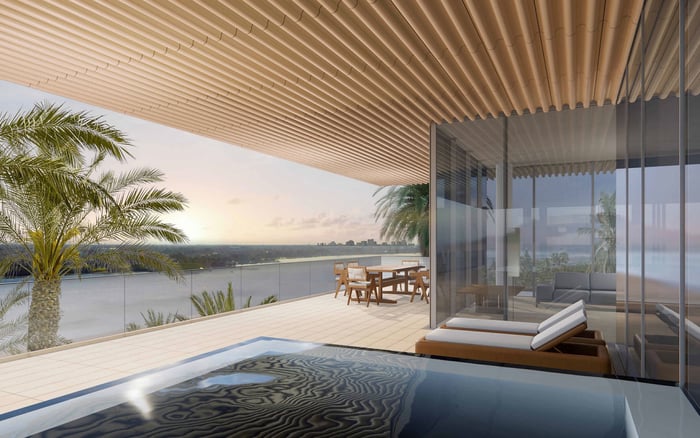
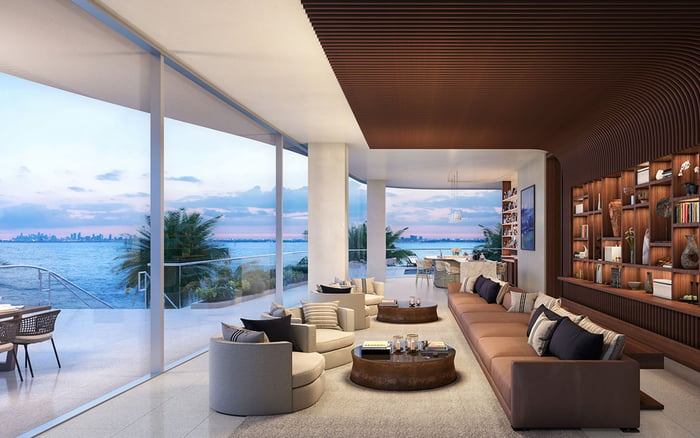
A discreet buyer’s guide to evaluating private wellness rooms in South Florida penthouses, from spatial planning and climate control to privacy, finish quality, resale logic, and daily use.

The modern penthouse is no longer judged solely by ceiling height, view corridors, and the drama of arrival. In South Florida, discerning buyers are also asking how a residence supports restoration. A private wellness room may function as a gym, meditation studio, recovery suite, massage room, yoga space, treatment room, or a hybrid of several uses. The best examples are not improvised spare bedrooms. They are quiet, precisely serviced spaces that feel as considered as the primary suite.
For a buyer, the question is not whether wellness is fashionable. The question is whether the room is genuinely usable, technically sound, and integrated into the rhythm of the home. A beautiful room that overheats, echoes, lacks privacy, or forces awkward equipment storage will quickly become decorative. A properly planned one can become a daily anchor, especially for owners balancing travel, family, business, and coastal leisure.
Before evaluating finishes, define the room’s primary function. Strength training requires different flooring, clearance, mirrors, storage, and acoustic treatment than yoga or breathwork. A massage or treatment room needs softer lighting, convenient linen storage, and a layout that allows circulation around a table. A meditation room benefits from restraint, low visual noise, and a sense of separation from social areas.
The strongest private wellness rooms begin with hierarchy. Decide what must happen every day, what happens occasionally, and what can remain elsewhere in the building’s amenity suite. In a Brickell sky residence, for example, a buyer may prioritize efficient early-morning training before the workday. In a quieter coastal or village setting, the emphasis may shift toward recovery, stretching, and spa-like rituals.
Buyers comparing residences such as The Residences at 1428 Brickell should look beyond the building name and study how the private floor plan supports uninterrupted routines. The wellness room should not read as a secondary afterthought placed wherever space remained.
A wellness room must be measured more carefully than a guest room. Study width, depth, ceiling height, door swing, wall strength, and usable clearance after built-ins are considered. A treadmill, reformer, weight rack, massage table, sauna component, or cold-plunge concept each changes the practical geometry of the room. Even if the buyer does not install equipment immediately, the room should have enough flexibility to adapt.
Flooring is a major tell. Stone may photograph beautifully, but it can be unforgiving for movement. Wood can bring warmth, but buyers should understand how it responds to humidity, impact, and vibration. Rubberized or layered surfaces may be appropriate in certain zones, although they must be detailed elegantly in a luxury residence. The goal is performance without a commercial look.
Walls matter as well. Mirrors can enlarge the room and support training, but they should not create glare or visual unease. Art can soften the space, but it should not compete with the room’s purpose of focus. Built-ins should hold towels, mats, bands, accessories, and recovery tools without turning the room into a closet.
South Florida makes climate control central to wellness room due diligence. A room used for training or heat-based recovery must remain comfortable, dry, and balanced. Buyers should ask how air moves, where returns are located, whether the room can be zoned, and how humidity is managed. The experience should feel calm, not forced.
Acoustics are equally important. A penthouse may sit above the city or ocean, but interior sound can still travel through corridors, slabs, and adjacent bedrooms. If the wellness room shares a wall with a primary suite, media room, or children’s room, evaluate whether impact noise and music can be contained. Quiet is part of the luxury.
Privacy should be studied from inside and outside the room. Glass walls may feel sculptural, yet they can undermine the purpose of personal restoration. If the space faces a terrace, neighboring tower, or family circulation path, window treatments and sight lines become essential. Wellness should not require performance.
In South Florida, the most satisfying wellness routines often move between interior and exterior experiences. A wellness room near a terrace can support sunrise stretching, post-training cooling, or quiet evening breathwork. The connection should be convenient, but not so exposed that the room loses intimacy.
Pool access can also influence value. A buyer who swims, recovers outdoors, or entertains around water may want the wellness room to connect logically to bathing areas, powder rooms, or outdoor showers when available. The route should be graceful. Walking through formal entertaining areas after a workout rarely feels luxurious.
Coastal markets bring another layer of consideration. In Miami Beach and Sunny Isles settings, light, glare, salt air, and view orientation can shape the comfort of a wellness space. A buyer studying oceanfront residences such as Bentley Residences Sunny Isles should consider how the private wellness room fits within the broader indoor-outdoor lifestyle rather than treating it as a sealed-off specialty room.
A common mistake is making the room so specific that it narrows future appeal. A private infrared suite, sound bath chamber, or highly specialized training space may suit one owner perfectly, but the next buyer may want flexibility. The ideal approach is to create a refined shell with strong infrastructure, then personalize it through furnishings, equipment, and lighting scenes.
New-construction buyers have an advantage because they can often evaluate plans before habits are compromised by finished walls. Still, restraint is wise. The room should read as wellness-first, but it should also be convertible to a study, nursery, dressing lounge, or quiet media space if life changes. That flexibility protects both enjoyment and resale logic.
Projects with a wellness sensibility, including The Well Bay Harbor Islands and The Well Coconut Grove, offer useful reference points for buyers thinking about how private wellness can coexist with broader residential amenities. The private room should complement the building, not duplicate every shared offering.
Begin with privacy. Can the room be used while guests, staff, or family members are elsewhere in the residence? Then study climate. Can the space handle heat, humidity, exertion, and equipment without discomfort? Next, test acoustics. A serene room should not disturb the home, and the home should not disturb the room.
Evaluate storage with honesty. Mats, shoes, towels, wearable devices, weights, recovery tools, and cleaning supplies all need a place. Check lighting at different times of day. Bright daylight may energize a morning session, while evening recovery may require a softer scene. Confirm power locations, data needs, mirror placement, and potential equipment loads before falling in love with millwork.
Finally, consider emotional quality. The room should invite use. It should feel calm before the first stretch, focused before the first lift, and restorative after the final repetition. In the best penthouses, wellness is not a feature to mention during a tour. It is a private ritual the residence quietly makes possible.
What is a private wellness room in a penthouse? It is a dedicated in-residence space for fitness, recovery, meditation, treatment, or a combination of wellness uses.
Should the wellness room replace the building gym? Not necessarily. The strongest private rooms support daily routines, while shared amenities can accommodate larger equipment and social wellness.
What is the most important technical feature? Climate control is critical, especially in South Florida, where humidity and heat can affect comfort and materials.
How much privacy should the room have? Enough that the owner can use it without feeling visible from social areas, neighboring buildings, or outdoor terraces.
Is a terrace connection valuable? Yes, if it supports fresh air, stretching, cooling down, or quiet rituals without compromising privacy.
Can a wellness room help resale value? It can support appeal when it is flexible, well finished, and not too narrowly customized to one owner’s routine.
What should buyers avoid? Avoid rooms with poor ventilation, weak acoustics, awkward storage, harsh lighting, or layouts that limit future use.
Should the room include heavy fitness equipment? Only after confirming clearances, flooring, noise control, power needs, and the effect on adjacent rooms.
Is a spa-like room better than a gym-like room? The better choice depends on the buyer’s daily habits, but flexibility usually creates the strongest long-term result.
When should this be evaluated in the purchase process? It should be reviewed early, before finishes, furniture plans, and mechanical assumptions become difficult to change.
For a discreet conversation and a curated building-by-building shortlist, connect with MILLION.
If branded residences are on your mind — as a home or as an allocation — we would be glad to share what we are seeing, privately.
Begin a quiet conversation