A buyer-focused guide to reviewing shade-structure approvals at The Estates at Acqualina, with attention to privacy, views, service operations, governing documents, and resale confidence.
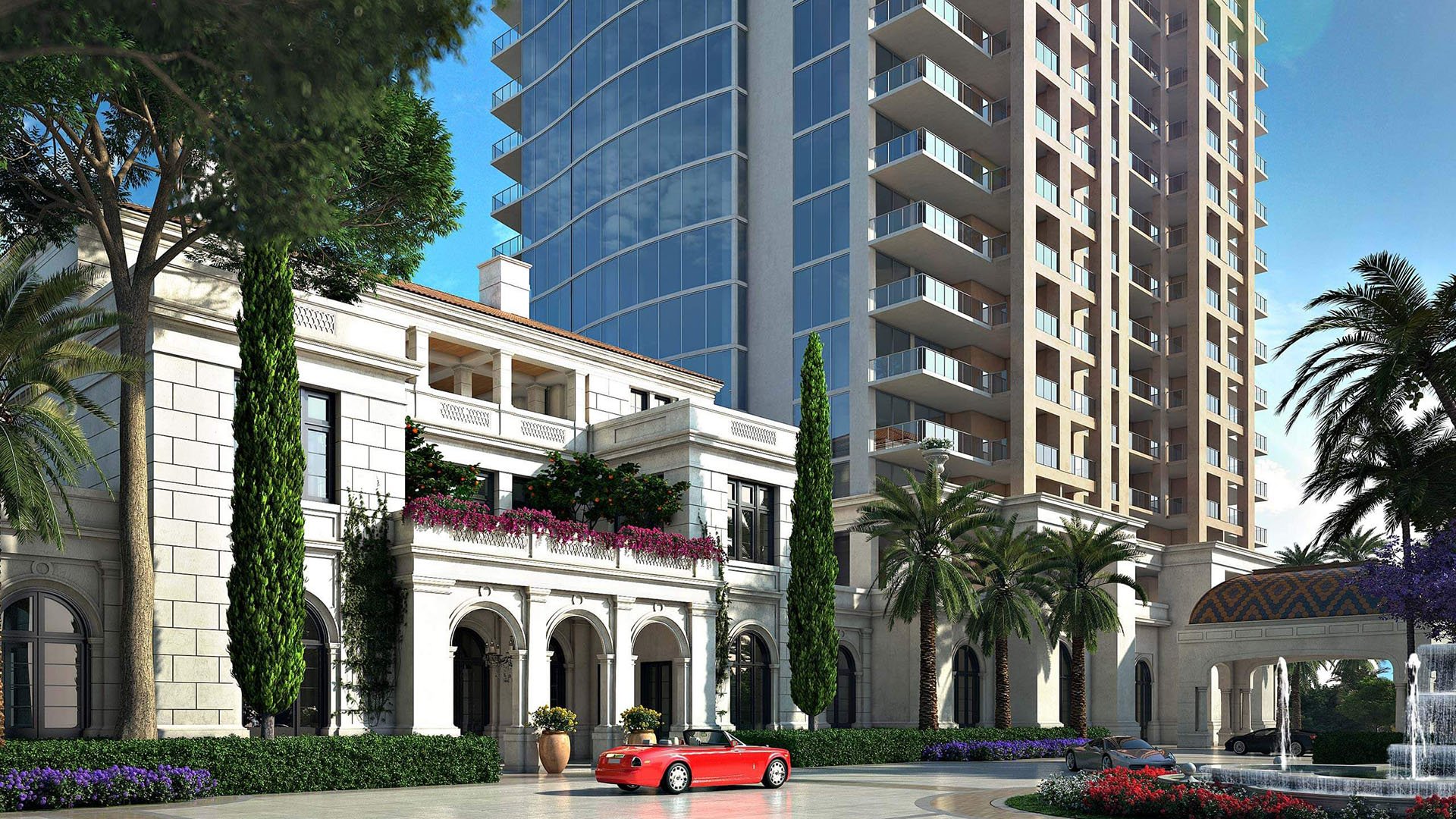
At The Estates at Acqualina Sunny Isles, shade is not a minor outdoor accessory. It is part of how an ultra-luxury oceanfront condominium protects privacy, frames leisure, and preserves the resort character that defines the Acqualina residential brand. A pergola, awning, cabana, retractable canopy, privacy screen, trellis, gazebo, or pavilion-style lounge structure may appear simple on a rendering or terrace plan. In practice, it can influence sightlines, staff circulation, maintenance obligations, and resale confidence.
That is why buyers should evaluate shade-structure approvals as core due diligence, not as a post-closing design errand. The most valuable outdoor feature makes a terrace, cabana, landscaped area, pool zone, or beach-adjacent space more livable without weakening the visual order of the building. In a branded condominium, the exterior is part of the product. Inconsistent modifications can create uncertainty, while disciplined approvals can reassure the next buyer that quality control remains intact.
The first distinction is between developer-installed shade features, association-standardized options, and owner-requested custom modifications. Developer-installed elements typically carry the strongest presumption of design integration because they are conceived as part of the original resort environment. Association-standardized options can also be compelling when they follow a defined palette, material standard, installation method, and maintenance protocol.
Custom owner requests deserve the closest review. A buyer should ask whether the feature was approved in writing, whether the approval is specific to the current owner, and whether it transfers to future ownership. Ideally, the approval record should include design specifications, the responsible installer, maintenance duties, repair obligations, insurance responsibilities if applicable, and any conditions attached to continued use.
For high-value Sunny Isles Beach residences, a casual verbal assurance is not enough. That is especially true at The Estates at Acqualina, where resort-style living, branded design consistency, and high-touch service are central to the value proposition. A shade feature can be beautiful, but its paper trail must be equally refined.
In a tower condominium, privacy is not only a side-to-side issue. Terraces and outdoor spaces can overlook one another from above, below, and diagonally. A screen that shields one residence from a neighboring terrace may also introduce a new visual plane for another owner. A canopy that softens midday sun may change what residents above see when looking toward the water.
This makes vertical analysis essential. Buyers should stand where they will actually live: seated at an outdoor dining table, reclining near a plunge or lounge area if applicable, moving through the primary suite terrace door, and looking outward from interior rooms. They should also consider how the structure appears from neighboring residences and shared amenity areas.
Privacy is most valuable when it feels effortless. Heavy-handed screening can make an outdoor room feel protected but visually constrained. At this level, the better question is not simply whether the structure blocks a view into the residence. It is whether it preserves the grace of the building while improving day-to-day comfort.
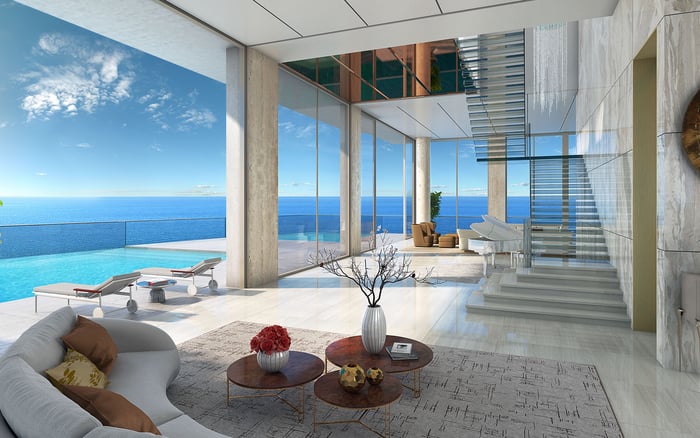
Oceanfront living depends on the choreography of view, light, and air. Any proposed shade feature should be evaluated for its effect on ocean, beach, amenity-deck, and skyline sightlines. A retractable canopy may be ideal when it disappears cleanly. A fixed pergola may be more complicated if it interrupts a view corridor or becomes visually dominant from adjacent homes.
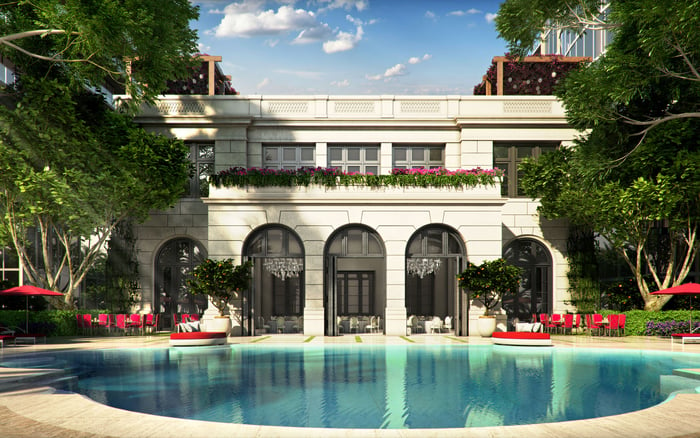
The same logic applies to common areas. Outdoor spaces such as terraces, landscaped areas, cabanas, amenity decks, pool zones, and beach-adjacent lounges are central to the resident experience at The Estates at Acqualina. A shade structure in one location can improve comfort while creating shadows, visual obstruction, or perceived nuisance elsewhere.
This is where restraint becomes a luxury attribute. The best solution is not always the largest or most private. It is the one that extends usable outdoor living while preserving the open horizon that makes the residence compelling in the first place. A simple Sunny Isles search label is not enough; the documents, drawings, and sightline effects matter.
At a high-touch property, shade also has an operational dimension. Common-area shade structures can affect staff circulation, poolside service, beach access, surveillance visibility, and emergency pathways. A cabana or pavilion may enhance comfort, but it should not complicate service choreography or reduce the clarity of movement through shared outdoor zones.
Buyers should think like both residents and operators. Can staff reach lounge areas efficiently? Does a structure block a natural line of sight across a pool deck? Does it narrow access toward the beach? Does it create a maintenance burden that will become visible during peak use? The answers matter because service quality is part of the daily luxury experience, not an abstract amenity.
Private terraces should be reviewed with similar discipline. A shade feature that requires frequent adjustment, specialized cleaning, or complicated repairs can become less elegant over time. The strongest installations look intentional, perform quietly, and do not impose friction on the residence or the association.
Before purchase or installation, buyers should request and review the condominium declaration, bylaws, rules and regulations, architectural-review procedures, prior approval letters, permits if applicable, design drawings, installation records, and maintenance agreements. The focus should be on balconies, terraces, limited common elements, exterior alterations, and any rules that regulate visibility from outside the residence.
A well-documented file should answer five questions. Who approved the structure? What exactly was approved? Who is responsible for installation and maintenance? What happens if the association later requires repair, removal, or replacement? Does the approval transfer to the next owner?
For a resale buyer, the difference between an elegant feature and a future dispute can be one missing approval letter. For a seller, assembling the file before listing can convert a possible objection into a sign of stewardship.
Resale value depends on whether the shade feature enhances usable outdoor living without compromising views, architectural consistency, or neighboring-unit enjoyment. In an ultra-luxury branded condominium, buyers are not only purchasing square footage. They are buying confidence in the building’s design discipline and service culture.
A well-approved structure can expand the perceived functionality of outdoor space, especially when it creates a more comfortable setting for dining, reading, entertaining, or quiet retreat. An ad hoc structure can have the opposite effect, even if expensive. If it appears out of character, blocks a meaningful view, or raises questions about association compliance, it may weaken buyer confidence.
The best resale narrative is simple: the feature is approved, attractive, maintained, transferable, and consistent with the building. Anything more ambiguous should be resolved before it becomes a negotiation point.
Why do shade-structure approvals matter at The Estates at Acqualina Sunny Isles? They matter because exterior appearance, privacy, views, and service quality are all part of the branded luxury experience.
What types of shade structures should buyers review? Pergolas, awnings, cabanas, retractable canopies, privacy screens, trellises, gazebos, and pavilion-style lounge structures should all be reviewed.
Is a developer-installed shade feature different from a custom owner modification? Yes. Developer-installed features are usually more integrated, while custom modifications require closer document review.
What is the main terrace issue for buyers? Buyers should confirm whether the terrace element is allowed, properly documented, maintained, and transferable to a future owner.
Can shade structures affect oceanfront views? Yes. They can affect ocean, beach, amenity-deck, and skyline sightlines from the residence and nearby areas.
How should privacy be evaluated in a tower condominium? Privacy should be reviewed vertically and horizontally because residences and outdoor areas can overlook one another from multiple angles.
Can a shade structure affect pool service? Yes. Common-area structures can influence staff circulation, poolside service, surveillance visibility, and emergency pathways.
What documents should a buyer request? Request the declaration, bylaws, rules, architectural-review procedures, approval letters, design specifications, permits, and maintenance agreements.
How can a shade feature help resale? It can improve usable outdoor living if it preserves views, architectural consistency, and neighboring-unit enjoyment.
What is the safest approval record for a future buyer? The strongest record shows written authorization, design details, installation responsibility, maintenance obligations, and transferability.
For a tailored shortlist and next-step guidance, connect with MILLION.
If branded residences are on your mind — as a home or as an allocation — we would be glad to share what we are seeing, privately.
Begin a quiet conversation