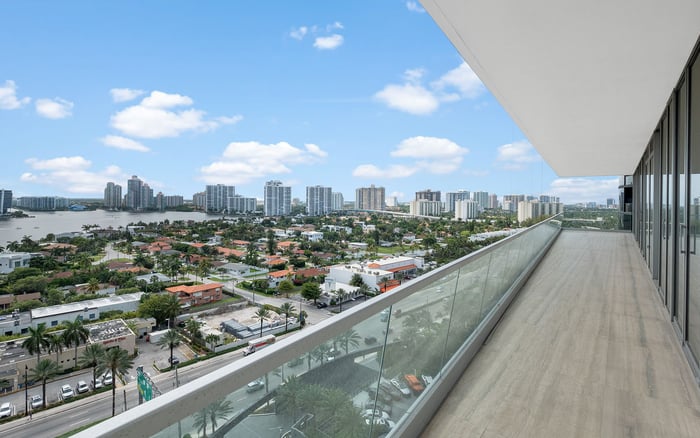
A reserve line of credit can reduce an association’s immediate cash demand while extending principal, interest, covenants and funding obligations into future ownership years. For a Jade Signature buyer, the decisive issue is not whether Florida law allows reserve borrowing, but whether any facility exists, what it finances and how its repayment aligns with the unit’s projected holding period.

A residence at Jade Signature Sunny Isles Beach may first be evaluated through architecture, exposure and lifestyle. Yet the association’s capital structure can be equally consequential. If a line of credit supports reserves, part of today’s funding pressure may be exchanged for tomorrow’s debt service.
Florida law permits required condominium reserves to be funded through regular assessments, special assessments, loans or lines of credit. The supplied facts, however, do not establish that Jade Signature currently has, or plans to obtain, a reserve credit line. That distinction is essential: a prudent buyer should treat borrowing as a due-diligence question, not a known condition of the building.
A softer assessment today can become principal, interest and reserve funding tomorrow.
Credit alters timing, not the underlying obligation. Rather than collect the full reserve requirement immediately, an association may use approved financing whose proceeds are immediately available for qualifying repair, maintenance or replacement expenses. The borrowing must cover the applicable funding obligation; it cannot be an unfunded promise that financing might become available later.
Using a special assessment, loan or line of credit for required reserves generally requires approval by a majority of the association’s total voting interests. Once authorized, the association may adopt a budget that counts approved financing proceeds toward reserve funding. Its declaration, bylaws and articles can still impose additional voting thresholds, restrictions or borrowing conditions, making statutory permission only the beginning of the analysis.
For current owners, the appeal is clear: financing may moderate an immediate surge in reserve contributions or soften a large special assessment. For future owners, the trade-off can include principal repayment, interest expense, lender covenants and variable-rate exposure. A facility supporting several pooled Structural Integrity Reserve Study components can also be broader than a loan tied to a single visible repair.
A future purchaser may inherit the economic effect of debt through recurring assessments, even when the loan is formally an association obligation. The critical period may begin after repairs are complete, when updated reserve contributions resume while principal and interest remain payable. Those parallel demands can make a seemingly manageable assessment materially more expensive over a multiyear holding period.
Associations completing required milestone-inspection repairs may pause reserve contributions for up to two years. A pause neither cancels the repair need nor eliminates the future funding requirement; it simply can change when owners contribute. Buyers should therefore examine several budget years rather than annualize the latest monthly assessment in isolation.
Indicative, non-association ownership-cost estimates for Jade Signature range from approximately $33,600 to more than $168,000 annually, depending on unit type. These figures require unit-specific verification. Even so, the range illustrates why an additional debt-service allocation could materially influence total carrying costs, particularly for larger residences.
Separate every assessment dollar into four categories: operations, cash reserves, existing debt service and temporary repair charges. This prevents a low reserve contribution from appearing favorable when borrowing offsets it, and keeps a temporary charge from being mistaken for a permanent operating expense.
Then align the repayment schedule with the intended holding period. A seller who owned during a lower-contribution period may transfer the residence before much of the principal is repaid. A buyer entering later may fund both debt service and replenished reserves. This timing deserves close attention in any investment analysis, particularly when the purchase is expected to become a resale within the loan term.
Buyers should request the credit limit, amount drawn, available balance, interest rate, maturity, collateral, covenants and repayment schedule. They should also identify the SIRS components financed and determine whether payments are fixed, floating or subject to future renewal. The undrawn portion matters as much as the current balance because it can indicate further borrowing capacity.
The headline reserve balance is not enough. Review the assumptions within the Structural Integrity Reserve Study, including useful lives, replacement costs and the schedule for each component. At an oceanfront property, buyers should test whether envelope and terrace-waterproofing cycles reflect site-specific conditions rather than rely solely on aggregated totals.
HB 913 included a temporary option for owner-controlled associations to approve secured credit equal to as much as 35% of certain SIRS reserves for components with more than 10 years of useful life remaining. The option applied to annual budgets adopted on or before December 31, 2027. A buyer should confirm whether it applies to the association’s current budget year, eligible components and financing plan rather than assume the percentage is universally available.
Start with the current budget, recent financial statements, latest SIRS, meeting minutes, owner-vote materials and purchaser disclosures. Reconcile the debt shown in the financial statements with the reserve funding presented in the budget. Any mismatch merits an explanation before contract deadlines expire.
The loan documents should reveal whether the facility is secured, which revenues may be pledged, which covenants constrain the association and what events could trigger default or repricing. Minutes can show whether additional draws, repairs or owner votes are under discussion. Reserve-related assessments and credit facilities are relevant to purchaser disclosure and future marketability, making this review part of both acquisition and exit planning.
For context, buyers comparing nearby options such as Armani Casa Sunny Isles Beach, Muse Residences Sunny Isles Beach, Turnberry Ocean Club Sunny Isles or The Ritz-Carlton Residences® Sunny Isles should apply the same framework to each association. The useful comparison is not the assessment amount alone, but the combination of operations, reserves, debt, temporary charges and the timing of future capital needs across Sunny Isles Beach.
A reserve credit line can be a rational tool when it matches qualifying obligations with available proceeds and an intelligible repayment plan. It can also transfer a meaningful share of the cost to later owners. At Jade Signature, the buyer’s task is to verify whether such financing exists, understand every material term and model its overlap with future reserve contributions. Contract review should be coordinated with qualified legal and financial advisers using current association documents and unit-specific disclosures.
For discreet guidance on a South Florida luxury condominium purchase, connect with MILLION.
If branded residences are on your mind — as a home or as an allocation — we would be glad to share what we are seeing, privately.
Begin a quiet conversationThe supplied facts do not establish that it does. Buyers should verify the current position through the budget, financial statements, SIRS, minutes and resale disclosures.
Yes. Florida law permits qualifying reserves to be funded through regular assessments, special assessments, loans or lines of credit.
Yes. A special assessment, loan or credit line for required reserves generally requires approval by a majority of the association’s total voting interests.
Yes. The declaration, bylaws or articles may add voting requirements, restrictions or borrowing conditions beyond statutory rules.
A future owner may pay debt service through assessments and later face resumed reserve contributions at the same time.
Request the limit, amount drawn, rate, maturity, collateral, covenants, repayment schedule and the SIRS components being financed.
No. A permitted pause during required milestone-inspection repairs changes timing but does not erase the repair or funding need.
The holding period determines how much loan repayment may fall within the buyer’s ownership and whether it overlaps with renewed reserve funding.
Separate operations, cash reserves, existing debt service and temporary repair charges to reveal the true composition of assessments.
Review useful-life and replacement-cost assumptions, component schedules, and whether envelope and terrace-waterproofing cycles reflect site-specific conditions.