A document-led buyer’s perspective on Aston Martin Residences and Frida Kahlo Wynwood Residences, distinguishing brand identity from operational responsibility, advertised services from enforceable commitments, and litigation allegations from established findings.

For a luxury condominium buyer, dependable administration may be the most consequential amenity. A beautifully appointed arrival matters less when responsibility for staffing, maintenance, financial oversight, and service interruptions is unclear. At Aston Martin Residences Downtown Miami and Frida Kahlo Wynwood Residences, the buyer’s file should distinguish three things: what is advertised, what is contractually promised, and who can be held accountable.
The two properties are not equivalent governance cases. Aston Martin has a documented opening and association litigation involving disputed management and financial practices. For Frida Kahlo, conclusions about management, turnover, service guarantees, or remedies should remain conditional until project-specific documents establish them. Neither a recognizable name nor an unresolved question settles the quality of governance.
Located at 300 Biscayne Boulevard Way, Aston Martin Residences Downtown Miami contains 66 stories and 391 residences. Its opening was announced on April 30, 2024, marking Aston Martin’s first completed real-estate project. G&G Business Developments was the brand’s identified development partner.
That public-facing relationship does not encompass the full legal structure. Riverwalk East Developments, LLC is identified as the condominium developer. Buyers should reconcile those identities across the purchase agreement, declaration, association records, and management agreement rather than treating the names as interchangeable.
Equally important, a development partnership and branded amenities do not establish an undertaking by Aston Martin Lagonda to manage daily condominium operations. The relevant question is not simply whose name appears on the building. It is which entity employs or contracts for the people delivering the experience-and what obligations that entity has accepted.
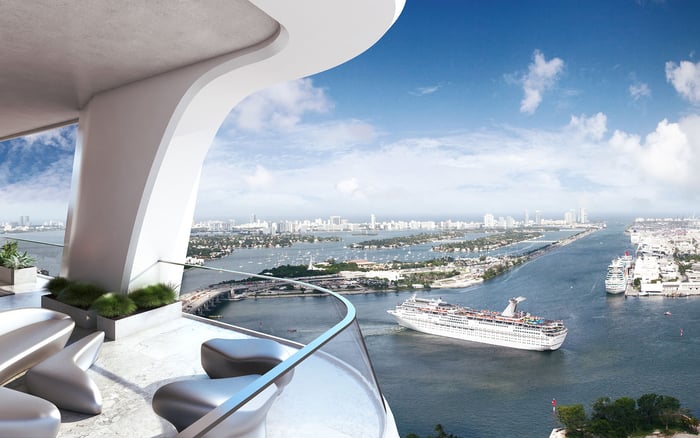
Aston Martin’s advertised amenity program encompasses approximately 42,275 square feet across floors 52 through 55. It includes a two-level gym, two theaters, an art gallery, a golf simulator, a spa, and a 55th-floor infinity pool and sky bar.
The advertised services also include concierge and hospitality-inspired services, 24-hour valet, a self-parking option, superyacht marina facilities, and a digital connection from each residence to the concierge and building amenities. These descriptions establish the advertised offering, not guaranteed staffing, uninterrupted access, or an enforceable service level.
For each service, request the operator’s identity, applicable agreement, operating hours, access restrictions, and fee schedule. Clarify whether the cost is included in regular assessments or requires additional payment. For marina access, request the governing rights and conditions rather than assuming an advertised facility creates an individual entitlement.
Then test continuity. Who must respond if the concierge system fails? What happens when a vendor is replaced? Does the agreement specify staffing or merely describe a service category? Written answers should connect the experience to an accountable party, an identified budget, and a defined remedy.
Association litigation documented as of February 5, 2026 involves claims against developer German Coto and related parties alleging self-dealing involving association funds. The association alleged that contracts had been arranged with companies controlled by Coto or associates before developer control passed to the association.
The challenged arrangements concerned cleaning, security, and maintenance. Allegations included inflated prices, a lack of competitive bidding, and substantial fees collected by a developer-controlled management company that allegedly acted as a gatekeeper for the developer.
The association also alleged that extensive financial and accounting information was not provided during turnover, and that computers holding information that should have transferred to the association were wiped. These are allegations, not adjudicated findings. The litigation’s outcome and current procedural status are not established here.
The association hired outside accountants and new management. For a prospective purchaser, those steps warrant follow-up: request evidence of the financial review, the current management agreement, and the board’s treatment of challenged contracts. A management change alone is not proof that every disputed issue has been resolved.
For Frida Kahlo Wynwood Residences, the prudent position is neither reassurance nor suspicion. Establish the manager, governance structure, turnover status, budgets, vendor relationships, and contractual service obligations through the relevant project documents before drawing conclusions.
Do not infer weak governance, absent remedies, or a clean litigation history from unconfirmed particulars. Request written identification of the developer, association, proposed or appointed manager, and any service operator, then reconcile those entities across the contractual file.
The same discipline applies to owner recourse. Ask counsel to identify the provisions governing complaints, enforcement, management replacement, and dispute resolution. Until those provisions are reviewed, a comparison with Aston Martin should focus on the questions buyers must ask, not a presumed similarity in disputes or operational performance.
Organize the diligence request around four practical subjects:
Authority: Obtain the declaration, bylaws, board records, management agreement, and turnover records. Establish who controls decisions and which approvals are required.
Money: Review budgets, reserves, financial statements, vendor contracts, and related-party disclosures. Ask how contract pricing was evaluated and how expenses are allocated.
Continuity: Identify service operators, staffing commitments, hours, restrictions, additional charges, renewal dates, and termination provisions. Ask what transition arrangements apply if an operator changes.
Recourse: Request litigation notices and have counsel review enforcement provisions, notice requirements, and available contractual remedies.
For Aston Martin, the turnover and accounting allegations make the completeness of records especially relevant. Ask whether the association can reconcile balances, trace payments, and document the authority for material contracts. For Frida Kahlo, establish the applicable governance stage before assuming any particular turnover record should already exist.
A buyer also considering Waldorf Astoria Residences Downtown Miami can use the same document checklist without assuming its operating arrangements resemble either property discussed here. Comparisons become meaningful when they address responsibility, cost, and enforceability rather than names alone.
The Aston Martin association lawsuit illustrates a route for collective owner action through the association and Miami-Dade Circuit Court. It does not establish a guaranteed recovery, an individual buyer’s remedy, or a resolved dispute. Counsel should verify current filings and distinguish association claims from rights available under a particular purchase agreement.
The strongest purchase file connects each material service promise to an operator, a funding arrangement, and an enforceable obligation. Where that connection remains unclear, seek clarification before commitment rather than assigning value to an assumption.
For a considered approach to your next South Florida residence, connect with MILLION.
If branded residences are on your mind — as a home or as an allocation — we would be glad to share what we are seeing, privately.
Begin a quiet conversationAston Martin Residences stands at 300 Biscayne Boulevard Way in Downtown Miami. The condominium contains 66 stories and 391 residences.
The opening was announced on April 30, 2024. It marked Aston Martin’s first completed real-estate project.
No, a development partnership and branded amenities do not establish an undertaking by Aston Martin Lagonda to manage daily condominium operations. Buyers should verify operational responsibility in the governing agreements.
G&G Business Developments was identified as Aston Martin’s development partner, while Riverwalk East Developments, LLC is identified as the condominium developer. Buyers should reconcile their respective roles against purchase and association documents.
The advertised offering includes concierge services, 24-hour valet, self-parking, marina facilities, and approximately 42,275 square feet of amenities. Advertising alone does not establish uninterrupted access, staffing commitments, or assessment coverage.
The association alleged self-dealing involving contracts, association funds, management fees, and incomplete turnover information. These allegations are not adjudicated findings, and the case’s outcome and current status are not established here.
The association hired outside accountants and new management. Buyers should request documentation of the review and current arrangements rather than assume all disputed issues were resolved.
No project-specific governance conclusion is warranted without reviewing its management, financial, turnover, and contractual documents. Unconfirmed particulars are not proof of deficient governance or absent remedies.
Request the declaration, bylaws, turnover records, management agreement, vendor contracts, related-party disclosures, budgets, reserves, financial statements, and litigation notices. Confirm service operators, charges, restrictions, and enforcement provisions.
It illustrates collective action through the condominium association and Miami-Dade Circuit Court, not guaranteed recovery. Counsel should distinguish association claims from an individual buyer’s contractual rights.